 https://treasuryxl.com/wp-content/uploads/2026/04/XLConnect-200.png
200
200
treasuryXL
https://treasuryxl.com/wp-content/uploads/2018/07/treasuryXL-logo-300x56.png
treasuryXL2026-09-22 13:46:332026-09-22 14:23:56XLconnect – World in Transition, Treasury in Transition
https://treasuryxl.com/wp-content/uploads/2026/04/XLConnect-200.png
200
200
treasuryXL
https://treasuryxl.com/wp-content/uploads/2018/07/treasuryXL-logo-300x56.png
treasuryXL2026-09-22 13:46:332026-09-22 14:23:56XLconnect – World in Transition, Treasury in TransitionFor a corporate treasurer, equity is not just an accounting entry but a fundamental component of the company’s financial structure and strategic flexibility. It represents the owners’ claim on the company’s assets after all liabilities are settled. Its management is central to the treasury’s role of optimizing the company’s financial resources to support business objectives.
The value of equity is seen through two primary lenses:
-
Book Value (Balance Sheet Equity): Calculated as Assets – Liabilities. This is the historical accounting value, comprised of share capital, retained earnings, and other reserves.
-
Market Value (Market Capitalization): Calculated as Share Price × Number of Outstanding Shares. This is the market’s real-time valuation of the company’s future earning potential and strategic position.
A key treasury objective is to manage the company’s capital structure—the mix of equity and debt—to minimize the overall cost of capital while ensuring sufficient funding for strategy.
How Equity Drives Treasury Activities
Treasury engages with equity directly and indirectly across several core functions. The following table outlines how equity considerations translate into specific treasury responsibilities.
| Treasury Function | Relation to Equity & Key Activities |
|---|---|
| Capital Structure & Funding Strategy | Analyzing the optimal balance between equity and debt to fund operations and growth. This involves planning for long-term equity raises (e.g., IPOs, secondary offerings) and working with investor relations. |
| Liquidity & Cash Management | Managing shareholder distributions (dividends, share buybacks) which directly reduce retained earnings (a component of equity). Decisions here balance returning value to owners with retaining cash for reinvestment. |
| Risk Management | Monitoring how market equity value fluctuations affect the company’s credit profile and ability to raise capital. A strong market valuation can provide a “buffer” and improve terms with lenders and counterparties. |
| Financial Planning & Analysis (FP&A) | Modeling the impact of strategic decisions (M&A, major investments) on earnings per share (EPS) and other key metrics important to equity investors. Treasury provides critical data for these strategic plans. |
| Investor & Banking Relations | Supporting communications with equity investors and analysts regarding the company’s liquidity, financial strategy, and risk posture. Treasury also negotiates with banks based on the strength of the company’s equity base. |
Key Equity-Related Concepts for Treasurers
-
Cost of Equity: The expected rate of return required by investors. It is a critical input when evaluating investment projects and determining the overall cost of capital. Treasury strategies that enhance financial stability and growth prospects can help manage this cost.
-
Shareholder Distributions: This includes dividends (cash payments from retained earnings) and share buybacks (repurchasing shares from the market). Treasury is central to executing these programs, managing the associated cash outflows, and assessing their impact on liquidity.
-
Equity as a Strategic Tool: Equity is not just funding; it is a currency. It can be used to finance acquisitions (stock-for-stock transactions) or to compensate employees (stock-based compensation plans). Treasury advises on the financial implications of these strategies.
In summary, from a treasury standpoint, equity is a dynamic component of the corporate financial framework. Effective treasury management involves strategically overseeing and deploying equity to ensure liquidity, manage financial risk, and secure the funding necessary to execute the company’s long-term strategy
Trusted partners to support you further
Click and Scroll! Here are more articles that you might like…
https://treasuryxl.com/wp-content/uploads/2026/04/XLConnect-200.png
200
200
treasuryXL
https://treasuryxl.com/wp-content/uploads/2018/07/treasuryXL-logo-300x56.png
treasuryXL2026-09-22 13:46:332026-09-22 14:23:56XLconnect – World in Transition, Treasury in Transition https://treasuryxl.com/wp-content/uploads/2026/09/Live-Session-TreasurySpring.png
200
200
treasuryXL
https://treasuryxl.com/wp-content/uploads/2018/07/treasuryXL-logo-300x56.png
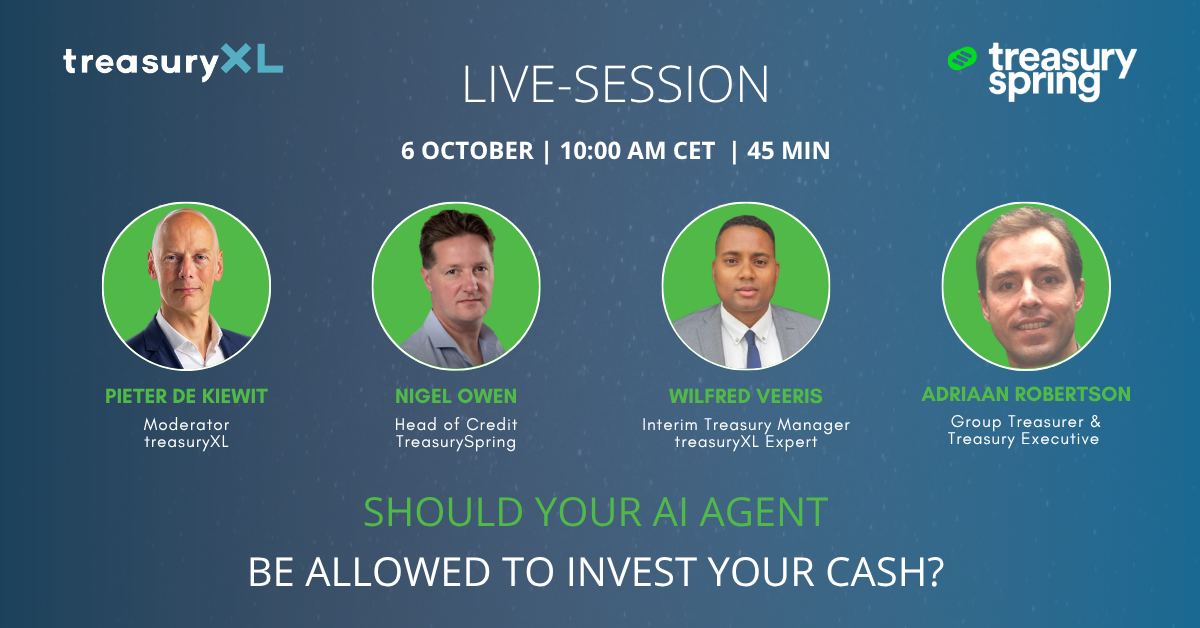
treasuryXL2026-09-21 15:21:422026-09-21 15:21:42Live Session: Should Your AI Agent Be Allowed to Invest Your Cash?
https://treasuryxl.com/wp-content/uploads/2026/09/Live-Session-TreasurySpring.png
200
200
treasuryXL
https://treasuryxl.com/wp-content/uploads/2018/07/treasuryXL-logo-300x56.png
treasuryXL2026-09-21 15:21:422026-09-21 15:21:42Live Session: Should Your AI Agent Be Allowed to Invest Your Cash? https://treasuryxl.com/wp-content/uploads/2026/09/Live-Session-Nomentia.png
200
200
treasuryXL
https://treasuryxl.com/wp-content/uploads/2018/07/treasuryXL-logo-300x56.png
treasuryXL2026-09-16 12:06:492026-09-16 12:06:49Recap & Recording: The ROI of Treasury: From Excel to Strategic Impact
https://treasuryxl.com/wp-content/uploads/2026/09/Live-Session-Nomentia.png
200
200
treasuryXL
https://treasuryxl.com/wp-content/uploads/2018/07/treasuryXL-logo-300x56.png
treasuryXL2026-09-16 12:06:492026-09-16 12:06:49Recap & Recording: The ROI of Treasury: From Excel to Strategic Impact https://treasuryxl.com/wp-content/uploads/2025/08/Nomentia-BLOGS-featured-3.png
200
200
treasuryXL
https://treasuryxl.com/wp-content/uploads/2018/07/treasuryXL-logo-300x56.png
treasuryXL2026-08-20 11:41:322026-09-15 13:10:22Live Session: The ROI of Treasury: From Excel to Strategic Impact
https://treasuryxl.com/wp-content/uploads/2025/08/Nomentia-BLOGS-featured-3.png
200
200
treasuryXL
https://treasuryxl.com/wp-content/uploads/2018/07/treasuryXL-logo-300x56.png
treasuryXL2026-08-20 11:41:322026-09-15 13:10:22Live Session: The ROI of Treasury: From Excel to Strategic Impact https://treasuryxl.com/wp-content/uploads/2026/06/Aviva-BLOGS-featured-11.png
200
200
treasuryXL
https://treasuryxl.com/wp-content/uploads/2018/07/treasuryXL-logo-300x56.png
treasuryXL2026-08-11 07:00:582026-08-10 15:22:53Aviva Investors launches tokenised Liquidity Fund share class in partnership with Ripple
https://treasuryxl.com/wp-content/uploads/2026/06/Aviva-BLOGS-featured-11.png
200
200
treasuryXL
https://treasuryxl.com/wp-content/uploads/2018/07/treasuryXL-logo-300x56.png
treasuryXL2026-06-29 07:00:062026-06-26 14:37:50Blockchain: The quiet technology reshaping financial infrastructure.
https://treasuryxl.com/wp-content/uploads/2026/06/Aviva-BLOGS-featured-11.png
200
200
treasuryXL
https://treasuryxl.com/wp-content/uploads/2018/07/treasuryXL-logo-300x56.png
treasuryXL2026-08-11 07:00:582026-08-10 15:22:53Aviva Investors launches tokenised Liquidity Fund share class in partnership with Ripple
https://treasuryxl.com/wp-content/uploads/2026/06/Aviva-BLOGS-featured-11.png
200
200
treasuryXL
https://treasuryxl.com/wp-content/uploads/2018/07/treasuryXL-logo-300x56.png
treasuryXL2026-06-29 07:00:062026-06-26 14:37:50Blockchain: The quiet technology reshaping financial infrastructure. https://treasuryxl.com/wp-content/uploads/2026/05/Aviva-BLOGS-featured-10.png
200
200
treasuryXL
https://treasuryxl.com/wp-content/uploads/2018/07/treasuryXL-logo-300x56.png
treasuryXL2026-05-20 07:00:182026-05-20 08:33:07Cash Meets Tech: Key Takeaways from XLConnect with Aviva Investors
https://treasuryxl.com/wp-content/uploads/2026/05/Aviva-BLOGS-featured-10.png
200
200
treasuryXL
https://treasuryxl.com/wp-content/uploads/2018/07/treasuryXL-logo-300x56.png
treasuryXL2026-05-20 07:00:182026-05-20 08:33:07Cash Meets Tech: Key Takeaways from XLConnect with Aviva Investors https://treasuryxl.com/wp-content/uploads/2025/06/Aviva-BLOGS-featured-6.png
200
200
treasuryXL
https://treasuryxl.com/wp-content/uploads/2018/07/treasuryXL-logo-300x56.png
treasuryXL2025-06-12 07:00:052025-06-26 08:44:44Money Market Funds: An overview for corporate treasurers and investors
https://treasuryxl.com/wp-content/uploads/2025/06/Aviva-BLOGS-featured-6.png
200
200
treasuryXL
https://treasuryxl.com/wp-content/uploads/2018/07/treasuryXL-logo-300x56.png
treasuryXL2025-06-12 07:00:052025-06-26 08:44:44Money Market Funds: An overview for corporate treasurers and investors https://treasuryxl.com/wp-content/uploads/2022/05/eBook-gray.png
200
200
treasuryXL
https://treasuryxl.com/wp-content/uploads/2018/07/treasuryXL-logo-300x56.png
treasuryXL2023-02-23 08:00:492023-02-21 14:21:19Unlock Your Treasury Expertise Today – Download Our Free eBook!
https://treasuryxl.com/wp-content/uploads/2022/05/eBook-gray.png
200
200
treasuryXL
https://treasuryxl.com/wp-content/uploads/2018/07/treasuryXL-logo-300x56.png
treasuryXL2023-02-23 08:00:492023-02-21 14:21:19Unlock Your Treasury Expertise Today – Download Our Free eBook! https://treasuryxl.com/wp-content/uploads/2023/02/unlock-200x200-1.png
200
200
treasuryXL
https://treasuryxl.com/wp-content/uploads/2018/07/treasuryXL-logo-300x56.png
treasuryXL2023-02-14 07:00:082023-04-06 09:55:32LIVE SESSION | Unlock the Benefits of Interim Treasury Management
https://treasuryxl.com/wp-content/uploads/2023/02/unlock-200x200-1.png
200
200
treasuryXL
https://treasuryxl.com/wp-content/uploads/2018/07/treasuryXL-logo-300x56.png
treasuryXL2023-02-14 07:00:082023-04-06 09:55:32LIVE SESSION | Unlock the Benefits of Interim Treasury Management https://treasuryxl.com/wp-content/uploads/2023/02/eurofinance-200.png
200
200
treasuryXL
https://treasuryxl.com/wp-content/uploads/2018/07/treasuryXL-logo-300x56.png
treasuryXL2023-02-07 07:00:202023-02-06 10:33:56Effective Finance & Treasury in Africa | Eurofinance
https://treasuryxl.com/wp-content/uploads/2022/05/eBook-gray.png
200
200
treasuryXL
https://treasuryxl.com/wp-content/uploads/2018/07/treasuryXL-logo-300x56.png
treasuryXL2022-10-27 10:20:362022-10-27 10:29:22Brush up on your treasury knowledge? Get our eBook: What is Treasury?
https://treasuryxl.com/wp-content/uploads/2023/02/eurofinance-200.png
200
200
treasuryXL
https://treasuryxl.com/wp-content/uploads/2018/07/treasuryXL-logo-300x56.png
treasuryXL2023-02-07 07:00:202023-02-06 10:33:56Effective Finance & Treasury in Africa | Eurofinance
https://treasuryxl.com/wp-content/uploads/2022/05/eBook-gray.png
200
200
treasuryXL
https://treasuryxl.com/wp-content/uploads/2018/07/treasuryXL-logo-300x56.png
treasuryXL2022-10-27 10:20:362022-10-27 10:29:22Brush up on your treasury knowledge? Get our eBook: What is Treasury? https://treasuryxl.com/wp-content/uploads/2022/10/Pieter-Vienna.png
200
200
treasuryXL
https://treasuryxl.com/wp-content/uploads/2018/07/treasuryXL-logo-300x56.png
treasuryXL2022-10-12 14:42:432023-01-02 14:17:36Eurofinance remains THE event for corporate treasurers | By Pieter de Kiewit
https://treasuryxl.com/wp-content/uploads/2022/10/Pieter-Vienna.png
200
200
treasuryXL
https://treasuryxl.com/wp-content/uploads/2018/07/treasuryXL-logo-300x56.png
treasuryXL2022-10-12 14:42:432023-01-02 14:17:36Eurofinance remains THE event for corporate treasurers | By Pieter de Kiewit https://treasuryxl.com/wp-content/uploads/2022/09/WEBINAR.png
200
200
treasuryXL
https://treasuryxl.com/wp-content/uploads/2018/07/treasuryXL-logo-300x56.png
treasuryXL2022-09-29 07:00:452023-01-02 14:17:59LIVE SESSION | My Treasury Career Development & How the Register Treasurer education contributed
https://treasuryxl.com/wp-content/uploads/2022/09/WEBINAR.png
200
200
treasuryXL
https://treasuryxl.com/wp-content/uploads/2018/07/treasuryXL-logo-300x56.png
treasuryXL2022-09-29 07:00:452023-01-02 14:17:59LIVE SESSION | My Treasury Career Development & How the Register Treasurer education contributed https://treasuryxl.com/wp-content/uploads/2022/09/blog-pieter-19e-200.png
200
200
treasuryXL
https://treasuryxl.com/wp-content/uploads/2018/07/treasuryXL-logo-300x56.png
treasuryXL2022-09-19 07:00:032023-01-02 14:18:20Where did the treasury applicants go? | By Pieter de Kiewit
https://treasuryxl.com/wp-content/uploads/2022/05/eBook-gray.png
200
200
treasuryXL
https://treasuryxl.com/wp-content/uploads/2018/07/treasuryXL-logo-300x56.png
treasuryXL2022-09-08 11:40:442022-09-08 11:59:28Quickly refresh your treasury knowledge? Download our eBook: What is Treasury?
https://treasuryxl.com/wp-content/uploads/2022/09/blog-pieter-19e-200.png
200
200
treasuryXL
https://treasuryxl.com/wp-content/uploads/2018/07/treasuryXL-logo-300x56.png
treasuryXL2022-09-19 07:00:032023-01-02 14:18:20Where did the treasury applicants go? | By Pieter de Kiewit
https://treasuryxl.com/wp-content/uploads/2022/05/eBook-gray.png
200
200
treasuryXL
https://treasuryxl.com/wp-content/uploads/2018/07/treasuryXL-logo-300x56.png
treasuryXL2022-09-08 11:40:442022-09-08 11:59:28Quickly refresh your treasury knowledge? Download our eBook: What is Treasury? https://treasuryxl.com/wp-content/uploads/2022/09/Cash-and-Treasurer-featured-200x200-1.png
200
200
treasuryXL
https://treasuryxl.com/wp-content/uploads/2018/07/treasuryXL-logo-300x56.png
treasuryXL2022-09-06 11:00:102022-09-06 12:46:51RECAP | Cash and Treasury Management Event Copenhagen | By Pieter de Kiewit
https://treasuryxl.com/wp-content/uploads/2022/09/Cash-and-Treasurer-featured-200x200-1.png
200
200
treasuryXL
https://treasuryxl.com/wp-content/uploads/2018/07/treasuryXL-logo-300x56.png
treasuryXL2022-09-06 11:00:102022-09-06 12:46:51RECAP | Cash and Treasury Management Event Copenhagen | By Pieter de Kiewit https://treasuryxl.com/wp-content/uploads/2022/08/22cash-featured-200x200px4.jpg
200
200
treasuryXL
https://treasuryxl.com/wp-content/uploads/2018/07/treasuryXL-logo-300x56.png
treasuryXL2022-08-04 09:21:162022-08-04 09:21:16Cash & Treasury Management: Join The World’s Leading Experts in Copenhagen
https://treasuryxl.com/wp-content/uploads/2022/08/22cash-featured-200x200px4.jpg
200
200
treasuryXL
https://treasuryxl.com/wp-content/uploads/2018/07/treasuryXL-logo-300x56.png
treasuryXL2022-08-04 09:21:162022-08-04 09:21:16Cash & Treasury Management: Join The World’s Leading Experts in Copenhagen https://treasuryxl.com/wp-content/uploads/2022/06/treasuryXL-200x200-1.jpg
200
200
treasuryXL
https://treasuryxl.com/wp-content/uploads/2018/07/treasuryXL-logo-300x56.png
treasuryXL2022-06-13 07:00:552022-06-10 11:50:23Treasury in transition – explore the agenda for EuroFinance International Treasury Management
https://treasuryxl.com/wp-content/uploads/2022/05/eBook-gray.png
200
200
treasuryXL
https://treasuryxl.com/wp-content/uploads/2018/07/treasuryXL-logo-300x56.png
treasuryXL2022-05-16 07:00:382022-08-15 14:52:05Subscribe and receive your 41 pages ‘easy-to-read’ eBook, What is Treasury?
https://treasuryxl.com/wp-content/uploads/2022/06/treasuryXL-200x200-1.jpg
200
200
treasuryXL
https://treasuryxl.com/wp-content/uploads/2018/07/treasuryXL-logo-300x56.png
treasuryXL2022-06-13 07:00:552022-06-10 11:50:23Treasury in transition – explore the agenda for EuroFinance International Treasury Management
https://treasuryxl.com/wp-content/uploads/2022/05/eBook-gray.png
200
200
treasuryXL
https://treasuryxl.com/wp-content/uploads/2018/07/treasuryXL-logo-300x56.png
treasuryXL2022-05-16 07:00:382022-08-15 14:52:05Subscribe and receive your 41 pages ‘easy-to-read’ eBook, What is Treasury? https://treasuryxl.com/wp-content/uploads/2022/05/EuroFinance-22.jpg
200
200
treasuryXL
https://treasuryxl.com/wp-content/uploads/2018/07/treasuryXL-logo-300x56.png
treasuryXL2022-05-09 07:00:212022-05-05 16:46:44The world’s largest treasury event is returning to Vienna in September | 10% discount via treasuryXL
https://treasuryxl.com/wp-content/uploads/2022/05/EuroFinance-22.jpg
200
200
treasuryXL
https://treasuryxl.com/wp-content/uploads/2018/07/treasuryXL-logo-300x56.png
treasuryXL2022-05-09 07:00:212022-05-05 16:46:44The world’s largest treasury event is returning to Vienna in September | 10% discount via treasuryXL https://treasuryxl.com/wp-content/uploads/2022/04/FSM-Banner-200x200-Englisch-v01-MN-2022-03-03.jpg
200
200
treasuryXL
https://treasuryxl.com/wp-content/uploads/2018/07/treasuryXL-logo-300x56.png
treasuryXL2022-04-20 12:05:102022-04-20 12:07:30Attend the 33rd Finance Symposium | 18-20 May 2022 | Mannheim
https://treasuryxl.com/wp-content/uploads/2022/04/FSM-Banner-200x200-Englisch-v01-MN-2022-03-03.jpg
200
200
treasuryXL
https://treasuryxl.com/wp-content/uploads/2018/07/treasuryXL-logo-300x56.png
treasuryXL2022-04-20 12:05:102022-04-20 12:07:30Attend the 33rd Finance Symposium | 18-20 May 2022 | Mannheim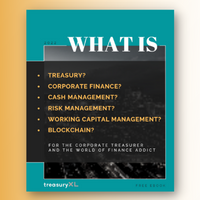 https://treasuryxl.com/wp-content/uploads/2022/04/eBook-200x200-1.png
200
200
treasuryXL
https://treasuryxl.com/wp-content/uploads/2018/07/treasuryXL-logo-300x56.png
treasuryXL2022-04-13 07:00:192023-02-07 14:23:00Your free eBook, What is Treasury?
https://treasuryxl.com/wp-content/uploads/2022/04/eBook-200x200-1.png
200
200
treasuryXL
https://treasuryxl.com/wp-content/uploads/2018/07/treasuryXL-logo-300x56.png
treasuryXL2022-04-13 07:00:192023-02-07 14:23:00Your free eBook, What is Treasury? https://treasuryxl.com/wp-content/uploads/2021/07/EuroFinance-pp.png
200
200
treasuryXL
https://treasuryxl.com/wp-content/uploads/2018/07/treasuryXL-logo-300x56.png
treasuryXL2022-04-08 12:16:452022-04-11 17:11:22EuroFinance International Treasury Management returns to Vienna | 21-23 September 2022
https://treasuryxl.com/wp-content/uploads/2021/07/EuroFinance-pp.png
200
200
treasuryXL
https://treasuryxl.com/wp-content/uploads/2018/07/treasuryXL-logo-300x56.png
treasuryXL2022-04-08 12:16:452022-04-11 17:11:22EuroFinance International Treasury Management returns to Vienna | 21-23 September 2022 https://treasuryxl.com/wp-content/uploads/2022/02/Website-200x200-1.jpg
200
200
treasuryXL
https://treasuryxl.com/wp-content/uploads/2018/07/treasuryXL-logo-300x56.png
treasuryXL2022-02-23 09:45:452022-02-22 16:16:43Effective Finance & Treasury in Africa event run by EuroFinance | London
https://treasuryxl.com/wp-content/uploads/2022/02/Website-200x200-1.jpg
200
200
treasuryXL
https://treasuryxl.com/wp-content/uploads/2018/07/treasuryXL-logo-300x56.png
treasuryXL2022-02-23 09:45:452022-02-22 16:16:43Effective Finance & Treasury in Africa event run by EuroFinance | London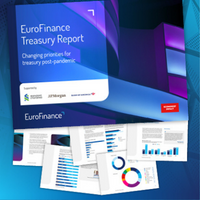 https://treasuryxl.com/wp-content/uploads/2021/11/eurofinance-200.png
200
200
treasuryXL
https://treasuryxl.com/wp-content/uploads/2018/07/treasuryXL-logo-300x56.png
treasuryXL2021-11-15 07:00:252021-11-15 08:53:28Changing priorities of corporate treasurers post-pandemic
https://treasuryxl.com/wp-content/uploads/2021/11/eurofinance-200.png
200
200
treasuryXL
https://treasuryxl.com/wp-content/uploads/2018/07/treasuryXL-logo-300x56.png
treasuryXL2021-11-15 07:00:252021-11-15 08:53:28Changing priorities of corporate treasurers post-pandemic https://treasuryxl.com/wp-content/uploads/2021/05/EuroFinance-2021_.jpg
200
200
treasuryXL
https://treasuryxl.com/wp-content/uploads/2018/07/treasuryXL-logo-300x56.png
treasuryXL2021-09-22 07:00:222021-08-11 15:04:41Your Last Call | International Treasury Management Virtual Week | September 27 – October 1
https://treasuryxl.com/wp-content/uploads/2021/05/EuroFinance-2021_.jpg
200
200
treasuryXL
https://treasuryxl.com/wp-content/uploads/2018/07/treasuryXL-logo-300x56.png
treasuryXL2021-09-22 07:00:222021-08-11 15:04:41Your Last Call | International Treasury Management Virtual Week | September 27 – October 1 https://treasuryxl.com/wp-content/uploads/2021/05/searching.png
200
200
treasuryXL
https://treasuryxl.com/wp-content/uploads/2018/07/treasuryXL-logo-300x56.png
treasuryXL2021-05-19 07:00:062021-05-17 09:57:28International Treasury Management Virtual Week | Celebrating 30 years as the world’s leading treasury event
https://treasuryxl.com/wp-content/uploads/2021/05/searching.png
200
200
treasuryXL
https://treasuryxl.com/wp-content/uploads/2018/07/treasuryXL-logo-300x56.png
treasuryXL2021-05-19 07:00:062021-05-17 09:57:28International Treasury Management Virtual Week | Celebrating 30 years as the world’s leading treasury event https://treasuryxl.com/wp-content/uploads/2021/05/Global-Treasury-.png
200
200
treasuryXL
https://treasuryxl.com/wp-content/uploads/2018/07/treasuryXL-logo-300x56.png
treasuryXL2021-05-12 07:00:062021-05-10 10:52:05Global Treasury Americas | Planning the post-pandemic Treasury
https://treasuryxl.com/wp-content/uploads/2021/05/Global-Treasury-.png
200
200
treasuryXL
https://treasuryxl.com/wp-content/uploads/2018/07/treasuryXL-logo-300x56.png
treasuryXL2021-05-12 07:00:062021-05-10 10:52:05Global Treasury Americas | Planning the post-pandemic Treasury https://treasuryxl.com/wp-content/uploads/2019/08/family-savings-201x181-1.png
181
201
treasuryXL
https://treasuryxl.com/wp-content/uploads/2018/07/treasuryXL-logo-300x56.png
treasuryXL2019-08-09 07:00:162020-01-21 15:43:33How to explain what treasury is to family and friends?
https://treasuryxl.com/wp-content/uploads/2019/08/family-savings-201x181-1.png
181
201
treasuryXL
https://treasuryxl.com/wp-content/uploads/2018/07/treasuryXL-logo-300x56.png
treasuryXL2019-08-09 07:00:162020-01-21 15:43:33How to explain what treasury is to family and friends? https://treasuryxl.com/wp-content/uploads/2019/06/Blockchain-2-202x181.png
181
202
treasuryXL
https://treasuryxl.com/wp-content/uploads/2018/07/treasuryXL-logo-300x56.png
treasuryXL2019-06-21 07:00:032020-01-21 15:44:41Blockchain: Game-changer for Small & Medium Enterprises?
https://treasuryxl.com/wp-content/uploads/2019/06/Blockchain-2-202x181.png
181
202
treasuryXL
https://treasuryxl.com/wp-content/uploads/2018/07/treasuryXL-logo-300x56.png
treasuryXL2019-06-21 07:00:032020-01-21 15:44:41Blockchain: Game-changer for Small & Medium Enterprises? https://treasuryxl.com/wp-content/uploads/2018/05/bank-200x200.png
200
200
treasuryXL
https://treasuryxl.com/wp-content/uploads/2018/07/treasuryXL-logo-300x56.png
treasuryXL2018-05-29 10:00:222020-07-02 15:10:19Kredietbeoordeling banken: trends en ontwikkelingen
https://treasuryxl.com/wp-content/uploads/2018/05/bank-200x200.png
200
200
treasuryXL
https://treasuryxl.com/wp-content/uploads/2018/07/treasuryXL-logo-300x56.png
treasuryXL2018-05-29 10:00:222020-07-02 15:10:19Kredietbeoordeling banken: trends en ontwikkelingen https://treasuryxl.com/wp-content/uploads/2018/03/IPOs-1.png
200
200
treasuryXL
https://treasuryxl.com/wp-content/uploads/2018/07/treasuryXL-logo-300x56.png
treasuryXL2018-03-13 09:08:522020-01-21 15:47:47IPOs – how to bring your company to the market
https://treasuryxl.com/wp-content/uploads/2018/03/IPOs-1.png
200
200
treasuryXL
https://treasuryxl.com/wp-content/uploads/2018/07/treasuryXL-logo-300x56.png
treasuryXL2018-03-13 09:08:522020-01-21 15:47:47IPOs – how to bring your company to the market https://treasuryxl.com/wp-content/uploads/2017/10/INR.png
200
200
treasuryXL
https://treasuryxl.com/wp-content/uploads/2018/07/treasuryXL-logo-300x56.png
treasuryXL2017-10-04 07:30:462020-01-21 15:49:50Indian Rupee remains very vulnerable
https://treasuryxl.com/wp-content/uploads/2017/10/INR.png
200
200
treasuryXL
https://treasuryxl.com/wp-content/uploads/2018/07/treasuryXL-logo-300x56.png
treasuryXL2017-10-04 07:30:462020-01-21 15:49:50Indian Rupee remains very vulnerable https://treasuryxl.com/wp-content/uploads/2017/05/Letter-of-Credit.jpg
200
200
treasuryXL
https://treasuryxl.com/wp-content/uploads/2018/07/treasuryXL-logo-300x56.png
treasuryXL2017-05-22 09:01:452020-07-02 16:29:30How to improve your working capital with Trade Finance instruments
https://treasuryxl.com/wp-content/uploads/2017/05/Letter-of-Credit.jpg
200
200
treasuryXL
https://treasuryxl.com/wp-content/uploads/2018/07/treasuryXL-logo-300x56.png
treasuryXL2017-05-22 09:01:452020-07-02 16:29:30How to improve your working capital with Trade Finance instruments https://treasuryxl.com/wp-content/uploads/2017/03/TS-afbeelding-1.jpg
200
200
treasuryXL
https://treasuryxl.com/wp-content/uploads/2018/07/treasuryXL-logo-300x56.png
treasuryXL2017-03-30 07:30:352020-07-02 16:13:02Basel III and the impact on cost of hedging
https://treasuryxl.com/wp-content/uploads/2017/03/TS-afbeelding-1.jpg
200
200
treasuryXL
https://treasuryxl.com/wp-content/uploads/2018/07/treasuryXL-logo-300x56.png
treasuryXL2017-03-30 07:30:352020-07-02 16:13:02Basel III and the impact on cost of hedging https://treasuryxl.com/wp-content/uploads/2016/11/corporateborrowing.jpg
200
200
treasuryXL
https://treasuryxl.com/wp-content/uploads/2018/07/treasuryXL-logo-300x56.png
treasuryXL2016-11-07 09:48:032020-07-02 14:46:40Experts talk about a DIY Approach to Corporate Borrowing
https://treasuryxl.com/wp-content/uploads/2016/11/corporateborrowing.jpg
200
200
treasuryXL
https://treasuryxl.com/wp-content/uploads/2018/07/treasuryXL-logo-300x56.png
treasuryXL2016-11-07 09:48:032020-07-02 14:46:40Experts talk about a DIY Approach to Corporate BorrowingNewsletter & eBook
Subscribe to our free weekly newsletter and receive your 41 pages ‘easy-to-read’ eBook, What is Treasury?

Great news! treasuryXL’s live session recordings are now available on Spotify