Three Basic Principles your Company needs to follow to prevent Payments Fraud

| 20-01-2021 | TIS |

Even the best tech solutions may not help you prevent and detect fraud, if your basic security procedures are insufficient. Based on our experience helping world leading brands set up proper controls against payments fraud, we believe that payment security is a much broader topic than just fraud. Therefore, payment fraud prevention or detection can only be a meaningful exercise when it is an integral part of a company’s overall payment security strategy.

 

Fraudsters come up with new ideas to scam companies all the time. As digitalization transforms the way payments are being made, the risk for cybercrime also increases. Recently, companies have become prey to business email compromise attacks (BEC): Someone will impersonate a high-level manager and tell an employee that due to extraordinary circumstances they need to make a payment right then and there. As the name suggests, this is usually done via email, but fraudsters have become more creative. In some instances, a voice imitation software was used to convincingly fake a manager’s voice on the phone. Because of nefarious scams like this, it is important to raise awareness for security and fraud prevention among your employees.


However, fraud is not always an external threat. Often, fraud happens within a company. For big companies it can be a struggle to keep track of all payments that are made across their worldwide subsidiaries – especially, if they are made manually. Unfortunately, fraudulent payments made by employees are usually detected afterwards – if they are detected at all.

It is therefore important to build a payments security strategy that works on all levels. But what does that mean? Where should a company begin?

A good start is to make sure that you have a system where each step of a payment process is visible and well-documented. Remember: Transparency and visibility are the enemies of fraud. You should always have control of all your payments. Standardization of payment processes and workflows is one step closer to better visibility and control. This way, fraud can be stopped before it has even happened. The following three basic principles can lay the groundwork:

1. Segregation of duties

This is a no-brainer. When responsibilities are shared, people can keep an eye on each other. Ideally, every critical payments’ process should involve multiple people or even multiple departments. Suspicious transactions are spotted at once.

2. A single payments’ gateway

Even if your payments are not fully centralized, it is very helpful to have a single payments’ gate. Combined with value-added services such as validation, multi-step authorization and routing, payments can be managed end-to-end. Additionally, centralized data visibility supports internal controls and audit compliance and the monitoring of transactions becomes much easier.

3. Appropriate designation of signature authority

Multi-level approval processes need clearly defined designation of signature authorities. Make sure that your workflows are sufficient and flexible enough to accommodate your company’s needs.

The TIS corporate payments platform has designed many enablers and features for its cloud-based platform to support payment security.  You can standardize and automate your payments processes, enforce segregation of duties, and manage signature authorities from wherever you are.
 

About TIS

TIS (Treasury Intelligence Solutions GmbH), founded in Walldorf, Germany in 2010, is a global leader in managing corporate payments. The Financial Times named TIS as one of “Europe’s Fastest Growing Companies” for 2019 and 2020. Offered as Software-as-a-Service (SaaS), the TIS solution is a comprehensive, highly-scalable, cloud platform for company-wide payments and cash management. The TIS solution has been successfully used for many years in both large and medium-sized companies, including Adecco Group, Hugo Boss, Fresenius, Fugro, Lanxess, OSRAM and QIAGEN. More than 25% of DAX companies are already TIS customers.




Making a Successful Transformation to SAP S/4HANA

19-01-2021 | treasuryXL | Kyriba |

SAP S/4HANA is SAP’s next-generation enterprise resource planning (ERP) system for large businesses. Many organizations that are currently using the SAP business suite are looking to upgrade to the new solution, often as part of a wider digital transformation.

As a digital core, S/4HANA is the link between the key business functions within an organization, including finance, marketing, manufacturing, procurement and sales. As well as connecting to the SAP ecosystem, it can connect to other cloud-based systems. It harnesses intelligent technologies such as artificial intelligence, machine learning and the internet of things to automate operations, and it connects data, devices and people in real-time.

S/4HANA enables digital transformation in several ways. It reduces an organization’s overall costs, drives business innovation, supports transformation projects and frees up the IT budget for investment in emerging technologies. Yet, while there is a strong business case in favor of S/4HANA, companies often struggle to identify which functionality they need from the platform, and when and how they should migrate.

Why Migrate Now?

Digital transformation is accelerating all the time and S/4HANA is “mission-critical” for digital transformation, explained Promantus’ director and head of Europe, Vikash Roy Chowdhury, during a recent webinar hosted by SAPinsider and sponsored by Kyriba. He added that as S/4HANA optimizes an organization’s digital transformation strategy, “it provides identity, visibility and innovation”.

There are many reasons why organizations should begin their migration to S/4HANA now:

  1. To take advantage of the digital economy and be quicker at getting new products and solutions to market.
     As digital transformation continues to gather pace, business processes will be further automated and new data flows will emerge, enabling organizations to gain better insights, improve their decision-making and foster business innovation.
  2. To avoid falling behind in the digital transformation journey.
    SAP will continue to provide standard support for its on-premise ERP system, ERP Central Component (ECC), until 2027. On the face of it, this commitment may seem a reason for organizations not to migrate to S/4HANA, but there are risks associated with continuing with a platform that has been earmarked for retirement. One risk is that organizations will get a poor return on investment in terms of their technological spend. Another is that they are overtaken by rivals that use S/4HANA’s state-of-the-art functionality to run their businesses more efficiently.
  3. To save money.
    The cost of implementing S/4HANA, and migrating to the platform, is likely to increase substantially over the next few years, as more and more businesses compete to secure resources that can support them with transformation.

The Challenges of an ERP Transformation

Migration to S/4HANA can present some significant challenges to businesses. Typically, the biggest challenge is resolving data issues. Other challenges include a lack of qualified resources, integration of legacy systems, accommodation of custom coding, and understanding the impact of S/4HANA on processes, especially where functionality has changed.

And treasuries have specific requirements in relation to an S/4HANA migration. They want bank connectivity and the integration of their global banks inside the S/4HANA infrastructure. They also want to see accelerated time-to-value (the rate at which the business benefits from the migration) so that they can free up resources from routine work to focus on more strategic activities, such as helping their organization to navigate the Covid-19 pandemic.

Unfortunately, bank connectivity can be one of the most difficult aspects of migration to S/4HANA, or any other ERP for that matter. It can take months – or even years – to achieve. “A lot of times… what keeps these ERP projects from going live is still waiting for the banks,” says Steven Otwell, director of payments at Kyriba.

For this reason, Kyriba is strategically collaborating with Promantus to support migration to S/4HANA from a treasury perspective.

Support for Treasuries

Fortunately, automation can ease the migration process. Promantus has developed a comprehensive S/4HANA transformation tool called ProAcc, which quickly and seamlessly automates all the migration phases, including assessment, pre-conversion, post-conversion and validation.

ProAcc provides a detailed assessment report that includes tailored recommendations for optimization and alternative scenarios, based on the current state. It also offers a single-view dashboard that gives full visibility around the migration process, from discovery to go-live. Furthermore, it acts as a single repository for the sequence of automated activities that take place, including prediction, monitoring, data snapshots, data integrity, configuration checks, and reconciliation.

The speed of migration will depend on an organization’s business and technological requirements, current SAP environment, and data quality and quantity, among other considerations.

Organizations that use ProAcc to support their S/4HANA migration benefit from:

  • Swift, secure and cost-effective implementation
  • Minimal interruptions to critical business processes
  • A tailor-made approach
  • Sequentially automated processes
  • Comprehensive support

“At Promantus and Kyriba, our entire focus is to bring the highest value to corporations in the shortest possible time, and at the lowest cost,” said Johnny Daugaard, vice president of client engagement at Promantus.

Kyriba’s service-based solution includes:

  • Connectivity as a Service.
    Bolt-on bank connectivity for SAP enables organizations to connect with thousands of banks and achieve time savings in excess of 80%. Kyriba has more than 550 active, configured and tested bank solutions for plug and play ERP connectivity. It also monitors bank connection 24/7 on behalf of its clients, with connection managed in different ways including FTP, host-to-host, regional protocols and SWIFT. Kyriba is the largest SWIFT for Corporates service bureau globally, managing more than 20% of SWIFT’s corporate business. As Kyriba’s service is fully outsourced, organizations do not need to employ internal resources to support bank connectivity, which reduces their overheads.
  • Customized Payment Fraud Management.
    This solution uses detection rules, coupled with machine learning, to detect anomalies in an organization’s flow of data from its SAP system to its banks. These anomalies could be possible payment frauds.
  • Payment Format Library.
    Kyriba’s library contains over 45,000 pre-developed and bank-tested payment format scenarios, which are shared across all Kyriba clients. This saves organizations from having to develop their own payment formats for their S/4HANA platform, which can be complicated, expensive and time-consuming – especially when an organization works with a large number of banks. Kyriba simply takes a single payment file from the organization’s ERP and interprets it. It then transforms the file, based on the approved format requirements of the individual banks.
  • Global bank monitoring.
    All incoming and outcoming bank files are monitored, relieving the IT team of the burden of having to work out whether files have been processed. Effectively, an organization’s banking support is fully outsourced to Kyriba.

Conclusion 

Today, organizations are having to react with agility to the challenges posed by Covid-19. Digital transformation is key both to their present survival and their future success – and for many large organizations, this transformation will be underpinned by migration to S/4HANA. Treasury and IT should be closely involved with this migration and carefully consider solutions that enable them to meet their objectives without consuming valuable resources.


The future of trading: The rise of data analytics in trading

11-01-2021 | treasuryXL | Refinitiv |


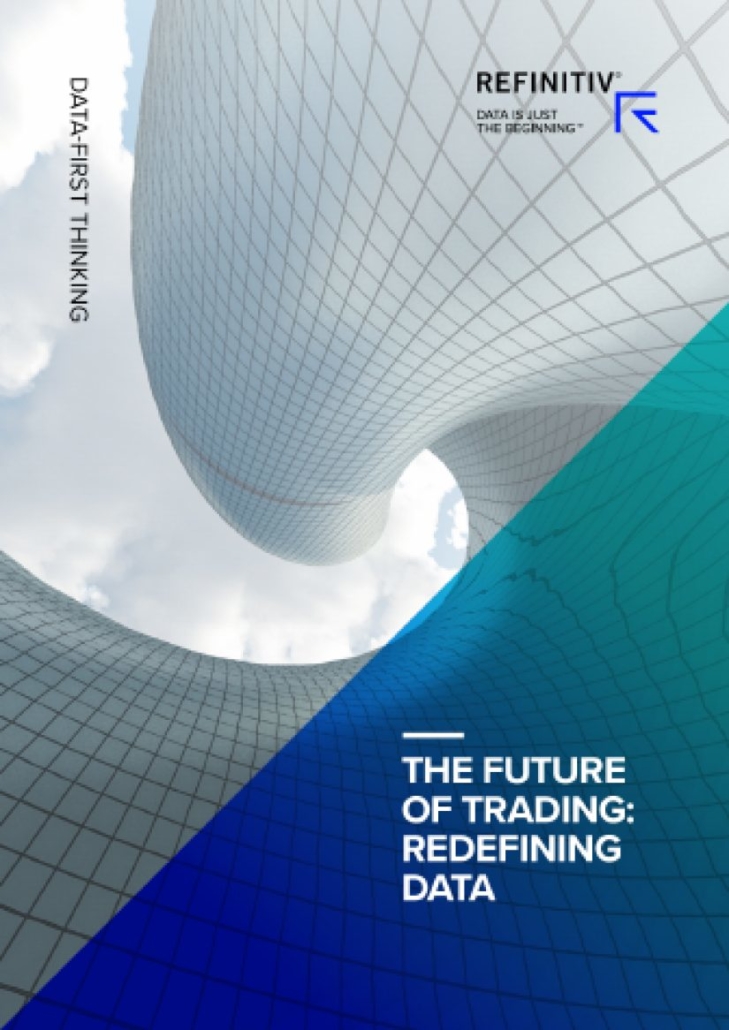
Redefining data: What is your strategy?

With more information available than ever, traders must find the right data, make sense of it, and ultimately take action.


With more information available than ever, traders must find the right data, make sense of it, and ultimately take action. Unstructured information, the explosion of alternative data, and the need for trusted sources makes an already daunting task even more complex.


In our second report with Greenwich Associates on the trading desk of the future we explore the data that will keep markets moving over the next 3-5 years. With an overwhelming 85% of those surveyed planning to increase spending on data management, the value of financial data is clearly increasing.

Alternative data tops the list of most important data types, but is only useful if traders trust the source. When it comes to issues of scale and trust, 41% of those surveyed will rely on large financial markets data aggregators. Finally, analytics to interpret existing, new and unstructured data are becoming as critical as finding the data itself.


The bottom line? Everyone needs a data strategy.


Download & Acces full report


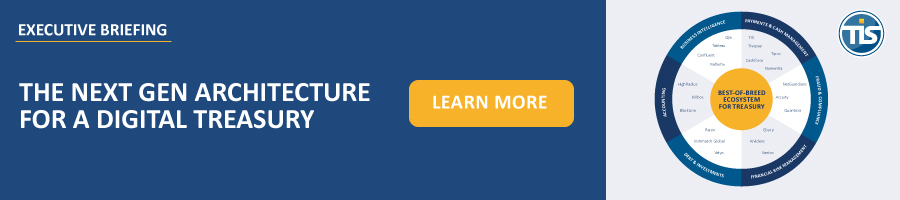
Executive Briefing: The Next Gen Architecture for a Digital Treasury

07-01-2021 | TIS |


Read TIS’ new executive briefing The Next Gen Architecture for a Digital Treasury
and find out how to digitalize treasury with a best-of-breed ecosystem!


Leverage the expertise of multiple specialists with seamless API integration and cloud technology. Find out more about:

  1. Advantages of specialist vendors compared to All-in-One solutions for treasury
  2. How seamless data flow through API integration can deliver better user experience and faciliate strategic business decisions
  3. How to set up a best-of-breed solution that is tailored to your company’s treasury needs and future growth

About TIS

TIS (Treasury Intelligence Solutions GmbH), founded in Walldorf, Germany in 2010, is a global leader in managing corporate payments. The Financial Times named TIS as one of “Europe’s Fastest Growing Companies” for 2019 and 2020. Offered as Software-as-a-Service (SaaS), the TIS solution is a comprehensive, highly-scalable, cloud platform for company-wide payments and cash management. The TIS solution has been successfully used for many years in both large and medium-sized companies, including Adecco Group, Hugo Boss, Fresenius, Fugro, Lanxess, OSRAM and QIAGEN. More than 25% of DAX companies are already TIS customers.
www.tis.biz

Webinar: Trends for Treasury and Cash Management 2021

| 04-01-2021 | treasuryXL | Nomentia |

Treasury & Cash Management Trends 2021

A new year is just ahead of us. And what better way to start the year than to look at trends that will shape our business in the coming months.

Some of the trends derive from the global pandemic that is still showing its effect on the global economy and businesses around the world but other trends have been long brewing or just got further amplified.

Date, Time and Registration


Date:
Thursday, January 14, 2021

Start: 13:00 CET / 14:00 EET

Duration: 45 minutes

Register: click here

Some of the topics Nomentia will cover


  • Centralization, in 2021 for real? A joint survey we did with GTNews showed that centralization is often stifled by internal roadblocks such as prioritizing the topic internally across functions.
  • This relates to the second trend for 2021, which is the role Treasury functions will take in bridging internal silos.
  • On top of this also payment fraud is a topic that has only further increased during the pandemic. Our survey shows that almost 50% of respondents consider fraud as a big challenge.
  • Lastly we will take a look at the death of monolithic platforms. In 2021 we will see the trend toward best-of-breed platforms continue.

Who should attend:


Cash Managers, Treasurers, and Finance leaders working in international companies who are interested in understanding the landscape they are operating in and want to stay up-to-date with developments.

Meet the speakers

jukka_round

Jukka Sallinen

Deputy CEO, Nomentia

Jukka is a cash management domain expert with a strong hands-on background from international and complex payment factory and SWIFT projects. Previously, Jukka has been working in various R&D roles, focusing on bank and ERP integrations and security topics.


David Kelin

David Kelin

Owner, DNA Treasury Ltd

David Kelin possesses invaluable commercial experience gained from over 35 years working in leading organizations in the areas of liquidity, treasury, and cash management. He has a keen interest in treasury technology and has written many articles on the topic. David owns and manages DNA Treasury Ltd where he provides advice to corporates and banks on treasury and liquidity. He has worked with 100’s of companies. He also runs a treasury training company which has developed courses and trained over 1,000 treasury professionals over the years.


About Nomentia

Nomentia is a Nordic powerhouse for global cash management. We believe in a world in which businesses can make the right decisions no matter how unpredictable the times are. Our SaaS-based platform offers solutions for cash forecasting and visibility, global payments with bank connectivity, reconciliation, in-house banking, guarantees, and FX dealing. We serve 2,300+ clients in over 100 countries processing more than 200 billion euros annually. Cash is king!

Top 5 most read articles at treasuryXL.com and LinkedIn of 2020

31-12-2020 | treasuryXL | Kendra Keydeniers

The last day of 2020 is here. The whole world experienced a ‘year not to forget’. I can imagine that when you popped the champagne last year you had other thoughts and plans in mind for 2020.

To make sure you don’t miss out on the pieces that made the most impact this year, we sifted through the data to uncover the articles our readers loved most in 2020 on our website and LinkedIn. (Treasury Topic ‘What is’ articles excluded).

Top 5 treasuryXL website articles of 2020

  1. Corporate Governance and Treasury | Embrace the Corporate Treasury Policy

    by Francois De Witte

  2. Top 5 most common pain points in Treasury

    by Michael Ringeling

  3. Corporates: Caveat IBOR!

    by Daniel Pluta, Enigma Consulting

  4. Exclusive interview with FX specialist Arnoud Doornbos about FX Risk Management

    by treasuryXL, Arnoud Doornbos

  5. How to simplify Procurement and Finance in the Supply Chain

    by Wim Kok

Top 5 treasuryXL LinkedIn posts of 2020

  1. Nomentia (former OpusCapita) makes Liquidity Management free for all customers!

    by Nomentia

  2. What is the difference between Treasury and Accounting?

    by TreasuryXL

  3. The missing part of a Treasury Job Description

    by Aastha Tomar

  4. An introduction to Forwards, Futures and Options Part 1

    by Aastha Tomar

  5. Partner Interview Series | The deeper dive with TIS (Treasury Intelligence Solutions)

    by treasuryXL, TIS

Within two weeks we will post a full recap of 2020 with an overview of the partners and treasury experts that have joined us, together with some interesting treasuryXL facts!

Thank you for being part of the treasuryXL community. Now it’s time to pop the champagne! Let 2021 begin…


Kendra Keydeniers

Director, Community & Partners treasuryXL

Pinpointing oil and gas sector Risks

14-12-2020 | treasuryXL | Refinitiv |

The oil and gas sector is under greater regulatory scrutiny, with record fines for financial crime-related violations. How is robust and thorough risk screening helping companies across the industry to pinpoint and protect against a range of potential risks?
  1. Screening and related due diligence tools are essential in the oil and gas sector for pinpointing and exposing potential risks early in the game.
  2. In the highly regulated upstream industry of exploration and drilling, risks include sanctions violations, bribery, corruption, and environmental crime.
  3. Refinitiv’s World-Check Risk Intelligence database comprises over four million structured records, enabling robust and accurate screening of both entities and individuals.

The oil and gas sector has been on the receiving end of some of the largest regulatory fines on record in recent years. Our Expert Talk, Drilling down: Oil and gas supply chain risk, written by Refinitiv’s Renata Galvao, takes a look at the sector and its unique challenges.

One of the highest profile was the US$853.2 million levied in 2018 against Brazilian state oil company, Petróleo Brasileiro SA, under the U.S. Foreign Corrupt Practices Act in the so-called Car Wash bribery scandal. While figures such as these are eye-wateringly high, the reputational fallout of any association with financial or environmental crime can be far more devastating. It is therefore imperative that organizations operating in the oil and gas sector take adequate measures to screen for, and mitigate, the wide range of risks to which they may be exposed within often vast, global supply chains.

Oil and gas sector risks

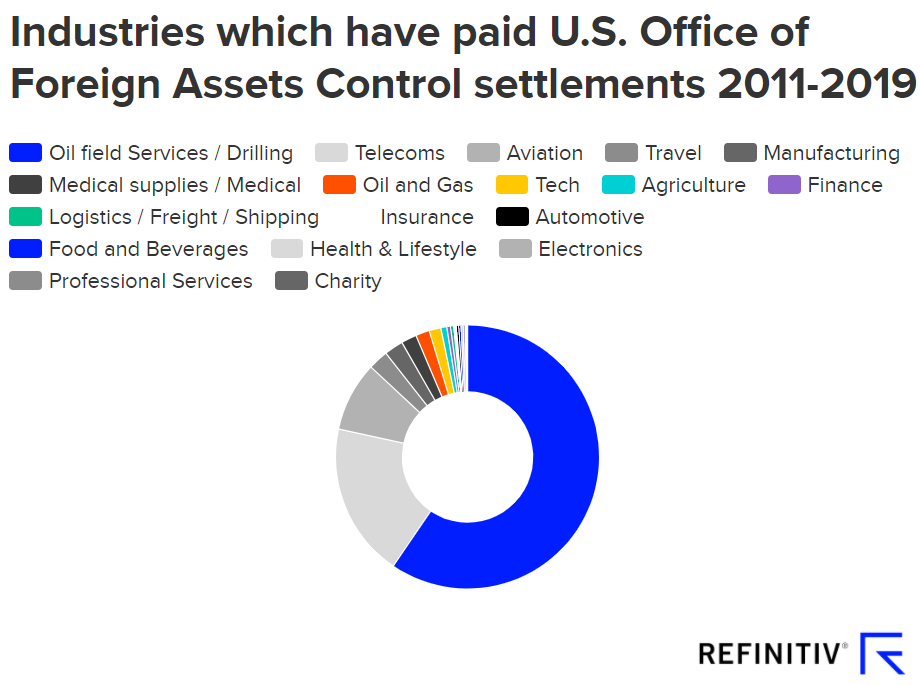
Organizations in the oil and gas sector — whether they are involved in upstream, midstream or downstream activities — face a range of risks and challenges. The highly regulated upstream industry — incorporating exploration and drilling — paid the largest share of all settlements for breaching Office of Foreign Assets Control sanctions in the period 2011-2019. Many oil-rich territories are situated in jurisdictions characterized by political uncertainty, and consequently organizations must contend with high levels of risk relating to bribery and corruption.  There is also exposure to a number of hidden risks, such as those related to terrorism financing and engagement with armed rebel groups.

The midstream industry — including transportation, storage and wholesale marketing — also faces a range of risks, including the financial, regulatory and reputational fallout associated with accidents such as spills, explosions, and leaks. Environmental regulations governing such issues are stringent, with penalties including both fines and imprisonment where criminal charges are brought against negligent individuals. Moreover, midstream organizations using sea transportation must be able to verify the beneficial ownership of all vessels used, as any links to criminal activity such as smuggling at sea, the illicit transportation of contraband and narcotics, or human trafficking must be identified.

The downstream industry — refining, processing, marketing and distribution — in turn is exposed to significant third-party risk from both the upstream and midstream industries. Oil theft is becoming a growing concern, and therefore understanding the source of crude and the legitimacy of the product are fundamental areas of focus for this sector. Downstream companies are also subject to growing environmental controls, with ever-more stringent national regulations monitoring and restricting the levels of pollution that refineries are allowed to emit.

Mitigating risk in global supply chains

Given this vast range of potential risks, screening and related due diligence are widely regarded as key tools to pinpoint and expose potential risk early in the game.

Refinitiv’s market-leading World-Check Risk Intelligence database can provide invaluable support to compliance teams by enabling them to conduct robust and accurate screening of both entities and individuals. World-Check One, our essential screening platform, further offers a range of specific opt-in tools, including:

  • Media Check to enable targeted searching for negative news and web articles, both current and historical, relating to individuals and entities.
  • UBO Check, which allows users to identify the ultimate beneficial owners of entities and then screen them against World-Check Risk Intelligence on a single platform.
  • Vessel Check, which reveals potential risk related to sanctioned or embargoed vessels and sea ports.

Additionally, where heightened risk is suspected, our Enhanced Due Diligence reports deliver targeted insights into potential business relationships, enabling companies to form a holistic view of potential risk before entering a new market or beginning a new relationship.

By investing in the right screening tools and technology, companies in the oil and gas sector can pinpoint, expose and mitigate risk in global supply chains, and in so doing protect themselves from the ever-growing threat of severe financial, regulatory and reputational fallout that has dogged the sector in the recent past.


Press Release: TIS among growth champions in Germany

| 08-12-2020 | TIS |

The cloud-based corporate payments expert establishes itself on the ranking by FOCUS-BUSINESS and Statista for the fourth time in a row.

Walldorf, December 8, 2020. FOCUS-BUSINESS has recently announced growth champions for the sixth time. For the fourth time in a row, TIS (Treasury Intelligence Solutions GmbH) was in the published ranking among the 500 fastest-growing German companies. Its above-average growth in turnover and staff and its innovative business model were important factors for the ranking.

As in previous years, Statista, the Hamburg-based statistics portal, selected a list of 12,000 German companies from all sectors with a particularly strong growth in sales or workforce in recent years. In April, there was a call for participants and on October 13, FOCUS-BUSINESS Growth Champions published the results. TIS ranking again among Germany’s top 500 fastest-growing companies shows that for mid-sized companies to large corporates, a streamlined and secure global payments strategy is becoming a must. From a technology standpoint, TIS’ cloud-based platform is the leading solution for corporate payments. Looking into the future, TIS will further accelerate its business growth in Europe and in the United States.

“With this year soon coming to an end, I must say that 2020 has been characterized by extraordinary challenges,” says Joerg Wiemer, co-founder and Chief Strategy Officer at TIS. “The concept of ‘Working from Home’ has highlighted the importance of digitalization. The current situation has made the decision makers in companies realize that cloud-based solutions are not only indispensable for business-critical processes such as payments, but the automation and standardization enabled by such solutions also boost efficiency and enhance security for these processes.”

About TIS

TIS (Treasury Intelligence Solutions GmbH), founded in Walldorf, Germany in 2010, is a global leader in managing corporate payments. The Financial Times named TIS as one of “Europe’s Fastest Growing Companies” for 2019 and 2020. Offered as Software-as-a-Service (SaaS), the TIS solution is a comprehensive, highly-scalable, cloud platform for company-wide payments and cash management. The TIS solution has been successfully used for many years in both large and medium-sized companies, including Adecco Group, Hugo Boss, Fresenius, Fugro, Lanxess, OSRAM and QIAGEN. More than 25% of DAX companies are already TIS customers.

www.tis.biz


Press Contact:

Treasury Intelligence Solutions GmbH

Liang Fang

Altrottstraße 31

69190 Walldorf

Germany


If you want to know more about TIS, visit www.tis.biz

Read the complete press release also here


How does the FATF help fight financial crime?

01-12-2020 | treasuryXL | Refinitiv |

The Financial Action Task Force (FATF) plays a crucial role in the global fight against crime, corruption and terrorism through its Mutual Evaluation assessment. How has the FATF evolved since its birth 31 years ago, and what role does it play in anti-money laundering (AML) and countering the financing of terrorism (CFT)?

  1. The FATF is an intergovernmental body that oversees global efforts to combat money laundering and the financing of terrorism.
  2. To become part of the FATF group, a country must undergo a ‘Mutual Peer Review’ to determine its levels of compliance with FATF’s Recommendations.
  3. The FATF’s methodology change, introducing the Effectiveness Assessment, is yielding more accurate results of a jurisdiction’s levels of compliance with its AML/CFT global standard.

The FATF is an inter-governmental body that was established in 1989 by the G7 nations to combat money laundering. For the first 12 years, of its existence it was a little-known organization. However, it came to prominence after 9/11 when its mandate was expanded to include additional Recommendations to combat the financing of terrorism and the financing of the proliferation of weapons of mass destruction. Since then, the FATF mandate and Recommendations have been endorsed by different UN resolutions, and it has been transformed to adapt to different emerging threats. In 2008, after the global financial crisis, FATF’s role as an international standard policy-making body in AML and CFT was expanded by the G20. It was given the ‘soft power’ to generate the necessary political will to bring about legislative and regulatory reforms in countries.

The FATF Mutual Peer Review

Countries wishing to become members of the FATF group must commit to a ‘Mutual Peer Review’ system. This will determine the country’s levels of deployment and compliance with the FATF Recommendations, which have been set as the international AML/CFT standard. The FATF oversees these reviews in conjunction with different international members and observers such as the IMF, the World Bank, the OECD, and the European Commission.                                                                                       
In addition to the information received from the assessment team performing the review, the FATF Mutual Evaluation’s Effectiveness Assessment also considers information from the FATF team that visits the country being evaluated. The Mutual Evaluation team comprises highly trained experts drawn from FATF member countries and international bodies.


Recommendations focus on effectiveness

Until 2013, the results of the FATF review were largely focused on the technical implementation of the Recommendations into the local legislations. However, because of the high levels of money laundering (ML) and financing of terrorism (FT) globally, the FATF decided to enhance its methodology to focus more on effectiveness rather than just technical compliance. This revised methodology helped to produce the expected tangible results in the fight against AML/CFT. It shed light on many countries that had previously been evaluated, but who under the new methodology began to show serious weaknesses in the fight against ML and FT. This resulted in the number of countries and jurisdictions on the FATF Grey List — those who were placed under increased monitoring — to start growing.

The FATF Mutual Evaluation employs peer pressure from other countries, as well as bodies such as the IMF and the World Bank, which impels the assessed countries to act. Negative mutual evaluation outcomes not only seriously damage the reputation of the assessed countries and embarrass its governments, but might also generate replicated systemic risks of coercion by other international institutions such as the European Commission. And the new methodology is working. In recent years, the Effectiveness Assessment is yielding more accurate results of a jurisdiction’s levels of compliance with FATF’s AML/CFT global standard. Many jurisdictions are now finally realizing the coercive power of the Mutual Assessment.

New evaluation methodology

The fourth round of Mutual Evaluations from FATF continued the shift towards concentrating on how effectively regulations are deployed rather than mainly focusing on technical compliance and whether country laws and regulations are in place in accordance with the FATF Recommendations.

This can be very challenging for a number of countries in many sectors, including some that have previously been assessed to be complying with the standards before the introduction of this new evaluation methodology.

The pressure to ensure that legislation was changed and that industry sectors complied with the Recommendations was achieved by targeting the industry sectors that posed the highest AML/CFT risk. At least this was the case in the Middle East and Africa. The early years concentrated on the banking and financial sectors, including the capital markets. This focus was later broadened to non-banking remittances and payments organizations and money exchanges. This was followed by the insurance sector and so on.

Non-financial sectors under the spotlight

The last few years has seen Mutual Evaluation reports focus on the designated non-financial business and professions (DNFBPs) sectors — real estate, lawyers, accountants, gold and precious stone dealers, for example — that had been previously overlooked area by past evaluations. For example, the EU Fifth Anti-Money Laundering Directive, which came into effect in January 2020, further strengthened its AML/CFT legislation to fall in line with the FATF, when it included a number of new sectors.

The non-financial sector often has the misconception that AML/CFT regulations are solely for the banking and financial sectors. A key shortcoming identified by FATF across many jurisdictions in emerging markets is that DNFBPs are falling short of FATF expectations. Recent evaluation reports from several countries show that DNFBPs have less comprehensive, and sometimes limited or no understanding, of AML/CFT regulations and the risks that they are facing.

However, the new approach of measuring effectiveness rather than technical compliance might keep many countries’ institutions and companies to consider: “Are our sanctions and transactions screening just a checklist process, or do they show the real effectiveness of our AML/CFT risk process as defined by FATF?”

Nomentia Webinar: Building the Bridge Between Treasury & Finance: Communication, Collaboration, Technology

| 18-11-2020 | treasuryXL | OpusCapita |

Finance & Treasury leaders are being challenged to become more engaged in driving results across the enterprise. This requires alignment across the Office of the CFO before these leaders can have success in impacting performance in HR, Operations, Marketing and Sales. How can treasury & finance leaders identify and mitigate barriers to effective communication and collaboration to maximize the value delivered by the Office of the CFO?

Join us to discover how to earn trust within and across departmental lines, and up and down the org chart at your company.

We will empower you to:

? Identify the skills you possess and/or need to develop to build deeper mutually beneficial relationships within and across departmental lines.

?Leverage technology to communicate with impact in any business environment.

?Raise your IQ relative to how and why treasury & finance work at your company.

?Define opportunities to impact the performance of your colleagues in treasury & finance at your company.

REGISTER NOW

About Nomentia

Nomentia is a Nordic powerhouse for global cash management. We believe in a world in which businesses can make the right decisions no matter how unpredictable the times are. Our SaaS-based platform offers solutions for cash forecasting and visibility, global payments with bank connectivity, reconciliation, in-house banking, guarantees, and FX dealing. We serve 2,300+ clients in over 100 countries processing more than 200 billion euros annually. Cash is king!