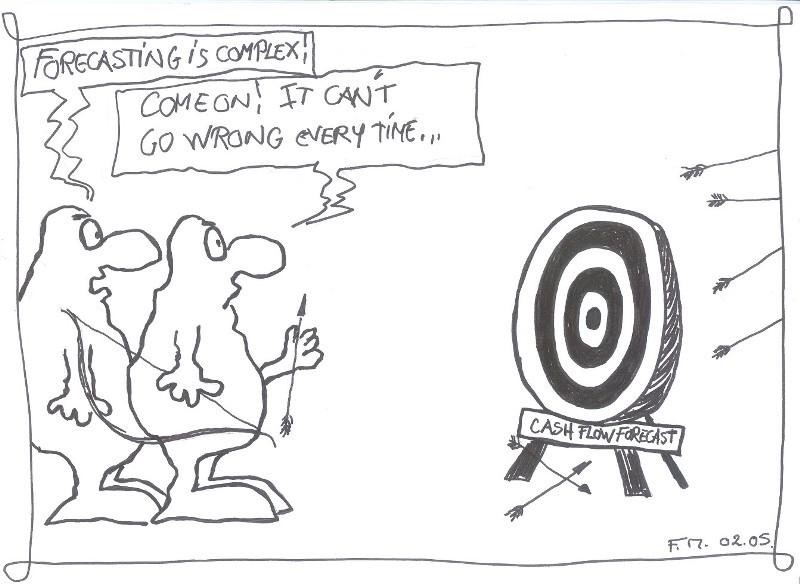
For the past 10 years we have lived with an overabundance of liquidity. In most people’s minds, abundant liquidity means constant availability. But the subprime crisis, the European debt crisis and now the COVID pandemic have shown the opposite to be true.
In a world of extreme volatility, liquidity flows can be interrupted overnight. And for financial managers therein lies the paradox. Despite its overabundance, it has never been more crucial to secure, diversify, monitor and optimise liquidity.
Prepare for the unthinkable.
In this environment, liquidity is obviously strategic, but above all it must be seen as a volatile and fragile resource, especially vulnerable to market disruptions whose occurrence and scope are unforeseeable by definition as well as by their very nature. The health crisis showed us that nothing is safe from a complete, abrupt halt, not even cash flow from operations, across every sector.
CFOs must now prepare their companies for the unthinkable! They will need to spend more and more time and energy to activate every possible source of liquidity by monitoring prices, availability, term, currencies and security packages for each of these sources. They will do this with a constant focus on optimisation, and above all must be ready to make snap decisions about sources that have run dry. It’s a massive undertaking. In a world of extreme volatility, Active Liquidity Management will make tomorrow’s leaders stand out from the crowd.
https://treasuryxl.com/wp-content/uploads/2021/03/Let-me-down.png544939treasuryXLhttps://treasuryxl.com/wp-content/uploads/2018/07/treasuryXL-logo-300x56.pngtreasuryXL2021-03-15 07:00:512022-12-29 13:31:23How to anticipate Liquidity risks to secure the Cash Flow
In this webinar Kyriba and Deloitte will discuss some of the challenges and time constraints faced in bank connectivity and outline how Kyriba’s Connectivity-As-A-Service can accelerate global banking connectivity projects by more than 80%.
The agenda will follow:
The Connectivity-as-a-Service challenges
The Kyriba Connectivity Network
A case study on implementation with Deloitte
REGISTER NOW to understand more of the issues related to cost-control, deployment, security and bank connectivity when embarking on large-scale ERP cloud migration projects.
https://treasuryxl.com/wp-content/uploads/2021/02/kw.png478469treasuryXLhttps://treasuryxl.com/wp-content/uploads/2018/07/treasuryXL-logo-300x56.pngtreasuryXL2021-02-25 15:47:542021-02-25 15:47:54Kyriba Webinar: How Connectivity-as-a-Service Can Help In ERP Migration
Last year was a good example to remind organizations that cash flow forecasting is important, although, very little were prepared for the unprecedented, sharp and abrupt changes in turnover and cash flow due to the Covid-19 pandemic.
CFO’s have been asking:
Where is the cash?
Are we prepared for all the contingencies?
Do we know how our cash flow will hold up for the rest of the year?
Will we meet the covenants set in our credit facilities?
In many treasuries, cash flow forecasting is a well-established basic core process, but from my experience it is often a “struggle” where the results do not always outweigh the efforts. Why is this process so difficult and more importantly: how can you make the cash flow forecast process a success?
Here are 7 steps that will help your organization:
1. Set your purpose and the horizon
Allow yourself to describe what the purpose of the cash flow forecast is as this will define also the horizon and the data that you need to build your forecast. The purpose will also be the guiding framework what level of tolerances you are prepared to accept.
Setting up a cash flow forecasting for quarterly reporting of covenants or to prepare for short term liquidity shortfalls means a different horizon and sometimes also a different set of data. Horizons can vary as much from the ‘standard’ 13-weeks to monthly or quarterly to even years. With a longer horizon, the level of accuracy will diminish.
2. Identify the cash flow drivers
This is the most essential and valuable step in the process as the right identification will largely determine the success of your forecasting.
Where and when do we receive cash inflows and what will be our expected cash outflows?”
From what sources can we derive the data, how predictable are they, in what currencies?
And in which entities or what bank accounts will these cash flows occur?
Prepare a list of all (forecasted) cash in- and outflows and label them with priority, currency, predictability and identify in what entity and from what source you will be able to find actual and forecasted data.
3. Collect systematic and consistent data from all cash flow drivers
As you have, in the previous step, identified what will drive your cash flow, then we reach the really difficult part and that is obtaining reliable data on actuals and forecasts on these drivers.
You often hear : “I do not know when our clients will pay our invoices” and “If we win the tender then contract turnover will be X, however timing of the tender and outcome is unsure” and “Forecasted volumes of our product, I can give you but prices will be determined at the sale on spot basis”.
Don’t confuse sales and profit with cash. Most organizations seem very well equipped and organized to close each accounting period their books and forecast somehow the main profit and loss items going forward, however translating that into cash items, in the right currency with the right timing is not always easy.
My experience is that the process of obtaining these data gives you great insights on how cash driven the company really is and what role cash is playing in the KPI and rewards throughout the organization. You will often find that cash is, except for the treasury responsible, not on top of each minds.
Find also the right balance in detail of the data you want to forecast, as you can define a lot of cash flow categories, but that also means that you will need to label your actuals for all these categories. Manual labelling is often undoable (unless you have unlimited resources) and automating this labelling with tools is often easier said than done.
4. Focus on cash balance visibility
Your starting point for your cash flow forecast is the cash balance you have today and without adequate cash balance visibility on your today’s cash balance you will not be able to project future cash balances. Cash visibility means that you have access to – real time- information of all cash balances in your organization. When you have 1 or 2 banks, the Electronic Banking tools of these 1 or 2 banks will provide you all the information that you need. However, often certain bank accounts are managed on a decentralized level and information on these accounts are provided only at the close of the reporting period. Multi-banking tools that function as an information overlay can help you to overcome these kind of situations but you can also set up you own cash balance reporting consolidation.
5. Include analysis for variances
Analyzing the actuals versus your forecasts gives you a better insight how well the predictions have been and which data were reliable in the previous forecasting period and which were not. The sources that provided these data need to receive feedback on the variances from you to understand what was causing this difference so that their data can be improved going forward. Otherwise, it is only your problem. Sometimes a sort of “carrot and stick” feedback can be used to strengthen the reliability of the data collecting and create co-ownership for the process.
6. Prepare for scenarios
For treasurers, being prepared for the unknown is part of their DNA. So setting up scenario’s next to a base case in the cash flow forecast is essential to understand the headroom and even more important, what are the main drivers affecting the headroom. Because one thing is certain: Covid-19 will not be the last crisis they we will face.
7. Let systems work for you
There is no one-size-fits-all solution. Each process and tool must be tailored to the needs and objectives of each specific business. Many organizations work with Excel sheets because of the flexibility, it’s easy to use, the low costs and because it can manage massive amounts of data. Basically there is no problem with that, except when you would like to follow the steps, I described above, in more complex and multi-currency environment, then Excel will fall short to “let systems work for you”.
Nowadays there are multiple solutions (in various price ranges) for tools that can support your cash flow forecasting process from dedicated cash flow forecasting tools to more generic treasury systems and also payment hubs and banks provide (parts of) the solutions to support the cash flow forecasting process. Sometimes the tools include also artificial intelligence features that use actual company data to determine and support the forecasts. But often the tool is just a blank template sheet that needs to be filled with the actual and forecasted data. Then the added value is limited as “garbage in” means often also “garbage out” .
Conclusion
My advice is to revisit the cash flow forecast process in your own organization with the above mentioned 7 steps. If not ideal, there might be a strong business case to change (parts) of the process to be better prepared for the future.
https://treasuryxl.com/wp-content/uploads/2021/02/cASH-FLSOFJHD.png200200treasuryXLhttps://treasuryxl.com/wp-content/uploads/2018/07/treasuryXL-logo-300x56.pngtreasuryXL2021-02-15 07:00:322022-12-29 14:20:117 steps on how to make Cash Flow forecast a success
Global corporate payments technology is changing at a rapid pace. So rapidly, in fact, that internal IT-managed platforms are not able to keep up and the challenges that ensue are left for the IT team to sort out.
These challenges include:
Insufficient Controls It is up to IT to protect assets from digitized fraud capabilities that are able to penetrate the standard four-eye principal and, in order to do so, IT will need to enhance controls.
Custom Banking Formats Each bank has its own specific requirements that, even within the same bank, may differ depending on payment type and bank branch location. The number of custom formats needed can make it difficult for IT to meet all global banking format customization requirements.
Infrastructure Costs The cost of building and maintaining payment connectivity infrastructure, especially given the customization requirements, can easily exceed what a company anticipated.
Delayed Project Established bank connections will need to be rebuilt as ERPs migrate to the cloud, which can greatly delay the project. And, rebuilding the connection is often made more difficult as employees leave and retire, taking with them the tribal knowledge of how the original architecture was deployed.
Let’s evaluate some of these in the context of the return on investment (ROI) your organisation would achieve by deploying a connectivity as a service global payment hub.
Enhancing Controls
The most common vulnerabilities to fraud include technical, process and simple human mistakes – and, worst case scenario, internal collusion. All of these become significantly more vulnerable when corporations rely on internally built systems and processes that depend on human control workflows with multiple checkpoints.
Today’s fraudsters are more sophisticated, able to easily penetrate corporate infrastructure and pass internal human dependent control workflows. They utilize social networks to penetrate organisations with phishing schemes that include email, as well as deep fake voice simulation software via phone that can sound exactly like your CFO or CEO requesting payment execution.
The best payment hub solution will aid the human dependent controls with machine learning technology, bringing to their attention anomalies that they must further investigate. The solution must be able to keep up with technical assets at the fraudster’s disposal – for example, based on history alerts related to banking change and volume as well as OFAC exception. Payment hubs with machine learning capabilities have demonstrated the ability to reduce corporate fraud exposure by at least 70%.
Payment Connectivity Complexities
Global banking format customization requirements are extremely complex with very limited, if any, corporate tribal knowledge related to the technical architecture and deployment. Each bank has their own specific requirements. In many cases, there may even be differences of formats within the same bank depending on branch locations. The cost of building and maintaining payment connectivity infrastructure given the customization requirements can be in the millions of dollars.
Payment hubs eliminate this cost in several ways:
IT no longer has to manage bank connectivity with outsourced development and maintenance of bank payment formats to the hub solution. Developing this internally can take up to 9 months for each bank at a cost of up to $150K+ per bank, not including any ERP consultant fees. A payment hub solution will be able to deploy connectivity within weeks and provide 24/7/365 maintenance and support at a fraction of the cost.
Multiple systems that previously sent payments to banks can be consolidated down to one. IT will only have to manage one format which is to the payment hub.
Treasury can optimise banking services and remove duplication caused by the multitude of systems (including treasury and ERPs) that connected to the banks. This will standardise and enhance controls and auditability of internal workflows.
ERP Cloud Transformation
If you are considering an ERP cloud transformation or are in the process of the transition, all of the bank connectivity that is established in the current environment will have to be re-built. Given the considerations highlighted earlier tied to the complexities, re-building all of the connections internally will be costly and risk go-live.
Connectivity as a service with the right payment hub will de-risk and accelerate cloud transformation projects. In fact, payment hub solutions provide a more than 80% improvement in time-to-value related to payment go live. This return on investment is inclusive of internal man-hour efforts, external consultant fee elimination, as well as the speed of bank on boarding timelines from up to 9 months to only a few weeks.
In conclusion, payment hubs enhance controls and keep up with the ever-changing fraud environment, eliminate any risk tied to business continuity due to internal infrastructure or tribal knowledge, and finally enable a successful ERP cloud transformation deployment eliminating any risk to internal timelines or objectives.
https://treasuryxl.com/wp-content/uploads/2021/01/wwd-scaled.jpg17062560treasuryXLhttps://treasuryxl.com/wp-content/uploads/2018/07/treasuryXL-logo-300x56.pngtreasuryXL2021-02-02 07:00:162021-02-05 14:23:51The Case for a Global Payment Hub
SAP S/4HANA is SAP’s next-generation enterprise resource planning (ERP) system for large businesses. Many organizations that are currently using the SAP business suite are looking to upgrade to the new solution, often as part of a wider digital transformation.
As a digital core, S/4HANA is the link between the key business functions within an organization, including finance, marketing, manufacturing, procurement and sales. As well as connecting to the SAP ecosystem, it can connect to other cloud-based systems. It harnesses intelligent technologies such as artificial intelligence, machine learning and the internet of things to automate operations, and it connects data, devices and people in real-time.
S/4HANA enables digital transformation in several ways. It reduces an organization’s overall costs, drives business innovation, supports transformation projects and frees up the IT budget for investment in emerging technologies. Yet, while there is a strong business case in favor of S/4HANA, companies often struggle to identify which functionality they need from the platform, and when and how they should migrate.
Why Migrate Now?
Digital transformation is accelerating all the time and S/4HANA is “mission-critical” for digital transformation, explained Promantus’ director and head of Europe, Vikash Roy Chowdhury, during a recent webinar hosted by SAPinsider and sponsored by Kyriba. He added that as S/4HANA optimizes an organization’s digital transformation strategy, “it provides identity, visibility and innovation”.
There are many reasons why organizations should begin their migration to S/4HANA now:
To take advantage of the digital economy and be quicker at getting new products and solutions to market. As digital transformation continues to gather pace, business processes will be further automated and new data flows will emerge, enabling organizations to gain better insights, improve their decision-making and foster business innovation.
To avoid falling behind in the digital transformation journey. SAP will continue to provide standard support for its on-premise ERP system, ERP Central Component (ECC), until 2027. On the face of it, this commitment may seem a reason for organizations not to migrate to S/4HANA, but there are risks associated with continuing with a platform that has been earmarked for retirement. One risk is that organizations will get a poor return on investment in terms of their technological spend. Another is that they are overtaken by rivals that use S/4HANA’s state-of-the-art functionality to run their businesses more efficiently.
To save money.
The cost of implementing S/4HANA, and migrating to the platform, is likely to increase substantially over the next few years, as more and more businesses compete to secure resources that can support them with transformation.
The Challenges of an ERP Transformation
Migration to S/4HANA can present some significant challenges to businesses. Typically, the biggest challenge is resolving data issues. Other challenges include a lack of qualified resources, integration of legacy systems, accommodation of custom coding, and understanding the impact of S/4HANA on processes, especially where functionality has changed.
And treasuries have specific requirements in relation to an S/4HANA migration. They want bank connectivity and the integration of their global banks inside the S/4HANA infrastructure. They also want to see accelerated time-to-value (the rate at which the business benefits from the migration) so that they can free up resources from routine work to focus on more strategic activities, such as helping their organization to navigate the Covid-19 pandemic.
Unfortunately, bank connectivity can be one of the most difficult aspects of migration to S/4HANA, or any other ERP for that matter. It can take months – or even years – to achieve. “A lot of times… what keeps these ERP projects from going live is still waiting for the banks,” says Steven Otwell, director of payments at Kyriba.
For this reason, Kyriba is strategically collaborating with Promantus to support migration to S/4HANA from a treasury perspective.
Support for Treasuries
Fortunately, automation can ease the migration process. Promantus has developed a comprehensive S/4HANA transformation tool called ProAcc, which quickly and seamlessly automates all the migration phases, including assessment, pre-conversion, post-conversion and validation.
ProAcc provides a detailed assessment report that includes tailored recommendations for optimization and alternative scenarios, based on the current state. It also offers a single-view dashboard that gives full visibility around the migration process, from discovery to go-live. Furthermore, it acts as a single repository for the sequence of automated activities that take place, including prediction, monitoring, data snapshots, data integrity, configuration checks, and reconciliation.
The speed of migration will depend on an organization’s business and technological requirements, current SAP environment, and data quality and quantity, among other considerations.
Organizations that use ProAcc to support their S/4HANA migration benefit from:
Swift, secure and cost-effective implementation
Minimal interruptions to critical business processes
A tailor-made approach
Sequentially automated processes
Comprehensive support
“At Promantus and Kyriba, our entire focus is to bring the highest value to corporations in the shortest possible time, and at the lowest cost,” said Johnny Daugaard, vice president of client engagement at Promantus.
Kyriba’s service-based solution includes:
Connectivity as a Service.
Bolt-on bank connectivity for SAP enables organizations to connect with thousands of banks and achieve time savings in excess of 80%. Kyriba has more than 550 active, configured and tested bank solutions for plug and play ERP connectivity. It also monitors bank connection 24/7 on behalf of its clients, with connection managed in different ways including FTP, host-to-host, regional protocols and SWIFT. Kyriba is the largest SWIFT for Corporates service bureau globally, managing more than 20% of SWIFT’s corporate business. As Kyriba’s service is fully outsourced, organizations do not need to employ internal resources to support bank connectivity, which reduces their overheads.
Customized Payment Fraud Management.
This solution uses detection rules, coupled with machine learning, to detect anomalies in an organization’s flow of data from its SAP system to its banks. These anomalies could be possible payment frauds.
Payment Format Library.
Kyriba’s library contains over 45,000 pre-developed and bank-tested payment format scenarios, which are shared across all Kyriba clients. This saves organizations from having to develop their own payment formats for their S/4HANA platform, which can be complicated, expensive and time-consuming – especially when an organization works with a large number of banks. Kyriba simply takes a single payment file from the organization’s ERP and interprets it. It then transforms the file, based on the approved format requirements of the individual banks.
Global bank monitoring.
All incoming and outcoming bank files are monitored, relieving the IT team of the burden of having to work out whether files have been processed. Effectively, an organization’s banking support is fully outsourced to Kyriba.
Conclusion
Today, organizations are having to react with agility to the challenges posed by Covid-19. Digital transformation is key both to their present survival and their future success – and for many large organizations, this transformation will be underpinned by migration to S/4HANA. Treasury and IT should be closely involved with this migration and carefully consider solutions that enable them to meet their objectives without consuming valuable resources.
https://treasuryxl.com/wp-content/uploads/2021/01/SAP.png540936treasuryXLhttps://treasuryxl.com/wp-content/uploads/2018/07/treasuryXL-logo-300x56.pngtreasuryXL2021-01-19 07:00:072021-01-18 12:00:46Making a Successful Transformation to SAP S/4HANA
https://treasuryxl.com/wp-content/uploads/2020/11/teaser-td.png200200treasuryXLhttps://treasuryxl.com/wp-content/uploads/2018/07/treasuryXL-logo-300x56.pngtreasuryXL2020-11-18 07:00:142021-02-03 16:55:28Treasury Delta’s corporate treasury RFP platform: How does it work and why collaborate?
These last few months have highlighted that Payments Fraud continues to be a major problem, with fraudsters quick to leverage the global pandemic, with the amounts involved considerable.
In this session Kyriba’sPaul Simpson will be joined by Helen Alexander from SWIFT and James Bushby from MasterCard, to explain what institutional payment fraud is, with a specific focus on the technology and processes that treasury and finance teams can employ to minimise risk.
In particular, the agenda will follow:
What institutional payment fraud is and the internal processes and technology to consider, with SWIFT
How a payment hub mitigates against Fraud for Corporates, with Kyriba
Introduction to how MasterCard is helping fight Financial Crime
Register your place by filling in the form to your right and we will be in touch!
Welcome to the 10th and last (for now) interview of the ‘Meet the Expert’ series. This time we interviewed our brand new Expert Arnaud Béasse. Arnaud is founder of the advisory firm Arts+Brands and an expert in Debt Management. He started his career as Regional Financial Controller, cumulating the responsibility for IT.
Arnaud has more than 17 years experience in Banks focusing successively on Structured Asset Finance, Corporate Banking, DCM and in Multinational Corporates for their Energy and Metals trading and Project Finance. He created Arts+Brands to expand his entrepreneurial spirit by advising small ventures and start-ups (Fintech, Biotech, IT) for their Fund Raising and Finance strategy and also by getting involved in the daily operations.
Arnaud is fluent in English, German and French and is used to work in international, multi-cultural and virtual teams environments.
We asked him 11 questions, let’s go!
How did your treasury journey start?
During my first assignment as a regional financial controller, I have been immediately confronted to a complex consolidation of cash streams from different emerging countries with different currencies and regulations. Finding secure and systematic solutions has been challenging but also interesting and fun. This was the beginning of my treasury discovery, from which I moved then to asset finance, project finance, trade and export finance and later to the complete « corporates and markets » solutions offered by a large European bank.
What do you like about working in Treasury?
I find the central role played by treasury in supporting a business very motivating: it manages all financial resources a business needs to generate returns. Perfect understanding and anticipation of the needs (planning) and an accurate analysis of the resources available (controlling) are therefore essential. I also like the necessity of combining short term priorities like cash management and long term planning like investments.
What is your Treasury Expertise?
Capitalising on my long banking and large corporates experience, I have acquired a strong knowledge of all kind of debt solutions associated with credit, regulatory, compliance competencies. I have specialised in Debt Management, Fund Raising, Asset Finance, Leasing, Cash Flow Management, Trade and Export Finance and Project Finance. I am currently focusing on Sustainable Finance to support firms aligning their finance resources with their commitments towards the environment.
What’s the most important factor in debt management?
The starting point of debt management is a careful analysis and control of the cash flows. Borrowings need to align with the business cycle of the company and eventually its equity profile. Once the needs of each business line and the corresponding cash flow generation are consolidated, the adequate debt structure can be designed with a mix of junior to senior, short term to long term solutions and a calibrated interest rates structure.
What has been your best experience in your debt management career until today?
I remember a dramatic situation occurring during a local currency crisis in an emerging country, where we had arranged a large equipment finance. The debt repayment plan did not anymore match with the borrower’s cash flow generation and we were heading straight to a default situation. After long and numerous discussions, we managed to get transferred a large position on natural resources the company was owning but not operating and structured it in a way that the majority of risks were covered, the credit committees and respective boards were satisfied and ultimately the borrower managed to earn additional profit. I admit there is a part of luck in this experience but getting from this desperate situation to a point where all parties were so happy has been my most fulfilling experience so far!
What has been your biggest challenge in your career?
I consider the toughest challenges in a company are almost always linked to human resources management and termination of assignments. But if we remain within the treasury topic, my biggest challenge so far has been to accept a board decision not to conclude an M&A transaction, whereby all indicators (profit, risk, market position, further opportunities) were very favourable for the group and I had worked for more than one year on the case. Some months later, upon publication of the yearly results, it became clear why the project was rejected!
What is the most important lesson that you have learned as a treasurer?
Along the various experiences I had with treasury, the most important lesson might be to always seek the most simple and straight forward option. There are many ways of hedging a currency position, improving the average interest rate of a pool of debt facilities, leverage the value of an asset, optimise the return of positive cash position. But the risk and time associated to it can rapidly be disproportionate to the purpose and the size of the original transaction. Treasury shall normally create value, not necessarily profit!
How have you seen the role of Corporate Treasury evolve over the years?
Obviously, the role of Corporate Treasurer has become more and more complex. Treasury needs to deal with an increasing availability of alternative financial products, intensifying risk management requirements, regulatory and compliance constraints. But at the same time, the emergence of digital treasury platforms and integrated cash management systems are making the steering of treasury much easier and more accurate.
The coronavirus is undoubtedly an unprecedented crisis. In general, can you elaborate on the impact this virus has on treasury from your perspective?
Treasury is between a rock and a hard place: as a consequence of the crisis, sales are dropping and cash flows are missing but the financial obligations (debt, salaries, rents, supply, …) remain and the access (if not the availability) of financial resources become difficult. For treasurers who had a prudent cash flow management with enough resources to bridge the gap, it has been a confirmation for their risk management strategy. For others with more lean structure, it is, in the best case, a very stressing moment trying to find last minute and costly (not only in terms of interest rates) funding solutions. Some businesses, which have bet on a very tight business model, will probably be restructured. The crisis will certainly lead corporates to adopt more careful models with sufficient reserves and flexible organisations but also postponed or reduced investments.
What developments do you expect in corporate treasury in the near and further future?
The main trend is definitively the further digitisation of the treasury functions, offering more reliable, more secure and faster execution of the transactions: payments, cash management, trading, trade and export instruments, guarantees, etc. As the execution of transactions will be more and more automated and integrated in the supply chain systems, treasurers will shift their focus on analysing and planning for the financial resources in order to formulate strategies.
Another interesting trend for the treasurer is the further development of the non-banking debt market. This shall broaden the borrowers’ horizon, balancing again the bargaining power in favour of the corporates and generating even more tailor-made/OTC debt solutions.
What is your best advice for businesses without a Treasurer?
Running a business without a treasurer can only be considered for small businesses. For standard operations, managing the daily needs with modern digital tools will always become easier, even if substantial support shall be required during the implementation of a system. Once the system is running, the daily treasury tasks can be integrated in the accounting and finance agenda.
However, as soon as operations get more complex (investment, take-over, international development, restructuring…), the support of a specialist remains essential, be it for a limited period of time like part-time or ad interim…
Do you ever get fed up with expensive service charges for the “privilege” of using your money? Do hidden international money transfer fees give you cold sweats when you log into your online banking account? Are the service charges imposed by providers like PayPal and Western Union making your heart beat faster?
You’ve worked hard all your life – to pay your bills, to provide for your family, and possibly to leave your home country to start a new life. Why should you pay exorbitant fees to move money in this digital age? There’s no need for armored trucks, planes, or boats to transport cash from you to the intended recipient of your money. Today, secure digital transactions are what gets money from one corner of the world to another.
Transferring money with a money services business (MSB) like XE eliminates the sorts of fees banks charge. You’re also assured a fair trade-able exchange rate on your money, based on the mid-market rate. (Meaning the mid-point between the buy-rate and sell-rate from international money markets.)
If you’ve heard this pitch from foreign currency transfer providers before, don’t worry, we’re just warming up here.
A Strategic Division of a Global Financial Powerhouse
XE, unlike many of the independent money services businesses in the marketplace, is a subsidiary of Euronet Worldwide, a leader in global electronic transactions and payments, and in facilitating payments between financial institutions, retailers, service providers and consumers.
We are entrusted by leading brands such as Google, Apple, Netflix and PayPal for their payments. Our sister companies facilitate payments for streaming media content, gaming, gift cards and pre-paid cellphones.
Our foreign currency market experts ensure our customers get the best value on money transfers to over 170 countries, in sixty currencies. Our consumer clients can transfer up to $500,000 (or your country’s equivalent denomination) from their accounts. There aren’t any monthly service charges or registration fees to erode your savings. Businesses can contract transfers of amounts exceeding $1 million.
The ABCs of International Money Transfer
If you’ve never contracted the services of a money services business before, here’s what you need to bring to the “table” before you even register for an account.
A bank account, and an original electronic copy of a bank statement
Government-issued identification such as a driver’s license, passport, or an age of majority card
An electronic copy of a utility bill, such as electricity bill or from a telecommunications company
An understanding of the approximate value of your foreign currency trading and transaction needs. These can help XE recommend services which maximize your return.
XE is mandated to collect these documents by the financial regulators around the world. They are used for the sole purpose of verifying your identity, and to defend the interests of XE and our clients against criminal activities like money laundering and to prevent the funding of terrorist activities.
There are further details about the terms of our service in the disclaimer below, and our Important information page.
It’s surprisingly easy to register for an account with XE, though if you need any assistance along the way, our knowledgeable customer success teams in our offices around the world are happy to assist you along the way.
Once you have registered for your account, and have transferred money to it from your bank, you can initiate a single transfer, series of transfers, or even mass payments to multiple suppliers or recipients. If you read on to the next section, you’ll learn about how you can take advantage of volatile market conditions to save money on overseas payments.
Services Which Distinguish XE from other MSBs
There are several overseas money transfer businesses in the market, and finding the ideal one for your personal or business needs can be challenging if you don’t know where to look. XE rises above the competition for many reasons in part because of our reputation for being easy to do business with. The proof is in our five-star rating on TrustPilot. Even our competitors regularly cite XE exchange rate data as the most accurate and reliable in the industry.
Some of the unique services which our customers rely on to mitigate costs include:
Forward contracts – which can lock in an exchange rate for up to twelve months, like recurring payments abroad for condominium fees.
Market orders – If you aren’t pressed for time on a specific payment, choose an exchange rate amount you are comfortable with, and we’ll initiate your payment for the moment the exchange rate meets that rate for your currency pair. These orders make the most of your money in turbulent times.
Spot orders for mass payments – Lock in on a rate for multiple payments at once for a batch of payments to multiple suppliers.
Risk management, cash solutions foreign exchange consulting and structured foreign exchange products for unique business requirements.
Time is of the essence in the currency market, much like in the stock market or in commodities trading. The services above provide some protections against unexpected peaks and valleys in the valuation of your local currency, though you should ensure you understand how upward or downward market movements can impact your scheduled payments.
Rate alerts via email are especially helpful to know when to trade when your base currency is at an optimal value relative to the currency you are exchanging for.
Money Transfer on the Go
There’s no denying that smartphones, tablets, and wearable devices are surpassing traditional computers for accessing digital content and getting things done online.
XE’s mobile apps for Android and iOS enable our customers stay up to date on exchange rates and make international payments without breaking stride.
XE is constantly developing innovative new channels and experiences for overseas money transfer. If you are evaluating XE relative to other money services businesses, don’t just take our word for it. Check out the review on money service provider review site Finder.com
Admittedly, XE is not:
The best choice for sending less than $1 (but who does that?)
Ideal for those individuals or companies not willing to provide identification before making a transfer. Yet, that’s contrary to international regulations in any case.
The money services business for those who want to pay on a cash or credit card basis.
The least expensive provider in the marketplace, nor are we the most expensive. You can’t beat us for value for your money though.
Whether you need to transfer rand to pay suppliers in South Africa, make a condo down payment in Dirhams to Dubai, or send krona to your sweetheart in Sweden, XE Money Transfer makes it easy and affordable.
Mark is a content writer, editor, and digital marketing specialist at XE, based in Newmarket, Ontario. Before joining XE, he worked with IBM, Open Text, TELUS and Canada Post.
XE can help safeguard your profit margins and improve cashflow through quantifying the FX risk you face and implementing unique strategies to mitigate it. XE Business Solutions provides a comprehensive range of currency services and products to help businesses access competitive rates with greater control.
Deciding when to make an international payment and at what rate can be critical. XE Business Solutions work with businesses to protect bottom-line from exchange rate fluctuations, while the currency experts and risk management specialists act as eyes and ears in the market to protect your profits from the world’s volatile currency markets.
Your company money is safe with XE, their NASDAQ listed parent company, Euronet Worldwide Inc., has a multibillion-dollar market capitalization, and an investment grade credit rating. With offices in the UK, Canada, Europe, APAC and North America they have a truly global coverage.
Are you curious to know more about XE? Maurits Houthoff, senior business development manager at XE.com, is always in for a cup of coffee, mail or call to provide you detailed information.
https://treasuryxl.com/wp-content/uploads/2020/01/Knipsel.png563847treasuryXLhttps://treasuryxl.com/wp-content/uploads/2018/07/treasuryXL-logo-300x56.pngtreasuryXL2020-01-16 11:44:172020-01-16 11:44:17How to Get Started with International Money Transfer
The markets have been exposed to some real turmoil. In the wake of the tensions in the Middle East, we have seen a general decline of stocks and move toward typical risk on plays – treasuries are up overall, gold is trending higher and so is oil. Very generally there are a number of themes affecting the major crosses.
Let’s get up to speed and examine these broadly:
GBP:
On one hand, there have been an increase of investment monetary inflows based on economic data. Add to this a general sentiment of rate hikes from the Bank of England still being on the table and a very likely sense of uncertainty or even fear from European exporters with the ECB under a great deal of pressure to stabilise/raise inflation (and be inventive in doing so) and Italy dragging the boat down somewhat there is every opportunity for the trade items to play out in a buoyed GBP. There are a few ‘watch out’ aspects, though. These may include things like monetary policy having been kept on hold due to Brexit (and there could be a case to see the Conservatives attempt to waylay Bank of England’s efforts to raise rates) and the possibility that investors have priced a recession into investment outlook. When reviewing 17 institutional banks’ forecasts for 2020, the consensus is for a rate to the Dollar of 1.3400.
USD:
Again, a tale with two sides to the coin. The Federal Reserve has added liquidity to the repurchase market (short version of this mini-crisis is: that the amount of available cash in this market dropped exactly as the demand for borrowing jumped which made interest rates look outlandish – the added liquidity settles this and resumes a better velocity of money, or speed of funds flowing through the economy). There are still some divisions remaining in terms of the Fed’s outlook for rates, meaning that stabilising and stopping rate cuts isn’t technically off the table. The uncertainty in the Middle East in the clash between the States and Iran means that investors have flocked to the safe-haven currency of the Dollar and add to this some very real concerns about the strength of the global economy and growth forecasts, meaning that safe haven movement could have longer to garner flight to the Dollar all could point to a near to medium term robust USD. Temper this view with some very conflicting US economic data, muted inflation price pressures and China getting rid of bonds – which would force the States to increase its balance sheet.
EUR:
The EUR has had a short-term increase in currency strength versus the GBP, but this is largely from uncertainties of how trade will be arranged in finalising Brexit. There are widespread concerns that, if a deal may not be organised in the timeframe allotted, the UK could default to trading with the EU on World Trade Organisation terms, which are far less favourable than a direct agreement. As earlier mentioned, though, the EU has significant issues brewing in the form of inflation control via the ECB and from a very poor economic performance by Italy in the last 8-12 months in particular. There are green shoots of good news, though, with preliminary German consumer inflation figures looking far better than expected – a significant contribution to solving their issues given Germany’s size and relative impact on the bloc. All things said and done, against the context of uncertainty from geo-political risks and fiscal/trade uncertainties as well, the EUR could well be the net loser in the coming weeks.
Elsewhere in the world, the cost of the bush fires in Australia are touted at being ~$2bn AUD and climbing, but of course, the cost of people’s lives and the lives and environment for their unique and rich wildlife ecosystem will be immeasurable. Our hearts go out to the people of Australia and the brave service people fighting the disaster.
GBPEUR: 1.1800
GBPUSD: 1.3198
EURUSD: 1.1183
The figures are based on the live mid-market rate, correct as of 08:30 GMT on 07/01/2020, and are provided for indicative purposes only. Live mid-market rates are not available to consumers and are for informational purposes only. The rates we quote for money transfer can be selected via the page on our website ‘Live Money Transfer rates’.
Get in touch with XE.com
About XE.com
XE can help safeguard your profit margins and improve cashflow through quantifying the FX risk you face and implementing unique strategies to mitigate it. XE Business Solutions provides a comprehensive range of currency services and products to help businesses access competitive rates with greater control.
Deciding when to make an international payment and at what rate can be critical. XE Business Solutions work with businesses to protect bottom-line from exchange rate fluctuations, while the currency experts and risk management specialists act as eyes and ears in the market to protect your profits from the world’s volatile currency markets.
Your company money is safe with XE, their NASDAQ listed parent company, Euronet Worldwide Inc., has a multibillion-dollar market capitalization, and an investment grade credit rating. With offices in the UK, Canada, Europe, APAC and North America they have a truly global coverage.
Are you curious to know more about XE? Maurits Houthoff, senior business development manager at XE.com, is always in for a cup of coffee, mail or call to provide you detailed information.
https://treasuryxl.com/wp-content/uploads/2020/01/xe-jan-9.jpg445655treasuryXLhttps://treasuryxl.com/wp-content/uploads/2018/07/treasuryXL-logo-300x56.pngtreasuryXL2020-01-09 07:00:162020-01-07 11:35:09Currency markets impacted by a number of factors as we open a new decade
We may request cookies to be set on your device. We use cookies to let us know when you visit our websites, how you interact with us, to enrich your user experience, and to customize your relationship with our website.
Click on the different category headings to find out more. You can also change some of your preferences. Note that blocking some types of cookies may impact your experience on our websites and the services we are able to offer.
Essential Website Cookies
These cookies are strictly necessary to provide you with services available through our website and to use some of its features.
Because these cookies are strictly necessary to deliver the website, refusing them will have impact how our site functions. You always can block or delete cookies by changing your browser settings and force blocking all cookies on this website. But this will always prompt you to accept/refuse cookies when revisiting our site.
We fully respect if you want to refuse cookies but to avoid asking you again and again kindly allow us to store a cookie for that. You are free to opt out any time or opt in for other cookies to get a better experience. If you refuse cookies we will remove all set cookies in our domain.
We provide you with a list of stored cookies on your computer in our domain so you can check what we stored. Due to security reasons we are not able to show or modify cookies from other domains. You can check these in your browser security settings.
Google Analytics Cookies
These cookies collect information that is used either in aggregate form to help us understand how our website is being used or how effective our marketing campaigns are, or to help us customize our website and application for you in order to enhance your experience.
If you do not want that we track your visit to our site you can disable tracking in your browser here:
Other external services
We also use different external services like Google Webfonts, Google Maps, and external Video providers. Since these providers may collect personal data like your IP address we allow you to block them here. Please be aware that this might heavily reduce the functionality and appearance of our site. Changes will take effect once you reload the page.
Google Webfont Settings:
Google Map Settings:
Google reCaptcha Settings:
Vimeo and Youtube video embeds:
Other cookies
The following cookies are also needed - You can choose if you want to allow them:
Privacy Policy
You can read about our cookies and privacy settings in detail on our Privacy Policy Page.