

BCR Publishing
We are the leading provider of news, market intelligence, events and training for the global receivables finance industry.
Working with industry leading organisations, experts, governments and universities, BCR Publications delivers expertise in factoring, receivables and supply chain finance to a global audience.
BCR has long been a beacon of innovation and excellence in the realm of receivables finance, playing an instrumental role in shaping the industry’s international landscape. Through its comprehensive conferences, insightful publications, and thought leadership, BCR has facilitated crucial dialogues and connections among industry professionals, driving forward the development of receivables finance globally.
Follow BCR Publishing
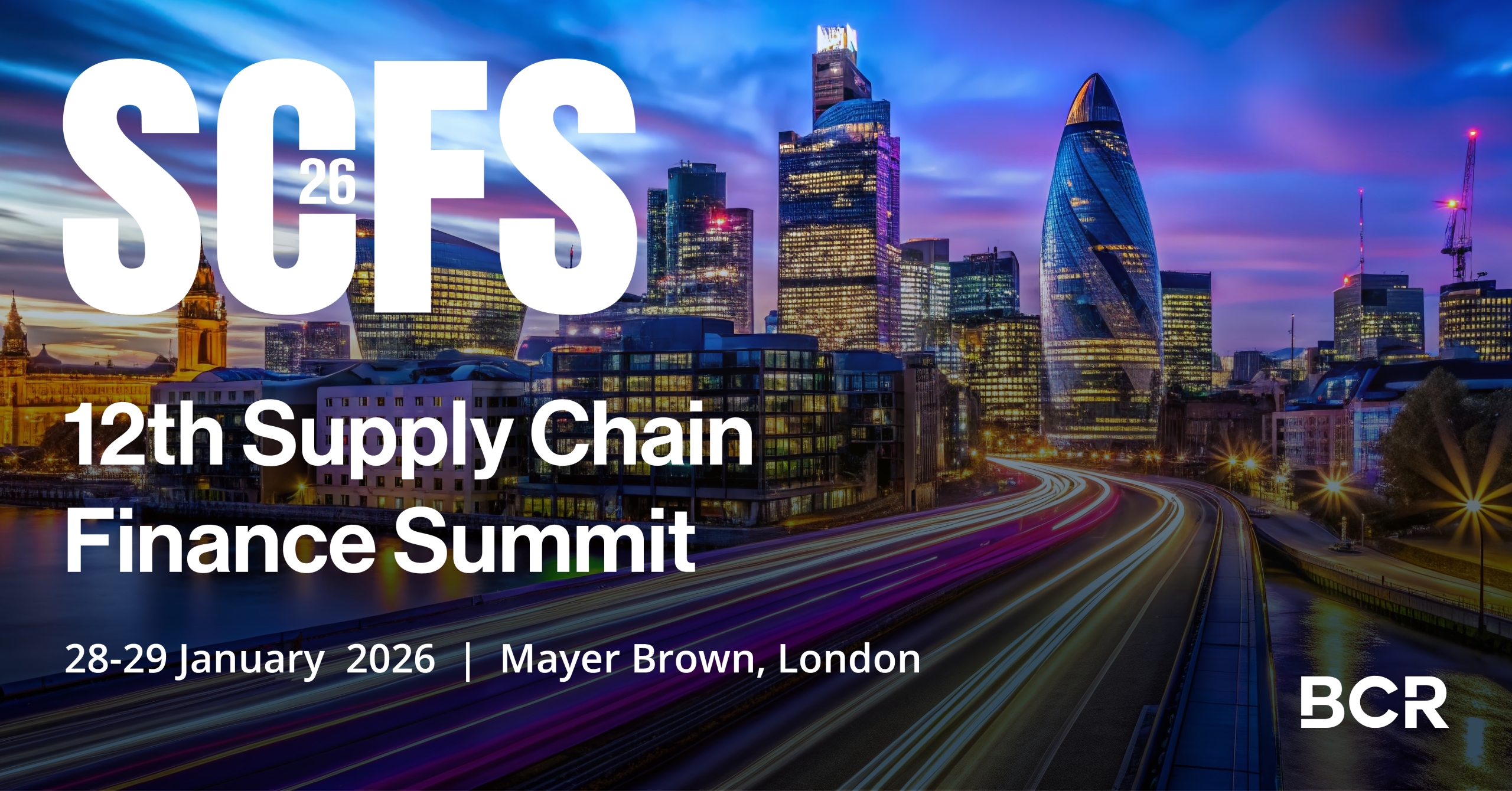
Free passes
For corporate treasurer roles/functions!
“Systems om je bank buitenspel te zetten” – Verslag van mijn Financial Systems presentatie
| 23-5-2017 | Pieter de Kiewit |
Als Feyenoord fan ben ik dit jaar gelukkig en weet veel van voetbal, ook al speel ik het niet. Daarin ligt een parallel in mijn werk als treasury recruiter. Maandelijks krijg ik van circa 100 experts persoonlijk college en zie een veelvoud aan cv’s. Ik denk dat ik hierdoor inzicht heb in systemen die worden gebruikt om treasury processen te managen en ik zie de afgelopen decennia interessante ontwikkelingen die de laatste jaren in een versnelling zijn geraakt.
Zonder namen te noemen van leveranciers, ik doe geen software sales, heb ik een lijst gemaakt van diensten en producten die de gereedschapskist van de treasurer kunnen vergroten en afhankelijkheid van zijn bank verkleinen. Toen ik deze lijst opstelde, viel me op dat er tussen de vakgebieden cash & werkkapitaal management enerzijds en funding anderzijds interessante ontwikkelingen zijn zoals bankonafhankelijke betaalplatforms, crowdfunding en het bankkosten inzichtelijk maken. In het managen van risk zie je bijvoorbeeld trade finance in blockchain en partijen die FX transacties tegen ongebruikelijk lage marges bieden.
Banken daadwerkelijk buitenspel wordt lastig en is volgens mij ook niet het streven. Banken bashen vind ik een zeer onsympathieke hobby. Daarbij is de Fintech wereld ook nog niet volwassen met alle bijbehorende consequenties. Voor de drukbezette treasurer, voor de DGA en CFO die maar incidenteel te maken hebben met het vakgebied kunnen deze ontwikkelingen nogal onoverzichtelijk zijn. Helaas is er geen oplossing die snel inzicht verschaft. Wel denk ik dat er mooie kansen liggen voor degene die vooraan wil meelopen in ontwikkelingen.
De discussie die zich ontspon tussen financiële lijnmanagers en treasury experts ging, onder andere, over de vraag of bankkosten daadwerkelijk inzichtelijk zijn en wat de toekomstige rol van de banken zal zijn. De Powerpoint presentatie is onder dit artikel opgenomen. Ik verheug me op verdere events waar discussie rond dit thema kan worden verder gevoerd.
Pieter de Kiewit
Owner Treasurer Search
Klik hier als je de presentatie van de sessie wilt bekijken.
How to improve your working capital with Trade Finance instruments
| 22-5-2017 | Olivier Werlingshoff |
Trade finance instruments are developed especially for companies that deal with export and/or import of goods to reduce risk but also to improve the working capital. Before going into the working capital part first let us refresh the theory.
If you are an importer of goods you would like to be sure the goods you will receive are the same as the goods you ordered. How can you be sure that the exporter sent you the right quality of goods and the right quantity, or that he sent them at all? One of the possibilities you have to reduce that risk is to pay after receiving the goods. If the quality and the quantity do not match with what you ordered, you simply do not accept the goods and do not pay the invoice.
At the same time the exporter of goods is worried that after sending you the goods, the invoice will remain unpaid after the agreed payment period. What if the client does not accept the goods in the harbor? He would then have to arrange for new transport to return the goods or try to find new clients in a short period of time.
There is a lot of risk for both parties especially when they do not know each other very well or if they are located on different continents.
Letter of Credit
In this case a Letter of Credit could be a solution. With a Letter of Credit you make agreements with the exporter about the quality and the quantity of the goods that you buy, and how, when and where the goods will be shipped to. Only if all terms and conditions of the Letter of Credit have been met the bank will pay the invoice. A lot of paper work will be part of the agreement for instance a Bills of Lading, a commercial invoice, a certificate of origin and an inspection certificate. As an additional security, the exporter can have the Letter of Credit confirmed by his bank.
In a nutshell this is the basic of how Letters of Credit (L/C) works.
Working Capital
Now you can ask the question how could this improve your working capital?
Firstly you will have more security that the payment will be made, therefore the risk of nonpayment will be reduced.
With trade finance you could also set up a line of credit based on your security and overall financial situation.
For the importer, he can finance the gap between paying the exporter and selling the goods to a buyer or use it for manufacturing purposes.
For the exporter, he can fund the gap between selling the goods and receiving payments from the buyer.
If there is not enough equity or there are no sufficient credit lines available, there is another option. Transaction Finance, hence the goods you will sell. [Export L/C] are used to fund [collateral] the buying of these same goods [Import L/C] This is called a Back to back L/C.
There could be a fly in the ointment, however! What happens when there is a mistake made in the paperwork? If this is a small mistake both parties would agree the transaction will go forward. But if during shipment the prices of the goods drop the importer will maybe not be very collaborative and will grab this opportunity to refuse the goods and not to pay the invoice!
Since the credit crisis the use of L/C’s went through the roof. If you need consultancy advise on this topic, drop us a line!
Olivier Werlingshoff
Group Treasury Director
More articles from this author:
How can payments improve your working capital?
Managing cash across borders
How to improve cash awareness without targets
Blockchain and Supply Chain Finance: the missing link!
| 19-5-2017 | Carlo de Meijer | treasuryXL |
Carlo writes: Whereas the focus on the use of blockchain long time has been on payments and securities, an important but still undervalued use case has been supply chain finance. But that is changing. The complexity and scale of existing supply chain finance solutions has posed major challenges in ensuring adequate funding and efficient operations. According to some blockchain technology has the potential to be a game-changer for supply-chain finance. Let’s have a look.
Present state
Supply chain finance (SCF) is a generic term for a wide variety of financing instruments, used to finance various parties in a supply chain. SCF refers to the use of short-term credit to balance working capital between a buyer and a seller, thus minimising aggregate supply chain cost. Businesses can use supply chain financing to build stronger relationships with suppliers, decrease currency risk and ultimately improve liquidity.
Financial institutions offer supply chain financing solutions aimed at improving the purchaser’s working capital, and the supplier’s liquidity, by providing an efficient payables platform to streamline the payment process. Compared to the “old-fashioned” Letter of Credit, SCF now also encompasses new trade finance instruments including factoring, reverse factoring, payables financing, and dynamic discounting. Reverse factoring is the most popular and most widely used supply chain finance instrument. In reverse factoring, receivables are sold to a bank at a discount as soon as they are approved by the buyer. The bank then commits to pay the company’s invoices to the suppliers.
It is important to understand that supply chains are complex by nature; various parties are involved from raw goods supplier, producer and distributor all the way up to the consumer. This has posed major challenges in ensuring adequate funding and efficient operations.
Blockchain and supply chain finance
The question is: what can blockchain mean for supply chain finance and how could it be applied?
A blockchain-based supply chain finance solution more specific via so-called smart contracts will essentially enable all parties in a supply chain finance solution to act on a single shared ledger. A supplier and manufacturer, along with every other participant, will solely update their parts of the transaction, enabling efficiency and an “unprecedented” level of trust and transparency on a ledger record that is immutable.
“If you talk to supply chain experts, their three primary areas of pain are visibility, process optimization, and demand management. Blockchain provides a system of trusted records that addresses all three.” Brigid McDermott, vice president, Blockchain Business Development & Ecosystem, at IBM
Blockchain technology can offer great potential for both corporates and banks in terms of increased control, speed and reliability of their supply chain and at a fraction of the cost of their current infrastructure. Payments made via this digital system can be monitored by both parties, meaning that suppliers are no longer at a disadvantaged positon in the buying process while they wait for processing. Blockchain will speed up the process, giving the two companies more control, and in the long-term would ultimately create more robust supply chains.
Because the bank can see both the original contract as well as the order placed with “Company B by Company A”, it can verify both authenticity and provenance. Further, if the contract tracks manufacturing or transportation events, the bank can also know the state of fulfilment at any given time. What should be quite clear is that the visibility and auditability that are main characteristics of blockchain technology allow financial collaboration across supply chain echelons, not just bilaterally.
The time required from initiation to payment can therefore be dramatically reduced. In addition to the reduced transaction time, other benefits for importers and exporters include reduced bank fees (due to less manual activity on the part of the banks), reduced time for loan approval, and reduced risk of fraud. This way of financing a supply chain is radically cheaper and more efficient than the current way of doing business.
Blockchain: the missing link
Using blockchain may provide a simple system of secure record keeping that allows the bank redeeming CFS “to ensure that the CFS presented by the holders has been used to finance appropriate supply chain smart contracts”. At the same time suppliers using the blockchain system may retain the privacy that is need in their financial transactions with their sub-suppliers.
There are still challenges to be dealt with, too, such as the need to implement paperless trade, issues of data privacy, and how to get all members of a supply chain to participate. If global supply chains are to gain the full benefit of this technology for managing payments and related data, all parties that play a role in global trade must be involved!
By providing this missing piece of the information and supply chain management puzzle, blockchain may become the missing link!
Blockchain SCF projects
Since early this year the number of blockchain projects to improve supply chain finance is growing firmly. Especially IBM is very active in this area and partnered with companies in China and India to work on new blockchain-based solutions. IBM also teamed with Danish logistic and transport company Maersk Line, to create a new solution to digitize the global, cross-border supply chain using blockchain technology. Start-ups are at the same time popping up to help bridge the gap to this new technology, such as blockchain-based financial operating network Fluent, which aims to streamline supply chain finance.
“Blockchains built into supply chains can offer trust and accountability, as well as compliance with government regulations and internal rules and processes, resulting in reductions in costs and time delays, improved quality, and reduced risks,”Arvind Krishna, IBM Research Senior Vice President and Director Yijian Blockchain Technology Application System
Carlo de Meijer
Economist and researcher
You can read more about the different SCF projects in the complete article of Carlo de Meijer on LinkedIn.