Partner Interview Series | More than a decade of Treasurer Search proudness

22-09-2020 | treasuryXL | Treasurer Search |

Treasurer Search is founded in 2009. Treasurer Search recruits candidates for both permanent and temporary treasury positions in industry, trade, services and non-profit. They recruit treasury professionals of all levels, from young graduates to senior treasury professionals, for positions including corporate treasurer, cash manager, treasury controller, treasury consultant, treasury analyst, assistant treasurer and group treasurer.

AN INTRODUCTION TO


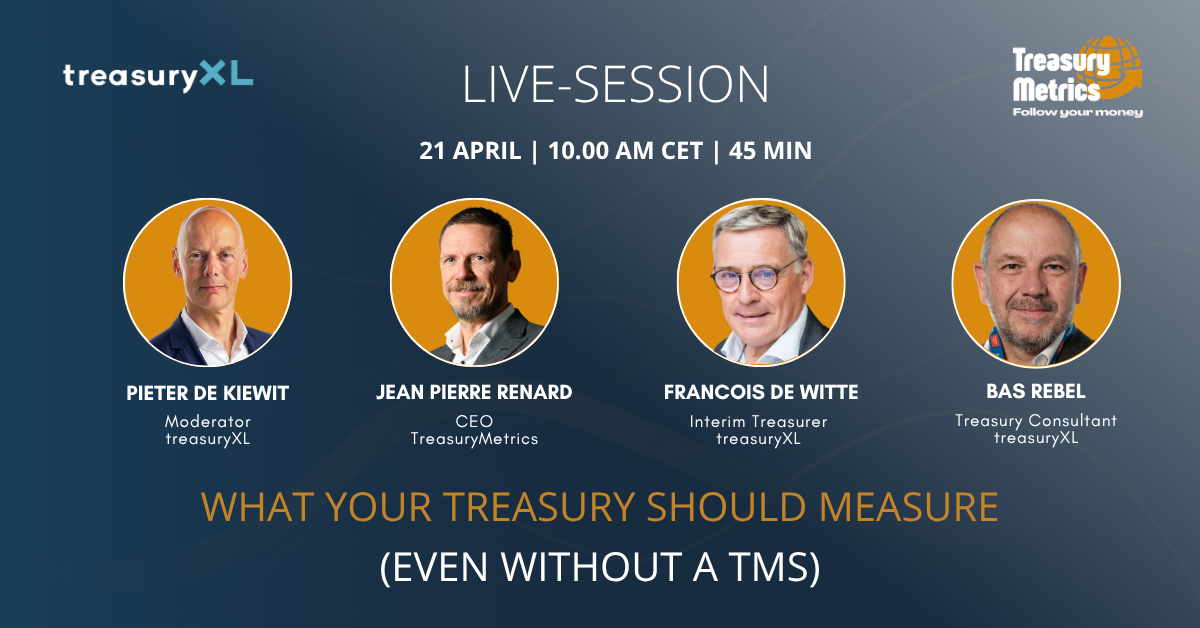
Pieter de Kiewit, Treasury Aficionado, Recruitment Consultant and Owner of Treasurer Search. His market focus is the BeNeLux and Germany, his clients are mainly corporates, non-profit and consultancy organizations. Pieter holds an MSc. in Organizational Science and has over 25 years experience in international recruitment. In many ways he contributes to the Treasury Community by connecting people, companies, education and events.

We asked him 11 questions and 2 bonus questions. Let’s go!


INTERVIEW

1. Can you tell us about Treasurer Search and its mission and vision?

In our vision the professional field of treasury will further evolve and serve a broader group of organizations. It is our mission to listen to treasurers, business and HR leaders and make robust matches taking everybody’s interest into account.

2. What was the main reason to start with Treasurer Search in 2009?

For me as a person, my first professional choice was recruitment. In 2009 I worked in the recruitment industry for 15 years in various roles with two international market leaders. I decided I wanted to recruit in a way that suited my clients, candidates and me best. And that an own organisation was the best structure to do so. Already early in my career I searched group treasurers and liked the job type in so many ways. With the expert combination of both recruitment and treasury, I think we can optimize our added value best.

3.  How would you describe your company in 3 words?

Results, expertise, authentic

4. Can you take us with you into your company culture? How would you describe it?

We take pride in what we do, want to show our added value and like our job. We are Dutch, direct, informal and also very much interested in you and what keeps you busy. We are here to stay and want to build long lasting relationships. And we are not afraid to try or even initiate something new.

5. What is, in your perception, the biggest benefit for clients and candidates to work with Treasurer Search?

Understanding the recruitment industry is not hard. What sets us apart from other executive search firms are our treasury expertise which enables us to dig in deeper. And our long lasting relationships. 90% of the candidates we find a position for, we had prior contact with. Over 50% of our revenue is repeat business and we are still growing. Clients like us because we find better candidates, quicker for a fair, market level fee.

6. What has been your biggest challenge since the start of Treasurer Search? And how did you deal with it?

Our USPs are stability and treasury expertise combined with recruitment skills. People who combine these aspects are few. We have taken steps not only forward but also back because new colleagues realized after a while that their motivation did not match the mission of Treasurer Search. By now we have a stable team and cautiously continue moving forward. In recruitment for our own organisation we spent even more time in informing potential colleagues.

7. What is the best learning experience you ever had as business owner of a treasury recruitment club?

The treasury community is an interested and intrinsically motivated group of people. Always willing to brainstorm and join. In order to channel positive input into plans that bring us the results we strive for, we cannot lose focus. That brings best results. Over time I better learned to avoid distractions but are not done learning.

8. In the last 10 years, what are the main differences in the world of treasury & recruitment?

Too many to make a comprehensive list. What strikes me most in treasury is that the professional level of treasurers is going up. Treasurers are nowadays educated at a higher level, better communicators and continue to invest in treasury education. Treasury is getting the platform it deserves.
Also recruitment is constantly changing. The success of a new hire will never be an exact science but we try to avoid risk. New insights and technology in our field resulted in www.treasurertest.com. In my opinion a perfect example of recruitment new style.

9. How do you see the future of the function of treasury?

I hope and expect treasurers will be able to increase their impact. In large corporates they will be able to contribute in strategy, mitigate risk better and save cost. In mid-sized organizations they will find their spot in the CFO team where they are currently not always. The impact of treasury technology cannot be overestimated, one blog is not enough to describe that topic.

10.  How important is treasury in times like these? In times of COVID19….

The cliché “profit is an opinion, cash a reality” is currently felt stronger than ever. The treasurer that cannot show his added value in these times might not be in the right position.

11. Tell us, 10 years from now, what does Treasurer Search look like?

Predicting the future in these times is more daunting than ever, we just celebrated our first 10 years… I hope 10 years from now we can still show stability, treasury and recruitment expertise. Furthermore I hope clients who currently do not have a treasurer are happy we found one for them and also many more clients who are not based in The Netherlands enjoy our services.

BONUS QUESTIONS

What makes you happy in your work?

Results. See that my colleagues are happy in their job and help candidates and clients moving forward.

What are you most proud of in your career at Treasurer Search?

That clients call us again because they like the candidate they hired through us before. That candidates are happy in their job we found them, and for a long time. That we created an organization with employees that like coming to work to a job that pays mortgages and children’s shoes. That the treasury community knows us and knows how to find us.

Large platforms mainly invest in stones: social value decreases

31-08-2020 | Lex van Teeffelen | treasuryXL

Due to the corona crisis, loan volume shrank by 37% for corporate loans with crowdfunding platforms. Unique, because since the foundation of crowdfunding platforms there has only been growth. The first half of 2020 was so bad that a number of platforms made use of the NOW scheme. Yet there is also good news. A number of platforms are growing rapidly. Five platforms have also been admitted to the SME Corona Guarantee Scheme. What are the main developments? And where are the largest platforms?

(Blog in Dutch)

Het goede nieuws

Het gaat een aantal platforms voor de wind. NLInvesteert neemt de koppositie over als marktleider in het eerste halfjaar 2020. Onderscheidend door de sterke risicobeoordeling en de lage default. Maar ook SameninGeld voor particulier vastgoedfinanciering en LenderSpender voor consumentenleningen groeien door.

Eindelijk toegang tot overheidsgaranties

Na veel lobbywerk in Den Haag is de kogel door de kerk. Ook crowdfundingplatforms kunnen overbruggingskredieten met staatsgaranties aanbieden. Het gaat om BMKB-Corona regeling tot 1,5 miljoen euro met een aflosvrije periode tot 18 maanden en een maximale looptijd van 4 jaar. Een aantal platforms heeft concessies moeten doen. Naast de crowd dienen ook professionele/grote investeerders mee te doen. De website van het RVO is wat traag met alle partijen te vermelden, maar de volgende crowdfundingplatforms zijn geaccrediteerd: GeldvoorelkaarVoordeGroeiOneplanetCrowdCoöperatie NLInvesteert en October. Vreemd genoeg krijgen ook de flitskredietverstrekkers Swishfund en Yeaz toegang tot de staatsgarantie. Die trekken ondernemers qua kosten en rente het vel over de neus. En dat met staatsgarantie!

NOW-aanvragen

Het Europees opererende platform October van Franse origine, is de grootste aanvrager van de platforms in de eerste NOW-ronde met 151K. Maar ook marktleider 2019 Geldvoorelkaar voelde de pijn en ontving 136K. De derde grootste aanvrager was DuurzaamInvesteren (Crowdinvesting BV) met een toegekend bedrag van 83K. Deze partij heeft onder meer de Triodos Bank als aandeelhouder. Flitskredietverstrekker Swishfund spant echter de kroon met 313K.

Het is natuurlijk toegestaan, maar het staat niet chic. Deze platforms behoren bepaald niet tot de kleintjes. Dat kleinere non-profit platforms als VoordeKunst en Kentau de NOW aanvragen, is meer vanzelfsprekend.

DuurzaamInvesteren krijgt navolging

Bij DuurzaamInvesteren gaat het al een tijd niet goed. Niet alleen scoort dit platform hoog op het aantal ondeugdelijkheden, ook blijft het volume achter bij de concurrenten sinds begin 2019. Een doorn in het oog is dat DuurzaamInvesteren proposities van de eigen aandeelhouders YardEnergie en Greenchoice plaatst. Hoe kan het platform daarbij objectiviteit garanderen? Helaas volgt aandeelhouder Lambert Kassing van KapitaalopMaat dit slechte voorbeeld op met deze propositie. Ook KapitaalopMaat kent weinig transacties met daarbij ook een hoge (loss giving) default. De aandeelhouder is tevens actief voor de Stichting Zekerheden KapitaalopMaat. Wederom ongewenste verstrengeling van belangen. Belanghebbenden kunnen melding doen bij de AFM.

Vastgoedtransacties zonder heldere risicobeoordeling

Waar de platforms voorheen vooral werkkapitaal verschaften, groeit nu de objectfinanciering – meer specifiek de vastgoedfinanciering – snel. Bijgaand ziet u een indicatief overzicht van de Onroerend Goed (OG) proposities van de drie grootste platforms (2020 YTD) op 18 augustus 2020 om 00.00 uur.

Tweederde of meer van de verstrekte leningen (in volume) is nu vastgoedfinanciering. Hoewel Geldvoorelkaar de meeste proposities post (66%), wordt zij in volume voorbijgestreefd door Collin Crowdfund en NLInvesteert. Dat investeerders wat te kiezen hebben blijkt uit de ranges in Loan To Value (LTV) en de geboden rentes. Op het eerste gezicht lijkt NLInvesteert het betere risico/rendement aan te bieden. Let wel, het aantal waarnemingen is beperkt. De proposities binnen en tussen de platforms wijken sterk van elkaar af. In een enkel geval wordt niet eens onderpand gevestigd, soms een tweede hypotheek (= lastig uitwinbaar), veelal een eerste hypotheek met (te) hoge LTV.

Er ontbreken veel indicatoren om OG proposties op waarde te kunnen schatten: de beoordeling van de locatie, de courantheid en verhandelbaarheid van het pand, de staat van onderhoud (binnen- en buitenkant), de kosten van achterstallig onderhoud of bouwkundige gebreken. Taxatierapporten worden niet bijgevoegd.

Investeren in vastgoed met eerste hypotheek is niet risicoloos. In een crisis komen meer bedrijfspanden leeg te staan. Daarmee daalt de waarde. Geen huurder, betekent sowieso een zeer lage waarde. Excecutieverkoop levert een fractie van de getaxeerde waarde op. Wachten op de juiste koper meer, maar gaat gepaard met doorlopende kosten. Bij particuliere woningen is dat risico minder groot. Maar in ontvolkte en sterk vergrijzende regio’s zeker aanwezig. Meer dan 65% LTV bij courante bedrijfspanden en 80% LTV bij particulier vastgoed voor investeringsdoeleinden is onverstandig. Vooral Geldvoorelkaar en Collin Crowdfund overschrijden die grenzen regelmatig. Geen van de drie platforms hanteert overigens expliciete pricingscriteria voor vastgoedproposities. Andere beoordelingscriteria zijn nodig.

Investeren in de reële economie of meedeinen met speculanten?

Naarmate er meer gehandeld wordt in particulier onroerend goed, zullen de platfoms meebewegen. Daar waar nieuwe panden en projecten worden gerealiseerd via aan-, ombouw en nieuwbouw, zie ik toegevoegde waarde. Daar waar ondernemers hun kosten gelijk kunnen houden met verwerving van het bedrijfspand niet. Investeren in stenen is – zeker nu – slecht voor de liquiditeit van een onderneming. Cash is King in crisistijd.

Maar wat is de toevoegde waarde van opkoop van particuliere panden? Die worden gesplitst of voor drie tot vijf personen ingericht. Huurprijzen worden flink verhoogd, stedelijke omgevingen worden onbetaalbaar voor starters en mensen met lage en midden inkomens. In plaats van honderden euro’s, stijgen de huren naar duizenden euro’s. Niet alleen het snel groeiende platform SameninGeld specialiseert zich hierin. Ook de grote platforms doen mee.

Economen in 17e eeuw noemden grond- en huizenbezitters de steriele klasse, omdat zij niet herinvesteren in directe economie en productiviteit. Adam Smith – schrijver van The Wealth of Nations – noemt hen zelfs parasieten, omdat zij “love to reap, where they never sowed”. Ook Nobelprijs winnaar Joseph Stiglitz, waarschuwt voor de ontwrichtende werking van de toenemende ongelijkheid en de accumulatie van kapitaal en bezit. En u kent vast de econoom Thomas Pikkety, die pleit voor het zwaar belasten van bezittingen en het licht belasten van arbeid?

Kleur bekennen

Met het verstrekken van overbruggingskredieten BMKB-C kunnen platforms hun rol herpakken. Banken laten steken vallen en beperken zich graag tot financieringen van 1 miljoen euro en meer.

Ik ben benieuwd waar de grotere crowdfundplatforms nu voor staan. Blijft het bij het oppikken van de restjes die de banken achterlaten? Zoals het er nu naar uitziet, lijken de grootste platforms veel op elkaar. Tijd voor fusies? Er mag wel wat meer kleur in het landschap komen*. Waar zit de toegevoegde waarde? Wat is hun Why en aan welke maatschappelijke doelstellingen dragen deze grotere platforms meetbaar bij?


Lex van Teeffelen

Professor Entrepreneurial Finance and Firm Acquisition

Cash is The Whole Royal Family!

26-08-2020 | Olivier Werlingshoff | treasuryXL

Can the treasurer be the linking pin between different departments within organizations?
For cash related topics he or she has to be the linking pin to understand the cash flows within the company and to be in control. When you understand how all departments work and how the financial information is produced by controllers, you can help them and give advice on how to lower trapped cash.

Cashflow

To me the cash flow forecast is the basic of all treasury related items. When setting up the forecast (direct/indirect), it gives you the possibility to dive deep in the risk of FX and take actions to lower them or even better, to develop a guideline on how to handle FX risks in the future. The same can be done for IR risk, debtor risk and all other cash flow related risks. When making the cash flow forecast, you can literally make visual what the effect of a change in payment behavior of your customers or a change in FX rates will be.

The Treasurer’s task

The treasurer has to be in constant contact with all different departments to receive the most actual information. As treasurer, you also have to challenge the different departments on cash related topics. The reason for this is that most of the colleagues are not always cash focused. You have to set up an internal marketing plan to reach all necessary stakeholders (organize meetings, develop reports, mailings, organize events where colleagues can come with cash optimization related idea’s etc…).

Supply chain departments are focusing on delivering on time for production or sales. It is very interesting to focus on the ins and outs of world of supply chain. All goods can be categorized based on the time they will stay in the warehouse as well as the time needed to replace them and the cost of a reorder. When you combine all variables, an optimum can be reach. The information that supply chain and purchasing department can provide you is the order book. This can help you to extent the reliable period of the direct cash flow forecast.


By sitting close to the financial department or the shared service center you can have a better understanding of the payment behavior of clients but also the payment behavior of the company. Is there enough focus on the debtor collection process and is the sales department also aware of the payment behavior of their customers? Are the invoices send on time? Do they use direct debits or are balances on bank accounts swept daily to a master account?


Financial control is a department which is also related to the cash flow forecast. Most of the time they will make budgets of balance sheets and P&L and will make (monthly/ quarterly/yearly) estimations of the working capital parts such as inventory, accounts payables and receivables. By doing so they will be able to predict an indirect cash flow forecast. Are their presumptions for the working capital parts correct? Are they based on the budget sales, or based on the previous years? Most of the time the presumptions explain the difference between the direct and indirect forecast and difficult to track down.

Conclusion

Financing activities such as project financing, supply chain and trade finance can be set up based on a reliable forecast. By increasing the cash awareness in different departments, you will be able to release trapped cash, lower costs and have better control of all cash related items.

Olivier Werlingshoff

Olivier is an operational treasury manager who likes to connect and get in touch with different departments. By doing so he gets the treasury department and the awareness of cash in the picture, gets grip on the cash flow and releases trapped cash as well as lowers costs.
He is available for a permanent/interim position and you can reach him on

+ 31683629427

[email protected].


Does your business need support in Treasury or a Treasury QuickScan?

We have treasurers available, go to Rent a Treasurer for all information.

Scoren met treasury in kleinere organisaties

| 19-08-2020 | treasuryXL | Pieter de Kiewit

Kosten besparen, business kansen creëren en risico’s verkleinen, dat is wat goede treasury elke organisatie kan brengen, dus niet alleen de multinationals. Als treasury aficionado zie ik dagelijks dat organisaties zichzelf tekort doen. In dit artikel maak ik graag concreet waar ik het over heb omdat ik merk dat velen het vakgebied onterecht complex vinden.

Kosten besparen

Het managen van geldstromen kost geld:

  • De bankier als loodgieter stuurt ook een rekening, vaak alleen niet zo expliciet. Deze rekening is bijvoorbeeld voor transacties en het aanhouden van rekeningen. De realiteit is dat de meeste organisaties en vaak ook hun banken geen voortdurend zicht hebben op deze kosten en dat ze voortdurend wijzigen.
  • Wat ook wel eens gebeurt is dat voor één internationale betaling even veel (per stuk) wordt betaald als voor 5.000 internationale betalingen. Dit terwijl kwantum korting van toepassing is.
  • Wat ik ook regelmatig zie is dat een bepaalde financieringsstrategie is gekozen waarbij een oplossing de markt conforme prijs heeft maar de juiste oplossing niet is. Rood staan op een rekening courant is veel duurder dan een hypothecaire lening. Vaak wordt niet nagedacht over wat de juiste oplossing is.
  • De laatste van vele voorbeelden die ik wil noemen is dat diverse offertes aanvragen bij diverse leveranciers kan leiden tot substantiële kostenbesparingen. Vaak is de huisbank best bereid een lager tarief voor een dollar deal te berekenen en zijn er velen die nog goedkoper kunnen leveren.

Het zijn simpele oplossingen maar de tijd wordt er niet in gestoken.

Business kansen creëren

De gereedschapskist van een treasurer zit vol oplossingen die het verschil kunnen maken tussen een kans verzilveren of niet. Zo zie je in bijvoorbeeld projecten organisaties of bedrijven die leveren in exotische oorden, dat de business stopt op het moment dat de klant pas wil betalen na complete levering. Dat kan te risicovol lijken of het kan zijn dat de leverancier de upfront kosten niet kan dragen met eigen middelen. Via garanties, letters of credit, borgstellingen door de overheid of projectfinanciers kan de business dan soms toch worden gerealiseerd. En besef goed, niet zo lang geleden was (equipment) leasing nog geen geaccepteerde oplossing. Nu kunnen transporteurs verladingen aanbieden en kunnen de vrachtwagen producenten meer produceren.

Risico’s verkleinen

Bij treasury en risico wordt vaak gedacht aan rente en valuta. Dat is terecht, de bijbehorende risico’s moeten prudent worden aangepakt. Een veel belangrijker risico is beschikbare liquiditeit. Goede treasurers kunnen forecasten en ingrijpen om cash beschikbaar te maken voor de organisatie. Extra faciliteiten vanuit de bank, doordacht werkkapitaalmanagement, managen van betalingstermijnen en tools als factoring kunnen het verschil maken tussen overleven of niet.

Hulp nodig?

Met deze korte opsomming wil ik duidelijk maken dat voor iedere organisatie treasury van grote waarde is. Dat kan met een expert op de payroll, met eigen boerenverstand of met een tijdelijke oplossing (Rent a Treasurer). Het gaat niet om complexe materie, wel om de bereidheid af en toe een stap terug te doen en het vakgebied te overzien.

Zullen we overleggen? Wie weet kan ik u in contact brengen met de expert die voor u het verschil kan maken.


Pieter de Kiewit

Owner at Treasurer Search

Meet our Experts – Arnaud Béasse

28-07-2020 | Arnaud Béasse | treasuryXL

Welcome to the 10th and last (for now) interview of the ‘Meet the Expert’ series. This time we interviewed our brand new Expert Arnaud Béasse. Arnaud is founder of the advisory firm Arts+Brands and an expert in Debt Management. He started his career as Regional Financial Controller, cumulating the responsibility for IT.

Arnaud has more than 17 years experience in Banks focusing successively on Structured Asset Finance, Corporate Banking, DCM and in Multinational Corporates for their Energy and Metals trading and Project Finance. He created Arts+Brands to expand his entrepreneurial spirit by advising small ventures and start-ups (Fintech, Biotech, IT) for their Fund Raising and Finance strategy and also by getting involved in the daily operations.

Arnaud is fluent in English, German and French and is used to work in international, multi-cultural and virtual teams environments.

We asked him 11 questions, let’s go!

How did your treasury journey start?

During my first assignment as a regional financial controller, I have been immediately confronted to a complex consolidation of cash streams from different emerging countries with different currencies and regulations. Finding secure and systematic solutions has been challenging but also interesting and fun. This was the beginning of my treasury discovery, from which I moved then to asset finance, project finance, trade and export finance and later to the complete « corporates and markets » solutions offered by a large European bank.

What do you like about working in Treasury?

I find the central role played by treasury in supporting a business very motivating: it manages all financial resources a business needs to generate returns. Perfect understanding and anticipation of the needs (planning) and an accurate analysis of the resources available (controlling) are therefore essential. I also like the necessity of combining short term priorities like cash management and long term planning like investments.

What is your Treasury Expertise?

Capitalising on my long banking and large corporates experience, I have acquired a strong knowledge of all kind of debt solutions associated with credit, regulatory, compliance competencies. I have specialised in Debt Management, Fund Raising, Asset Finance, Leasing, Cash Flow Management, Trade and Export Finance and Project Finance. I am currently focusing on Sustainable Finance to support firms aligning their finance resources with their commitments towards the environment.

What’s the most important factor in debt management?

The starting point of debt management is a careful analysis and control of the cash flows. Borrowings need to align with the business cycle of the company and eventually its equity profile. Once the needs of each business line and the corresponding cash flow generation are consolidated, the adequate debt structure can be designed with a mix of junior to senior, short term to long term solutions and a calibrated interest rates structure.

What has been your best experience in your debt management career until today?

I remember a dramatic situation occurring during a local currency crisis in an emerging country, where we had arranged a large equipment finance. The debt repayment plan did not anymore match with the borrower’s cash flow generation and we were heading straight to a default situation. After long and numerous discussions, we managed to get transferred a large position on natural resources the company was owning but not operating and structured it in a way that the majority of risks were covered, the credit committees and respective boards were satisfied and ultimately the borrower managed to earn additional profit. I admit there is a part of luck in this experience but getting from this desperate situation to a point where all parties were so happy has been my most fulfilling experience so far!

What has been your biggest challenge in your career?

I consider the toughest challenges in a company are almost always linked to human resources management and termination of assignments. But if we remain within the treasury topic, my biggest challenge so far has been to accept a board decision not to conclude an M&A transaction, whereby all indicators (profit, risk, market position, further opportunities) were very favourable for the group and I had worked for more than one year on the case. Some months later, upon publication of the yearly results, it became clear why the project was rejected!

What is the most important lesson that you have learned as a treasurer?

Along the various experiences I had with treasury, the most important lesson might be to always seek the most simple and straight forward option. There are many ways of hedging a currency position, improving the average interest rate of a pool of debt facilities, leverage the value of an asset, optimise the return of positive cash position. But the risk and time associated to it can rapidly be disproportionate to the purpose and the size of the original transaction. Treasury shall normally create value, not necessarily profit!

How have you seen the role of Corporate Treasury evolve over the years?

Obviously, the role of Corporate Treasurer has become more and more complex. Treasury needs to deal with an increasing availability of alternative financial products, intensifying risk management requirements, regulatory and compliance constraints. But at the same time, the emergence of digital treasury platforms and integrated cash management systems are making the steering of treasury much easier and more accurate.

The coronavirus is undoubtedly an unprecedented crisis. In general, can you elaborate on the impact this virus has on treasury from your perspective?

Treasury is between a rock and a hard place: as a consequence of the crisis, sales are dropping and cash flows are missing but the financial obligations (debt, salaries, rents, supply, …) remain and the access (if not the availability) of financial resources become difficult. For treasurers who had a prudent cash flow management with enough resources to bridge the gap, it has been a confirmation for their risk management strategy. For others with more lean structure, it is, in the best case, a very stressing moment trying to find last minute and costly (not only in terms of interest rates) funding solutions. Some businesses, which have bet on a very tight business model, will probably be restructured. The crisis will certainly lead corporates to adopt more careful models with sufficient reserves and flexible organisations but also postponed or reduced investments.

What developments do you expect in corporate treasury in the near and further future?

The main trend is definitively the further digitisation of the treasury functions, offering more reliable, more secure and faster execution of the transactions: payments, cash management, trading, trade and export instruments, guarantees, etc. As the execution of transactions will be more and more automated and integrated in the supply chain systems, treasurers will shift their focus on analysing and planning for the financial resources in order to formulate strategies.

Another interesting trend for the treasurer is the further development of the non-banking debt market. This shall broaden the borrowers’ horizon, balancing again the bargaining power in favour of the corporates and generating even more tailor-made/OTC debt solutions.

What is your best advice for businesses without a Treasurer?

Running a business without a treasurer can only be considered for small businesses. For standard operations, managing the daily needs with modern digital tools will always become easier, even if substantial support shall be required during the implementation of a system. Once the system is running, the daily treasury tasks can be integrated in the accounting and finance agenda.

However, as soon as operations get more complex (investment, take-over, international development, restructuring…), the support of a specialist remains essential, be it for a limited period of time like part-time or ad interim…


Arnaud Béasse


Does your business need support in Treasury or a Treasury QuickScan?

We have treasurers available, go to Rent a Treasurer for all information.


Meet our Experts – Vincenzo Masile

21-07-2020 | Vincenzo Masile | treasuryXL

Welcome to interview #9 of the ‘Meet the Expert” series. This time we interviewed our Expert and Treasury Specialist Vincenzo Masile. He is an experienced international finance manager who lived and developed his career in Italy, The United Kingdom, Switzerland and The Netherlands. Currently, he lives in Amsterdam, and enjoys working with people from different countries.

His fields of expertise are:

We asked him 11 questions, let’s go!

1. How did your treasury journey start?

Back in 2008 I was working as a credit manager for a large US agricultural commodities, ADM, at their cocoa operations in The Netherlands and I was asked to spend six months in Switzerland at the newly created treasury hub.

2. What do you like about working in Treasury?

I enjoy the variety of the tasks and the communication with the different company stakeholders.

3. What is your Treasury Expertise?

Cash Management, People Management, Project Management, FX, Reporting, Banks Relationships

4. Do you have examples of risk mitigation, creation of opportunities and/or cost savings?

I was the PMO of a hedging project at Netapp for the EMEA region back to 2012. Cost savings opportunities were identified improving the process accuracy on Oracle 11 and simplifying the reporting to corporate.

At Affidea I changed the cash flow forecast reporting moving from a fully manual version to a partial automated version. This change generated time saving and more accuracy.

5. What has been your best experience in your treasury career until today?

On April this year I completed an eighteen months assignment at Affidea B.V., a Dutch pan-European medical healthcare and I worked mainly from their finance ops in Budapest and occasionally from their holding office in Amsterdam.

It was a very interesting and valuable experience.

6. What has been your biggest challenge in treasury?

Lack of cash visibility especially at country level has been one of the biggest challenges I had to face to.

7. What’s the most important lesson that you’ve learned as a treasurer?

A treasurer has a watchdog role over all aspects of financial management and indeed cash will be always the King!

8. How have you seen the role of Corporate Treasury evolve over the years?

Treasury evolved from a traditional finance role into a business enabler supporting the company growth. In that respect effective communication & collaboration across different areas of business is the key.

9. The coronavirus is undoubtedly an unprecedented crisis. In general, can you elaborate on the impact this virus has on treasury from your perspective?

My view here is that treasurers should take the following steps going forward:

  • Cash flow management:  This is even more critical as we move beyond COVID-19
  •  Determine cash availability: Enables informed decisions around liquidity and cash flow, debt, FX exposures and payment priorities
  •  Scenario testing: Ensures understanding of preparedness for shocks
  •  Engage with relationship banks: Opportune time to partner with banks to fast track digital adoption of tools that provide visibility, efficiency, fraud control etc.
  •  Digitize manual processes: Ensures enhanced controls are put in place where manual payments remain – to mitigate cyber and fraud risk
  •  Monetize inventory: Inventory may be temporarily surplus to requirements because of demand gluts or supply chain disruption

10. What developments do you expect in corporate treasury in the near and further future?

Technology will play a major role in the future and this can be only beneficial to corporate treasury. Payments platforms, Fintech, Trade finance blockchain solutions, outline that the future is already here.

11. What is your best advice for businesses without a Treasurer?

It depends on the size of the company but generally speaking I strongly recommend to have on board a treasurer.


Vincenzo Masile

Treasury Expert/ Credit Risk Manager


Does your business need support in Treasury or a Treasury QuickScan?

We have treasurers available, go to Rent a Treasurer for all information.


Meet our Experts – Interview François de Witte

07-07-2020 | François de Witte | treasuryXL

After having worked for more than 30 years in banking, our expert François de Witte launched his own consultancy activity, FDW Consult, specialized in finance and treasury consulting. From 2014 to 2016, he was also Solution Partner Treasury & Finance at USG Professionals. Since then he took up several assignments, including one in the automotive sector with Ginion Group and with Ibanity, part of Isabel Group in the area of PSD2 and open banking. He currently is Senior Project Manager Treasury at Gaming1 (part of Ardent-Group). He is also co-founder and CFO of SafeTrade Holding. Key areas of expertise:

We asked him 11 questions, let’s go!

1. How did your treasury journey start?

My roots are not really in treasury, because I have spent 30 years in banking with ING. Mid-2013, I made a major career move to treasury & finance. I could thereby leverage on the expertise I acquired in both Corporate Banking and Payments & Cash Management.

2. What do you like about working in Treasury?

The diversity of topics and people with whom you are in contact. The treasurer monitors the cash & finance, and is in the frontline of the circulatory system of the company. In addition, in view of the technology developments and the globalisation, treasury is a fast moving discipline,

3. What is your Treasury Expertise?

Based upon a gap analysis, during the first couple of years, I strengthened my expertise in the other areas of treasury by self-training. I also started training in some subject matters, at the university and at other training organisations, and this is a good way to keep yourself updated on the latest developments.

4. Do you have examples of risk mitigation, creation of opportunities and/or cost savings?

I have done quite a number of consultancy assignments. In one of them, thanks to a complete review of the processes, including also the business, we managed to gain some 10-15 days working capital management. In another project, we reviewed the account structure and the bank lines and could generate substantial savings. During a treasury scan, I was able to identify foreign exchange risks, which had not been spotted by the management.

5. What has been your best experience in your treasury career until today?

In my current assignment, we have selected a TMS-solution (Kyriba) and are currently finalising the implementation. Simultaneously we created a cash pooling and an In-House bank and streamlined the processes.

6. What has been your biggest challenge in treasury?

When starting in treasury, I did not have experience on the field, and needed to switch from a banker’s approach to a corporate approach. If you want to be successful, you need to also have operational experience. I have spent at the start quite a lot to train myself and to get up to speed in treasury.

7. What’s the most important lesson that you’ve learned as a treasurer?

Cash is and remains king. It is very important to make the management aware of the importance of cash, even if a company is in a cash-rich position.

8. How have you seen the role of Corporate Treasury evolve over the years?

The Treasurer is becoming a business partner of the whole group. As a treasury, you get a good transversal view of the business flows. This is very nice because you are in the cockpit of the finance department.

9. The coronavirus is undoubtedly an unprecedented crisis. In general, can you elaborate on the impact this virus has on treasury from your perspective?

The COVID crisis was a wake-up call. It reminds us that it is important to keep the focus on cash and working capital management. It also highlighted the importance of good well-balanced banking relationships. During the last years, some corporates did not put the right attention to this.

10. What developments do you expect in corporate treasury in the near and further future?

Cash will remain dominant. In addition, we have the automation enabling to work more efficiently. I also see AI (Artificial Intelligence) as enabler, e.g. for cash forecasting. Blockchain will also add value in some areas, such as documentary trade.

11. What is your best advice for businesses without a Treasurer?

 Even if you do not have the critical mass to justify a treasury department, give it the right attention. Try to understand the drivers of your cash generation and to identify the risks. I would also recommend to invest in a treasury management scan.


François de Witte

Founder & Senior Consultant at FDW Consult


Does your business need support in Treasury or a Treasury QuickScan?

We have treasurers available, go to Rent a Treasurer for all information.


Meet our Experts – Interview Ger van Rosmalen

01-07-2020 | Ger van Rosmalen | treasuryXL

Our Expert Ger van Rosmalen has over 45 years of global Trade Finance expertise (Letters of Credit, Documentary Collections, Bank guarantees) mainly working for international banks. In addition, he is also frequently asked to conduct trainings for companies like EvoFenedex and Vesting Finance, as well as for Chambers of Commerce, and Professional Higher Education programs. His drive is to assist companies with Trade Finance solutions. To help companies to achieve their business objectives through a better understanding of profitable Trade Finance solutions and instruments, and to promote efficient cooperation between Sales, Finance and Logistics. Get to know him better:

We asked him 11 questions, let’s go!

1. How did your Trade Finance journey start?

My first job started 46 years ago at the Letter of Credit Department of a Dutch bank. I applied for the job of junior and when I answered the question of the HR manager “do you have bank blood?” with YES he hired me.

2. What do you like about working in Trade Finance?

Not one day, not one transaction is the same. I like to be challenged, finding solutions, be creative but always within the guidelines of compliance/AML rules. Assisting customers to close their deal. Education and training of Trade Finance solutions so customers understand the risk before signing a contract.

3. What is your Trade Finance Expertise?

I have a lot of knowledge and expertise in the field of Letters of Credit and Bank guarantees. How to apply those instruments, explain to people with different levels of Trade Finance knowledge about these products and how to be able to understand the risks and to avoid or exclude certain risks.

4. Do you have examples of risk mitigation, creation of opportunities and/or cost savings?

Risk Mitigation in Trade Finance can be the use of “confirmed” Letters of Credit, it means (if possible) that the bank of the exporter is taking over the (country/bank) risk of a foreign unknown bank. If the exporter can fulfill the conditions of the Letter of Credit his risk is his own bank. Creation of opportunities is my passion, drive and reason for being is this business for such a long time.

5. What has been your best experience in your Trade Finance career until today?

The change of UCP500 to UCP600 (Rules for Letters of Credit) was a big improvement for companies dealing with L/C’s. It is not that black and white anymore. My experience is how companies adapted to these new rules if you take them through these rules. People felt more confident in using these instruments and will be used for some time. Since UCP600 is already in force from 2007 it is expected that new rules are on their way. I hope my very best experience is yet to come when new rules will be launched. Trade has evolved and rules should adopt to that.

6. What has been your biggest challenge in Trade Finance?

My biggest challenge is every day being able to convince people to use these well established instruments.

7. What’s the most important lesson that you’ve learned as a Trade Finance expert?

To trust my instinct. Some deals are too good to be true or I just miss the logic of the transaction. My instinct has let me down only once in 46 years.

8. How have you seen the role of trade finance expert evolve over the years?

On the Sales side of the Trade Finance Expert I noticed corporates appreciate direct contact with an expert who has all the knowledge of Trade Finance from a sales perspective as well a from a operations perspective. You have become their trusted advisor in this field.

9. The coronavirus is undoubtedly an unprecedented crisis. In general, can you elaborate on the impact this virus has on Trade Finance from your perspective?

The use of Trade Finance instruments will be more important now that we are facing the Corona crisis, which will force exporters to look for other sometimes forgotten alternative solutions. High tech innovative solutions such as FinTech or Block Chain is still under construction and exporters do not have the time to investigate those solutions. They need to generate turnover and need quick available products such as Letters of Credit to support their business. I embrace those new techniques but that will not have my priority the coming period of uncertainty. People tend to say Letters of Credit are old fashioned, time consuming and too much risk. I disagree if you understand what is expected of you as exporter. If you know how to communicate with your buyer and your bank you will experience the comfort of those almost forgotten products. It is imperative that you understand and educate yourself in this field or hire experts to support you.

10. What developments do you expect in corporate trade finance in the near and further future?

It will depend on how the financial world will be able to join forces and create workable solutions. Not several small groups of banks developing their system so still fragmented but one solution workable for all parties involved in Trade Finance. If you look at the Bank Payment Obligation (BPO) it is the example how we missed the opportunity to develop one unique system. Corporates dealing with different banks and other counterparts needed several systems offered by different banks or other parties. If suppliers of the Fintech or Blockchain solutions are learning from the BPO adventure they now have the opportunity to change the world of Trade Finance significantly. Digitalisation of Trade Finance is the future whether that will be the near future or somewhere in the future is the challenge of all parties involved.

11. What is your best advice for businesses without a Trade Finance expert?

In my opinion you cannot rely on knowledge outside your company only. It will make you vulnerable. Outsourcing is not the magic word. Educate and train yourself and your staff so you understand the impact of your decisions and take responsibility.


Ger van Rosmalen

Trade Finance Specialist


Does your business need support in Trade Finance, Treasury or a Treasury QuickScan?

We have treasurers available, go to Rent a Treasurer for all information.


Meet our Experts – Interview Olivier Werlingshoff

23-06-2020 | Olivier Werlingshoff | treasuryXL

Our Expert Olivier Werlingshoff specializes in the following fields:

His focus is to help the business improve their working capital and cash management processes to release trapped cash, to reduce costs and to be “in control”. Get to know him better:

We asked him 9 questions, let’s go!

1. How did your Treasury journey start?

After working at banks as cash management consultant for several years I was asked to set up a treasury department at a corporate.  The company was a combination of retail, real estate and development and active in the whole of Europe. Besides the set up of a new department they also wanted to optimize different working capital processes and increase the cash awareness. Coming from banks this was a total different environment. Instead of telling companies how to optimize their working capital, I had to do it myself together with different departments. My sales experience helped me to increase the internal cash awareness and to promote optimization of working capital processes.

2. What do you like about working in Treasury?

Treasury is the oil in organizations where all cash related departments comes together. By optimizing those processes you can get a grip on your cash, decrease risks and release trapped cash.

3. What is your Treasury Expertise?

Operational cash management, liquidity forecast (direct- indirect), risk management, (international) bank account structure,  cash pooling, working capital optimization.

4. Do you have examples of risk mitigation, creation of opportunities and/or cost savings?

Yes, a lot of cost savings examples and also release of trapped cash. Decrease bank transfer pricing, introduction of new payment methods to increase the turnover, implementation of cash pools and optimize working capital processes to release trapped cash to mention a few.

5. What has been your best experience in your treasury career until today?

By showing the benefits of treasury to colleagues by increasing the cash awareness. By doing so, new ideas comes out of the organizations itself and are more easy to implement.

6. What has been your biggest challenge in treasury?

The implementation of a new payment system in a complex organization. You have to focus on stakeholder management and get the operational department behind you with support of the board members.

7. What’s the most important lesson that you’ve learned as a treasurer?

Treasury is a supporting function. You have to help other departments and the CFO to achieve their targets.

8. The coronavirus is undoubtedly an unprecedented crisis. In general, can you elaborate on the impact this virus has on treasury from your perspective?

In a lot of sectors the sales dropped due to the Corona lock-down. Companies need to have a clear view on their cash and be able to pay their invoices on time. Forecasting is more than ever very important and key to be able to forecast funding needs on time.

9. What is your best advice for businesses without a Treasurer?

Not all companies need a dedicated treasurer. Controllers need to have more focus on cash related items and risks (liquidity, FX, Interest and audit). Furthermore it will be good for controllers to focus more on forecasts instead of the reporting of past activities.


Olivier Werlingshoff

Owner at WERFIAD | Working Capital | Cash Management |


Does your business need support in Treasury or a Treasury QuickScan?

We have treasurers available, go to Rent a Treasurer for all information.


Meet our Experts – Interview Michael Ringeling

16-06-2020 | Michael Ringeling | treasuryXL

Meet our Expert Micheal Ringeling, an experienced Treasurer with a unique combination of corporate treasury, corporate control and banking expertise. A solid base in finance (Stork, TenneT) and banking (ABN AMRO Bank) contributed to his specialisation in treasury. Being hands on, trustworthy and creative with a can-do mentality, Michael worked as independent interim treasurer in the past nine years for various companies like TNT, Vion, TomTom and Unit4.

Knowing all the ins and outs in the world of treasury, he will hit the ground running and provide efficient and effective solutions on every operational and strategic level in the following areas:

Treasury and Cash Management

  • Cross border cross currency cash pooling, efficient banking infrastructure
  • Finance agreements
  • Intercompany loans, in house bank and intercompany netting
  • Interest rate and foreign exchange (FX) risk management and deal execution (hedging)
  • Treasury policies
  • Cash flow forecasting
  • Establish an optimal relationship between organisation and financial institutions

Treasury Control

  • IFRS, financial instruments and disclosures in the annual report
  • Alignment between Treasury and Control.

We asked him 11 questions, let’s go!

1. How did your treasury journey start?

I started my career in controlling and worked as a corporate controller for the national high voltage grid operator in the Netherlands (TenneT) when the finance director asked me if I would be interested in arranging a bridge loan facility for the acquisition of a company. The answer was obviously yes and that is how my treasury journey started.

2. What do you like about working in Treasury?

The interaction with various people in the business, managing liquidity and funding, finding smart solutions to optimise payment processes, deal with foreign exchange risks. In short, all different aspects of treasury that contribute to the company’s success.  

3. What is your Treasury Expertise?

I am an experienced treasurer with a unique combination of corporate treasury, corporate control and banking expertise.
Finance agreements, Liquidity management, Cash pooling, Efficient banking infrastructure, Intercompany loans, In house bank and intercompany netting, Interest rate and FX risk management, Deal execution, Treasury policies, Cash flow forecasting, IFRS, Financial instruments and disclosures in the annual report and establishing an optimal relationship between organisation and financial institutions are the core of my expertise.

4. Do you have examples of risk mitigation, creation of opportunities and/or cost savings?

For multiple companies, I have advised and executed numerous FX, interest rate and commodity hedges, mitigating the underlying business risks. I have arranged finance agreements enabling companies to pursue new business growth opportunities and implemented cash pools, optimising the cash positions and reducing finance costs.

5. What has been your best experience in your treasury career until today?

I would say the entire journey is one big experience.

6. What has been your biggest challenge in treasury?

Being an interim treasurer, every assignment has its challenges that need 100% attention. The biggest one was a time critical refinance to safeguard business continuity.

7. What’s the most important lesson that you’ve learned as a treasurer?

As a treasurer you are responsible for safeguarding one of the most valuable assets: cash. So be trustworthy at all times, communicate and make sure to always have access to sufficient liquidity.

8. How have you seen the role of Corporate Treasury evolve over the years?

Yes and no. The most important role of a treasurer is safeguarding liquidity. That has not changed much since the concept of money was invented in ancient history. What did change is that we no longer need well armored knights to physically protect the cash. Today’s defense mechanisms are more and more about automation, digital security and regulatory frameworks.

9. The coronavirus is undoubtedly an unprecedented crisis. In general, can you elaborate on the impact this virus has on treasury from your perspective?

Disruptive events like the COViD-19 crisis increase focus on business continuity. Protect your people and your liquidity! Many companies obtained additional (stand-by) credit facilities to make sure sufficient liquidity is available should the business be negatively impacted by the COVID-19 crisis. Cash is king again.

10. What developments do you expect in corporate treasury in the near and further future?

Increasing importance of automation, digitalisation and regulatory frameworks to safely operate corporate treasuries.

11. What is your best advice for businesses without a Treasurer?

Contact treasuryXL and call me.
Most small and mid-size companies will not have a full-time treasurer on board. That does not mean they don’t have treasury risks. Think about finance agreements and their terms and conditions, interest rate risk, foreign exchange risk, payment processes, electronic banking, bank guarantees and bank relationships. Some of these can be efficiently managed by the controller or finance director. However, some treasury topics can be handled better by a specialist. Ad interim, part-time, on a project basis or in an advisory role to support the finance director. Interested in how I can support? Please contact me, I’m just one phone call or email away.


Michael Ringeling

Treasurer


Does your business need support in Treasury or a Treasury QuickScan?

We have treasurers available, go to Rent a Treasurer for all information.