Transitioning from LIBOR: Explaining the cash fallback rates

14-09-2021 | treasuryXL | Refinitiv | Jacob Rank-Broadley

The LIBOR transition: We explain what fallback rates for the USD cash markets are and provide practical insights on how these rates can be used.


  1. Refinitiv USD IBOR Cash Fallbacks are designed to ensure existing USD LIBOR referencing products such as loans, bonds and securitisations can continue to operate post-USD LIBOR cessation.
  2. There are two versions of the Refinitiv USD IBOR Cash Fallbacks: those for consumer products and those for institutional products.
  3. Initially, market participants can use the prototype USD IBOR Cash Fallbacks to become more familiar with the rates and test technical connectivity.

For more data-driven insights in your Inbox, subscribe to the Refinitiv Perspectives weekly newsletter.

During my previous blog on fallbacks in April 2021, I outlined the importance of introducing robust fallback rates into the USD cash markets.

There is a substantial exposure of cash instruments that have no effective means to easily transition away from LIBOR upon its cessation. New LIBOR legislation signed into State of New York law reduces the adverse economic outcomes associated with the instruments by requiring them to use the Alternative Reference Rates Committee’s (ARRC) recommended fallback language.

In March, the ARRC announced Refinitiv as publisher of its fallback rates for cash products. Since then, Refinitiv has been working with the Federal Reserve and the ARRC to finalise the design of the USD IBOR Cash Fallbacks.

Refinitiv is committed to supporting you through the LIBOR transition with LIBOR Transition and Replacement Rate solutions

Fallback rate economically equivalent to USD LIBOR

The Refinitiv USD IBOR Cash Fallbacks provide the rates described in the ARRC’s recommended fallback language.

These are composed of two components: the adjusted Secured Overnight Financing Rate (SOFR) part measures the average SOFR rate for the relevant tenor. Added to this is a spread adjustment, which measures the difference between the USD LIBOR for each tenor and SOFR compounded in arrears for that tenor.

Adding these two components together gives an all-in fallback rate that is economically equivalent to USD LIBOR.

There are two version of the Refinitiv USD IBOR Cash Fallbacks: those for consumer products and those for institutional products. Both are published to five decimal places and include the adjusted SOFR rate, the spread adjustment and the all-in rate.

Watch: Refinitiv Perspectives LIVE – The LIBOR Transition: Risk-Free Term Rates

Consumer cash fallbacks

Refinitiv USD IBOR Consumer Cash Fallbacks are designed to ensure existing USD LIBOR referencing consumer cash products such as mortgages and student loans can continue to operate post-USD LIBOR cessation.

These rates are based upon compound SOFR in advance, which means the rate is known at the start of the interest period, plus the spread adjustment.

Prior to 1 July 2023, the spread adjustment will be calculated as the median difference between USD LIBOR and SOFR compound in arrears for the previous 10 working days, resulting in the spread adjustment changing on a daily basis.

This is an indicative rate, and while it should not be used as a reference rate in financial products, it is designed to aid familiarity with the USD IBOR Consumer Cash Fallbacks prior to adoption in July 2023.

Following 30 June 2024, the spread adjustment will be calculated as the median of the historical differences between USD LIBOR for each tenor and the compounded in arrears SOFR for that tenor over a five-year period prior to 5 March 2021.

For the period between 1 July 2023 and 30 June 2024, the spread adjustment will be calculated as the linear interpolation between the two rates outlined above.

A floored version of the consumer cash fallbacks is also available, meaning that if the average SOFR across all days in the tenor is below zero, then the all-in published fallback rate will be solely the corresponding spread adjustment.

Refinitiv USD IBOR Consumer Cash Fallbacks will be published in 1-month, 3-month and 6-month tenors.

Institutional cash fallbacks

Refinitiv USD IBOR Institutional Cash Fallbacks are designed to ensure existing USD LIBOR referencing commercial cash products such as bilateral business loans, floating rate notes, securitisations and syndicated loans can continue to operate post USD LIBOR cessation.

In order to account for different conventions in different markets, there are a number of different versions of the Refinitiv USD IBOR Institutional Cash Fallbacks. There are three different ways of capturing the average SOFR rate: SOFR compound in arrears, Simple SOFR in arrears and SOFR compound in advance.

Added to this is the spread adjustment, which is calculated as the median of the historical differences between USD LIBOR for each tenor and the compounded in arrears SOFR for that tenor over a five-year period prior to 5 March 2021.

Unlike Refinitiv USD IBOR Consumer Cash Fallbacks, there is no transition period. This means that the spread adjustment remains fixed for perpetuity.

Each of the SOFR compound in arrears and Daily Simple SOFR rates will be available in up to seven tenors in a variety of different forms in order to conform to convention in different markets.

The 3-, 5- and 10-day lookback without observation shift versions give counterparties more notice by applying the SOFR rate from three, five and ten business days prior to the rate publication date.

The 2-, 3- and 5-days lookback with an observation shift versions also give counterparties more notice by applying the SOFR rate from two, three and five business days prior to the publication date, but in contrast to a lookback without observation shift, it applies that rate for the number of calendar days associated with the rate two, three and five business days prior.

The 2- and 3-day lockout versions fix the SOFR rate for the last two and three days prior to publication.

The plain version has no lookback, observation shift, or lockout.

The SOFR compound in advance rates for institutional products will be available in 1-month, 3-month and 6-month tenors.


What’s the next step?

Initially, market participants can use the prototype USD IBOR Cash Fallbacks to become more familiar with the rates and test technical connectivity.

Following the ARRC’s recent endorsement of Term SOFR, Refinitiv plans to supplement the initial prototype with a forward-looking term rate version in due course.

During the prototype phase, we anticipate changes to the methodology based on user feedback to ensure full alignment with industry standards prior to publication of the production rates.

Production rates for the institutional cash fallbacks should be available from autumn 2021, and for the consumer cash fallbacks they will be available from July 2023.

How to access the rates

Prototype rates are now available from the Refinitiv website and through Refinitiv products including Refinitiv® Eikon, Refinitiv Real-Time and Refinitiv® DataScope.

For more information on these rates, including the methodology and identifiers (RICs), please visit our Refinitiv USD IBOR Cash Fallbacks page.

Refinitiv is committed to supporting you through the LIBOR transition with LIBOR Transition and Replacement Rate solutions


Our (interim) treasury labour market is extremely international

13-09-2021 | treasuryXL | Pieter de Kiewit Just before starting my vacation I created a small overview of the recent successes of Team Treasurer Search. Next to the fact that we see the speed of placements picking up, I think it is striking how international our treasury labour market is. This is not only for […]

$20 Billion in Bank Service Fees: Are You Overpaying?

31-08-2021 | treasuryXL | Gtreasury |

By Heena Ladhani, Ecosystem Manager, GTreasury

Twenty billion dollars. That’s how many corporate treasurers in the U.S. are now forking over to banks in service transaction fees every year. It’s a big number and it’s growing every year. But there’s also vast potential for reducing that amount by optimizing the outlay for-fee services and becoming better-informed for price negotiations.

A recent survey from Treasury Strategies determined that 70 percent of corporate treasurers are reviewing their bank service fees on a monthly basis. However, the same survey determined that a fraction – just 21 percent of treasurers – will actually benchmark those service fees as part of their bank analysis and management. Among those treasurers who do use benchmarks, many only do so on a line-item basis, rather than at the product category level. A majority also don’t have processes to recognize the impact of volume on benchmark prices. In short, there is room – a lot of room – for opportunities to trim costs.

Accurate bank fee analysis backed by correctly applied benchmarking enables treasurers to preserve strong relationships with bank creditors as well. Too often, simplistic benchmark techniques give treasurers only a surface-level analysis of whether fees are in line with market averages. As a result, treasurers may falsely challenge their banks over small sums, while missing out on more appropriate and fruitful interventions – a ‘can’t-see-the-forest-for-the-trees’ scenario. Incomplete analysis comes with its own costs, absorbing misapplied resources and eroding creditors’ goodwill over insignificant or erroneous concerns.

Let’s look at two examples of how benchmarking, done right, can ensure treasurers’ accurate analysis and lead to optimized bank transaction costs:

Example 1: Benchmark beyond what you know

Wire transfer fees are an area in which effective benchmarking is especially ripe for opportunity. For example, suppose a treasurer’s initial internal benchmarking finds that the four banks the company uses offer rates spanning from $14 to $20. This self-benchmarking reveals the potential to move all wire transfer fees to the $14 rate. However, expanding benchmark horizons to the market at large makes clear that all the banks are charging fees well above the median.

There is no shortage of potential reasons for this, which should be investigated. The company could potentially reduce fees by using a bank portal, streamlining Fedwire, SWIFT, or CHIPS costs, opting for digitized communications, and beyond. Importantly, though, a small cost on each wire can quickly add up to significant savings. By benchmarking these fees at a more expansive scope, those savings can be found, pursued, and realized.

Example 2: True treasury management services costs are multi-dimensional

Take a hypothetical corporate treasurer examining lockbox item processing fees at two different banks. Bank X charges $0.30 per item; Bank Y charges $0.50. The treasurer’s organization directs 500 items to Bank X each month, and 5000 to Bank Y. On the surface, the treasurer’s analysis is simple: Bank Y is overly expensive and should be challenged.

A deeper and more holistic analysis, however, clarifies a more accurate picture. Factoring in bundled remittance processing services – such as monthly lockbox maintenance, daily deposit ticket charges, image and hardcopy fees, and courier fees – rewrites the story. Now it’s clear that Bank X provides a per item rate of $4.00, but Bank Y is just $3.00. The more simplistic cost benchmark analysis missed this crucial information.

That said, the analysis must also consider that volume is crucial to accuracy. Bank fees often vary by volume. Checking Bank X’s $4.00 per item rate against the market, the median benchmark price for a volume of 500 items a month is actually $5.00. The bank’s price is quite favorable at that volume. Now looking at Bank Y, the median benchmark price at a volume of 5000 is just $2.00 per item. Suddenly Bank Y is exposed as the truly expensive one.
There is a range of subsequent steps available to leverage this complete analysis into savings. The pricing may simply be too high, or active services may use overly expensive configurations. The treasurer should check for any unneeded services. Common redundancies can include receiving both electronic and hardcopies of checks, using packages featuring both electronic transmission and express mail, performing multiple daily deposits instead of a single batch, or using Fedwire rather than ACH. Accurate benchmarking makes each of these wasteful potential expenses easier to identify. Once recognized, streamlining such service costs can be simple.

When it comes to bank pricing, treasurers also have a variety of options for optimization. For example, treasury could consolidate the lockbox items to Bank Y’s lower cost. It could then restructure processing at that bank to the market’s median price. Alternatively, it could request a bid from Bank Yon on the total volume and explore that offer.

Apply robust benchmark analysis across the board

The same process for optimizing bank offers and options based on complete and accurate benchmark analysis applies to all bank services used by corporate treasury teams. All transaction processing and information services should be put to careful scrutiny to see what savings may emerge. In this way, implementing the right treasury management strategy and processes to make robust benchmarking an integrated component of regular bank fee analysis is an investment that pays equally robust dividends.

Author: Heena Ladhani is the Ecosystem Manager at GTreasury, a treasury and risk management system.  She is a FinTech professional with more than seven years of experience working with global clients to design solutions and improve processes utilizing treasury systems. She resides near Chicago.


How to Start Avoiding Payment Fraud from Happening

| 18-08-2021 | treasuryXL | Nomentia |

It’s 2021 and even with advancing technologies and AI detecting fraudulent behavior, payment fraud remains an ever-present Risk for any company.

The other day we met with someone who has recently been a target of Payment Fraud and is now implementing a payment factory in order to reduce the risk. We wanted to take a look at how we approach the subject with our solution. Having the right software in place is important, sure but it goes beyond technology.

Let’s start with the Software, Nomentia’s Cash Management solution has several mechanisms in place that protect you against fraud.

Here’s a Quick list

  • First of all, our software creates a single point of managing all payments. We talk a lot about centralizing, and this is just that. Our product brings all these payments into a single view. If we think of a typical case, a company might upload some payments to internet banks, some to a service bureau, use host-to-host connections for others and maybe even run some payments via SWIFT. That creates at least 5 times X channels where payments are executed. This means all payments can’t be seen from one view, which already makes it impossible to detect fraudulent or suspicious payments. But in addition, those 5 times X channels also mean 5 times X places where user rights need to be maintained and controlled.
  • This brings us also to the second point; our software comes with a comprehensive user and user rights management. Our software creates a clear structure and visibility as to who has rights to which companies and accounts and what kind of user roles they are having. We create visibility and an easy way to maintain those rights.
  • When payments are transferred from one source system such as ERP, payroll and the likes to our cloud, files cannot be altered. This creates additional security measures that protect companies from attacks.
  • Lastly, we have created capabilities to set up straight forward approval flows that ensure a segregation of duty into the way payments are done, within the users’ approval limit. Approval limits can be set for each user when working in different roles for multiple companies.

Those are the things that come built into our software. But it’s important to highlight one key fact, most fraud attempts have a human factor and that’s why it’s important to look beyond the software and take a critical look at the processes. As a matter of fact, despite all the noise about external risks, fraud and theft are more likely to be committed by an internal actor than an external actor (Source: FBI Internet Crime Complaint Center).

In other words, if you focus on validating data for possible fraud, you probably should take steps to minimize the possibility of fraud in the first place. Otherwise, proverbially speaking, it’s winter (Northern Finland winter for that matter) and you are going out in shorts and with wet hair.

Apart from controlling user access rights, we would like to share some more tips and ideas that can help to mitigate the risk of fraud.

  • Payments that are made from ERP but rejected by the bank cannot be modified by all users. In practice this means when a payment is made from the ERP system but rejected by the bank, it bounces back where users need to review the failed payment, before sending it to the bank. Fixing the payment data on ERP master data instead of manual adjustments. This would highlight and prevent for example internal fraud attempts.
  • Consider working with your system admins to install payment templates that your end users can use. This decreases the risk for fraud and error by limiting the manual work of filling in information.
  • Make use of the full audit trail that we provide. You can see the whole lifecycle of a payment from its creation to its reconciliation, including by whom and which changes were made, who has approved and sent the payment.
  • Create clear rules on manual payment creation. We enforce a 4-eye approval flow before sending it. In manual payments, there might be a reason to have more than 2 persons approval. If you are having SSC’s in use or even multiple SSC globally. Use the standard 4-eye approval flow locally but have additional approval from another SSC to reduce the internal actor.

These are a few ideas from our side. We are always happy to hear more ideas and feedback on how we can together create safe payment processes.

DOWNLOAD PAYMENT FRAUD E-BOOK


Cloudiness in Libor Transition?

03-08-2021 | treasuryXL | Kyriba | Bob Stark

With less than 6 months to go until the transition from Libor to new overnight risk-free rates, uncertainty lingers as to which rate indices are to be adopted in countries such as the United States.

While regulators remain steadfast in their recommendations that risk free rates such as SOFR in the United States and SONIA in the United Kingdom should be the only choice to replace LIBOR, credit-sensitive rates (CSR) including Bloomberg’s proposed BSBY index remain in the conversation for some market participants and influencers. There are several examples of banks offering new contracts based on the BSBY and other CSRs instead of SONIA, in fact.

Arguments for alternative rates

Proponents of credit-sensitive rates such as Bloomberg’s BSBY, AMX’s Ameribor, and HIS Markit’s CRITS suggest that adopting risk free rates such as Sonia does not solve the underlying transparency issues that plagued Libor in the first place. Bloomberg market experts, such as Umesh Gajria, Global Head of Linked Products, have been referenced arguing that robustness of the highly liquid market instruments supporting their calculated index make BSBY, amongst other proposed indices, resilient to manipulation. Regulators in the UK and US do not agree, stating that the market only needs one replacement for Libor and that replacement must be free of risk and market influence.

Time is running out

Whether SOFR prevails or whether a mix of Libor replacement options remain available to corporate CFOs, with less than 6 months remaining until Libor is discontinued, this rate uncertainty is one of the contributing factors explaining why corporates have yet to transition most of their USD contracts away from Libor. While certain Libor USD tenors will continue to be published into 2023, no new contracts in the United States can be based on Libor effective January 1, 2022. Corporate CFOs are running out of time for a solution to move away from Libor.

Treasury systems support all outcomes

Despite the challenges that corporate treasury teams will continue to experience as they sort out which rates should be used in collaboration with their banks and counterparties, FinTech firms including treasury management systems are prepared for any outcome.

Kyriba offers complete Libor transition support within its cloud solution, including backward-looking compounding calculations, amortizations, and online availability for in-advance and in-arrears risk-free and credit-sensitive rates.

If you have questions or concerns, please reach your dedicated Kyriba representative to setup a consultation with our market teams.

Banks, Fintechs and the Changing Landscape

2-8-2021 | treasuryXL | Pieter de Kiewit

My regular blog readers know I like to take the layman perspective on what amazes me in (Corporate) Treasury. I have my personal archive with relevant news we use to discuss every second week in team meetings. What currently amazes me most are the completely unpredictable developments in what used to be the banking market. Just some recent news:

  • Wise, formerly known as Transferwise does a direct listing in London and is valued at $11 billion. They will invest in further facilitating cross border payments thus offering a bank service substitute; read more
  • The competition of Wise, Revolut receives further investments and is valued at GBP 21 billion. They will establish full banking services building direct competition; read more
  • Mollie, a miniature Adyen, explicitly states that they will beat banks at their game; read more
  • One can also see banks creating their own new brands and services. ABN started Aymz, entering the niche market where RNHB and others are financing real estate in not too big tickets: read more
  • And Niels van Daatselaar, CEO of TreasurUp writes about banks and fintechs working together: read more
  • My final example is Ebury being taken over by Santander: the old world takes over the new contender: read more

A few years ago, the Traditional banks had the upper hand and would buy all parties that threatened them. By now, many Fintechs have a much higher valuation than banks. The extreme liquidity in the markets and willingness to invest leads to a situation that predicting what will be next is hard. I think that future winners find a right balance between applying newest technology, understanding potential clients, choose a clear strategy and move forward at highest speed. Many markets are winner takes all, making the game extra exciting.

I have not found a journalist or researcher who was able to solve this market equation and predict which of the various “eat or being eaten” scenarios will occur. The constant flow of new market entrants will continue. My expectations are that Apple, Microsoft, Google or Amazon entering this market with very substantial investments might be the next game changer. But why would I know?

What do you think will happen?


Pieter de Kiewit

Owner at Treasurer Search


Press release | Kantox joins the treasuryXL community as Premium Partner

28-07-2021 | treasuryXL | Kantox

treasuryXL announces partnership with Kantox to strengthen dissemination of the latest trends about currency management automation technology

VENLO, The Netherlands, July 28, 2021 – treasuryXL, the community platform for everyone who is active in the world of treasury, and Kantox, the global leader in currency management automation software, today announced the signature of a premium partnership.

This partnership will create a new content resource for the treasuryXL community. Treasurers will now have access to a regular stream of insightful and practical content on currency management automation. This partnership includes:

● Collaboration on messaging, content production, and visibility
● Mutual distribution on select items of interest
● Collaboration on larger themes: event promotion, speaking and experts contribution, publications

Through this partnership, treasuryXL and Kantox are striving to ensure that treasurers are always up to date with the latest news and events in their field.

About treasuryXL

treasuryXL started in 2016 as a community platform for everyone who is active in the world of treasury. Their extensive and highly qualified network consists of experienced and aspiring treasurers. treasuryXL keeps their network updated with daily news, events and the latest treasury vacancies.

treasuryXL brings the treasury function to a higher level, both for the inner circle: corporate treasurers, bankers & consultants, as well as others that might benefit: CFO’s, business owners, other people from the CFO Team and educators.

treasuryXL offers:

● professionals the chance to publish their expertise, opinions, success stories, distribute these and stimulate dialogue.
● a labour market platform by creating an overview of vacancies, events and treasury education.
● a variety of consultancy services in collaboration with qualified treasurers.
● a broad network of highly valued partners and experts.

About Kantox

Kantox is a leader in Currency Management Automation software that enables corporates to effectively manage their FX workflow and leverage currencies for growth. Since 2011, Kantox’s expertise and solutions have allowed businesses to collect FX exposure data and automate their hedging, pricing, payment and collection processes.

The company is headquartered in London and authorised by the Financial Conduct Authority (reference number 580343) and Kantox European Union, S.L. is based in Barcelona and authorised by the Bank of Spain (reference number 6890) For more information, visit www.kantox.com, @Kantox LinkedIn.


GO TO PARTNER PROFILE

5 Post-Pandemic Trends Corporate Treasurers Should Pay Attention To

26-07-2021 | treasuryXL | Gtreasury |

Corporate treasurers have manned a vital lookout position for their enterprises throughout the pandemic, navigating oft-tumultuous and unpredictable economic shifts. As businesses now inch closer to more normal operations, expect treasury to continue to fulfill a role of heightened intra-organizational visibility while adapting to new realities for what’s required from their job.

Here are the five trends treasurers can expect to play out in 2021, as a post-pandemic world appears closer across the horizon:

Treasury must continue to deliver accurate cash visibility and forecasting.

For many businesses hit hard, a waning pandemic will – hopefully – bring sales and production back to pre-pandemic levels. Organizations will continue to require frequent and accurate-as-possible cash forecasting to guide effective decision-making throughout this period of recovery. Treasury teams may continue to be called upon to deliver forecasts as often as weekly or daily; even as conditions stabilize, I think it’s unlikely that quarterly (or monthly) forecasts will be the norm. To facilitate this increased frequency, treasurers will increasingly pursue appropriate technologies fit for rapid-fire forecasting, particularly in the area of AI-based tools.

By and large, treasurers surveyed from the pandemic’s onset proved quite accurate in foreseeing a drawn-out pandemic recovery timetable – and the lingering impacts that have indeed since occurred. The data shows they’ve also proven effective in leading their companies to make strategic preparations accordingly. Those deft approaches ought to continue through the end of the pandemic while undergoing iterations to adapt to changing circumstances as necessary. In many ways, the outcome each company can expect is rooted in the capabilities and foundation for success that treasury teams have already implemented.

If treasurers aren’t yet equipped with the automation and treasury management systems necessary to match their cash reporting workloads, their organizations will be more vulnerable to shifting circumstances. Corporate treasurers in this position face compounding limitations: spending all available bandwidth on completing manual cash reporting processes leave no resources to implement new automation. To avoid or escape this cycle, treasurers should work with software and service providers to rapidly realize the automation they require.

Treasury must become more efficient.

Many treasury teams have become leaner over the course of the pandemic. At the same time, the cash forecasting and risk assessment that treasury provides has been crucial for enabling companies to maintain vital liquidity. That function will remain essential throughout the pandemic’s aftermath.

To accomplish more with less, treasury teams should pursue solutions that increase their efficiency via broader automation and smoother integrations. The pandemic has also driven the shift to distributed workplaces, which will persist going forward. Facilitating efficient distributed workforces will require treasury systems to be able to deliver continuous remote access to information, seamlessly and in real-time. Treasury teams that have digital automation projects in development ought to expedite those efforts now, and then release new features in stages where possible. The value of optimized processes and automation cannot be understated for corporate treasury in the post-pandemic environment.

As the pandemic subsides, merger and acquisition activity will rise.

Enterprises will have low-cost access to cash and equity as the pandemic wanes, which many will tap to pursue mergers and acquisitions. Treasurers will conduct the critical work of assessing the cash positions and risk profiles of potential merger partners and acquisition targets while ensuring the necessary liquidity to complete these transactions.

Treasurers must prioritize preparedness for benchmark rate reform.

LIBOR continues to be a moving target but is due to be replaced with new benchmark rates after 2021. Corporate treasurers are well-advised to prepare for this transition sooner than later, realigning all standing loans and contracts to the new rates. Those companies that aren’t yet on pace for a smooth transition will need to accelerate their work in this area.

Well before the deadline, treasurers should review all loans, credit, and investments tied to LIBOR, and arrange replacement rates and fallback provisions with lenders and servicers. Similarly, all new contracts will need to include appropriate fallback provisions. The new benchmark rates will also require treasurers to train and become experts in their new operating environment.

Singular platforms able to seamlessly integrate data and technologies across treasury ecosystems will be all the more valuable.

Treasury and risk management systems able to integrate cash, payments, risk, fraud, ERP, BI, and additional capabilities on a single platform are crucial to eliminating friction in payments and data workflows. Treasurers can discover vast benefits by using systems that unite the universe of fintech solutions they rely upon. Treasurers should vet and select solution ecosystems able to automate bank transfers, deliver simplified connectivity to banks and accounts across the globe, and transfer information along with payments. Those able to drive accurate decision-making, ease new feature implementation, improve treasurers’ user experiences, and provide strategic enhancements also deserve treasurers’ attention. The right technology strategy will open the door for treasurers to far more easily introduce valuable new capabilities and efficiencies.


Make no mistake about it: for corporate treasurers and the systems and processes they oversee, the aftermath of the pandemic necessitates maintaining vigilance and continuing to optimize practices.


ABOUT THE AUTHOR


E-Book: ERP Migration | How to Simplify and Accelerate Bank Integration

14-07-2021 | treasuryXL | Kyriba |

ERP cloud migration is a costly and time-consuming undertaking, particularly where IT is concerned – and for many corporations, the bank integration exercise can be among the most daunting aspects of the project.

The good news is that companies can simplify and accelerate the bank integration component of ERP migration, and reduce payment connectivity and format costs by up to 80%.

In this latest ebook, you will learn about the IT challenges involved in the bank integration element of ERP cloud migration, including:

  • Following banks’ schedules
  • Navigating geographical variations
  • SWIFT certification
  • Resourcing challenges

You’ll also find out how you can reduce the need for IT resources while minimizing costs, reducing complexity and accelerating the bank integration project.

Fill out this form to get your copy of the comprehensive eBook.


Are you leaving Money on the Table with your Checkout and Payment Solution?

12-07-2021 | treasuryXL | EcomStream |

Benchmarking your checkout and Payment solution is worth the effort. There are often areas for improvement that are relatively easy to execute or implement.

In 2018, EcomStream has assisted a number of online entrepreneurs, large and small, by benchmarking and optimizing their payment solution and checkout. This results in an improved customer experience and lower costs, sometimes up to 50% cheaper.

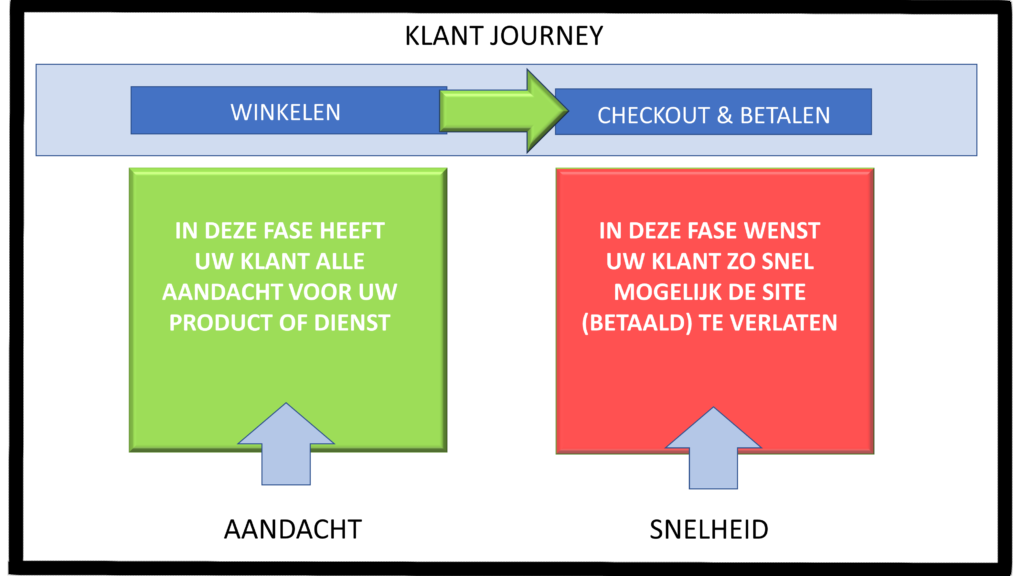
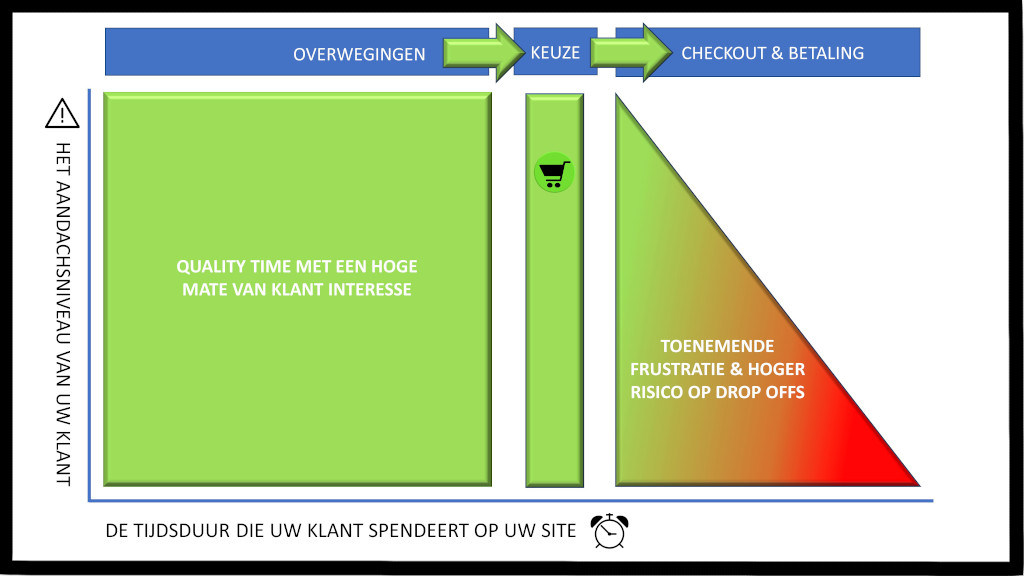
In optimization processes the checkout and payment solution is often seen as a functionality with little or no conversion uplift opportunity. Wrongly!

Studies from Baymard Institute show why in this final phase of your sales funnel, where visitors should just go through checkout and payment, they are leaving your site. It also shows what you can do about it.

The Payment solution is often overlooked in optimization projects. “Don’t fix if it ain’t broken” you sometimes hear. Many entrepreneurs are therefore already happy when their online payment solution functions properly and provides basic functionalities. There have been many developments in this area in recent years that make it easier to migrate from a payment service provider and there are considerable savings opportunities thanks to increased competition. You can compare the payments market with the market of energy suppliers but it is far less transparent. Competition is fierce and it is worthwhile to compare, renegotiate or migrate.

Let EcomStream do a benchmark assessment of your checkout and payment solution. You will be amazed by the findings. In the area of customer experience but also with regards to contractual terms and rates. A meaningful agenda item for your next optimization meeting or contact EcomStream now