Do treasurers really need instant payments? some implications.
| 30-01-2018 | Patrick Kunz |

Per 13 January 2018 we have a new payments service directive (nr. 2) live in the European union, PSD2 for short. One part of PSD2 is the possibility for banks to offer instant payments between banks in the EU. Within max 10 seconds money flows from one bank to the other, also on weekends and on holidays. In this paper I want to discuss the implications for treasurers of instant payments.
Cash flow forecasting
Forecasting is an important part of the daily/weekly routine of a treasurer. He/she needs to predict the future to know his cash/risk/financing position. On the ultra-short term spectrum of this forecast a treasurer might use intraday bank statement (MT942) to take into account the incoming funds during the day. These are often updated hourly. With instant payments a treasurer can have a look at their bank account and the balance that is showing is the real-time balance with all incoming transactions being settled. As said before a treasurer might already have intraday statements but there is (1) a time lag in those and (2) there might be transactions not processed yet. Bottom line this difference amounts to several hours lag. Depending on the size of the company and the amount and size of transactions there is some impact but not very sizeable. Furthermore, those treasurers that do not use intraday balances for their forecasting have no impact of instant payments. However, how about the due payments on non-working days? In the future these are normal payments dates. Previously due payments on weekends are either set on Friday or Monday depending on the terms of the contract. These could now be forecasted on the exact day. But that depends, payments are often done during business hours, so it is possible that nothing changes. Depending on the size of the transactions there is importance to check this with your suppliers and clients. This also depends on bank processing of yourself and your client/supplier.
Bank processing
Instant means instant in time but also in days. In the past we were dependent on the opening hours of the banks and later of the ECB. That could mean that if we send money just after close on Friday and there was a public holiday on Monday we would only see the money coming in on Tuesday. The money was “lost in translation” in between. This is not very modern in an age where we send an email from Tokyo to South Africa in minutes but not money. We could literally fly there with cash and be faster. After all banks have implemented PSD2 money flows 24/7. So also in the weekend and on holidays.
This has an impact on the processing of your bank statement. You now receive bank statement for Saturday and Sunday. Most accounting/treasury departments do not work on the weekends so there is a chance that these statements are not processed. This means you must process 3 statements on Monday. Some companies have automatic processing of bank statements, so the weekend statements might be processed but not (automatically) consolidated leading to more open positions on Monday.
Ok big deal, there is more work to do on Monday due to more bank statements. But there is more: not necessarily for treasury departments. Think about customer services (helpdesk) departments. If a client with an overdue payment calls it would be great if the helpdesk employee is able to verify statements of the customers if the says he has paid or will pay immediately. This however only works if processing is automatic or if the helpdesk employee can access/search the incoming payments on the bank account (which might not have processed in accounting). Not all companies will have this yet.
Overdue calculations might be faulty in some ERP systems as only working days are considered. If a payment is due on Sunday, you can pay on this Sunday and not necessarily on the Friday before.
Conclusion
Instant payments are only a fraction of PSD2 which is often not very interesting for most treasurers. They get some information faster but that does not really help them too much. There is however more to it. Since payments can now arrive and be made in the weekends the cash flow forecasting should now contain 7 days in a week instead of 5. Payment can be spread out more but also receipts will be. Bank processing is more work; 7 daily statements per bank account per week instead of 5. Extra processing or extra automation needed. The extra information might be needed by other departments too even though the treasury/accounting department is not working.
Overall the implications could be bigger then you might think and are different for every company and depending on their existing (bank) processing.
Most bank are planning to introduce weekend reporting by H2 2018 while instant payments are due beginning 2019. For business transactions this might even take until H2 2019.
Some time left but a good time to already think about your current processes in comparison to the new reality under psd2. Treasury is moving to a 24/7 information economy. It’s about time.
Time will tell if there will be fintech’s stepping in helping with above issues with direct connections to the bank, which is another important part of PSD2 but not within the scope of this article.
If you need help with automating your bank statement processing or with your cash flow forecasting, then look at this author and other Flex Treasurers on this website for answers.

Treasury, Finance & Risk Consultant/ Owner Pecunia Treasury & Finance BV
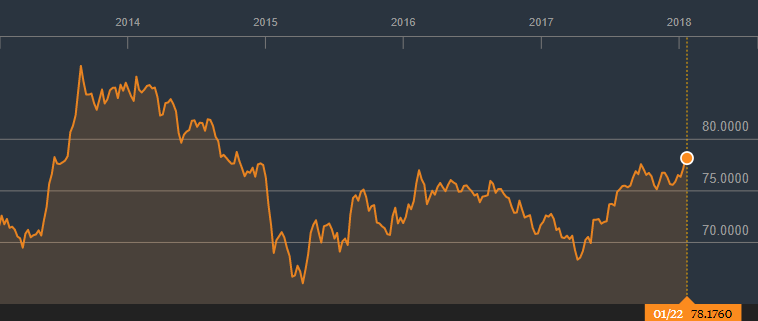
 Over the last year there have been impressive price gains in Greek Government bonds leading to equally impressive falls in yields. Greek 2-year bonds are now yielding 1.35% – down from around 7% at the start of 2017. Similarly, 10-year bonds are now yielding 3.66% – a significant fall since the start of 2017. In fact, the yield on Greek 2-year bonds is now lower than in USA where the current yield is 2.09%. Last week S&P upgraded Greece’s long term credit rating to ‘B’ from ‘B-‘. It would appear that Greece is doing everything right. Right?


 The BEPS (base erosion and profit shifting) initiative is an OECD initiative, approved by the G20, to identify over a period to December 2015, ways of providing more standardised tax rules globally. Phases two and three involve implementation and monitoring (together with some remaining standard setting and clarification). BEPS is a term used to describe tax planning strategies that rely on mismatches and gaps that exist between the tax rules of different jurisdictions, to minimise the corporation tax that is payable overall, by either making tax profits “disappear” or shift profits to low tax operations where there is little or no genuine activity. In general BEPS strategies are not illegal; rather they take advantage of different tax rules operating in different jurisdictions, which may not be suited to the current global and digital business environment.
 Payments is increasingly seen as an area that is ripe for disruption, having the potential to enhance payment processing. To overcome the current structural weaknesses in the payments area including low speed, high expenses, financial institutions are increasingly adopting the idea of blockchain or distributed ledger technology (DLT). This in order to offer (near) instant cross-border payments at lower costs, higher security and more reliability. Up till recently most of these trials have been non-interoperable stand-alone solutions. But that may change!
 Despite interest rate being very low for the last few years, general consensus is that rates will eventually rise – rates will become more normal. Rates are being held down by the actions of central banks with their quantitative easing. As QE is scaled backed and stopped this should allow rates to rise from their current low levels. The big question is – how high will rates rise? The Euro is not yet 20 years old and that means that whilst there is a lot of data, it does not require looking through 50 or 60 years of data to try and find the norm.
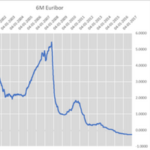 In the last year both the ECB in regard of EURIBOR and the FCA in London in regard of LIBOR have come to the same conclusion – the fixing of interest rate indices can not carry on in their present form. The current benchmarks are tainted by allegations of fraud and malpractice. Furthermore, the way that the rates are determined are also criticized – no actual transactions take place at the fixing price when the fix is made daily. But the big problem is that these fixings are intrinsically linked to financial contracts with values measured in 100 of trillions of EUR, USD, GBP etc.
 On the 13th January 2018, PSD2 came into force. In previous articles we have discussed the meaning of this legislation. To recap – it is a directive to regulate the payment market and payment service providers, whilst also opening the market to non-banks. This should lead to a uniformity in products, technical standards and infrastructure. PSD2 will allow customers of banks to voluntarily use third party providers to process and initiate their financial transactions.