

BCR Publishing
We are the leading provider of news, market intelligence, events and training for the global receivables finance industry.
Working with industry leading organisations, experts, governments and universities, BCR Publications delivers expertise in factoring, receivables and supply chain finance to a global audience.
BCR has long been a beacon of innovation and excellence in the realm of receivables finance, playing an instrumental role in shaping the industry’s international landscape. Through its comprehensive conferences, insightful publications, and thought leadership, BCR has facilitated crucial dialogues and connections among industry professionals, driving forward the development of receivables finance globally.
Follow BCR Publishing
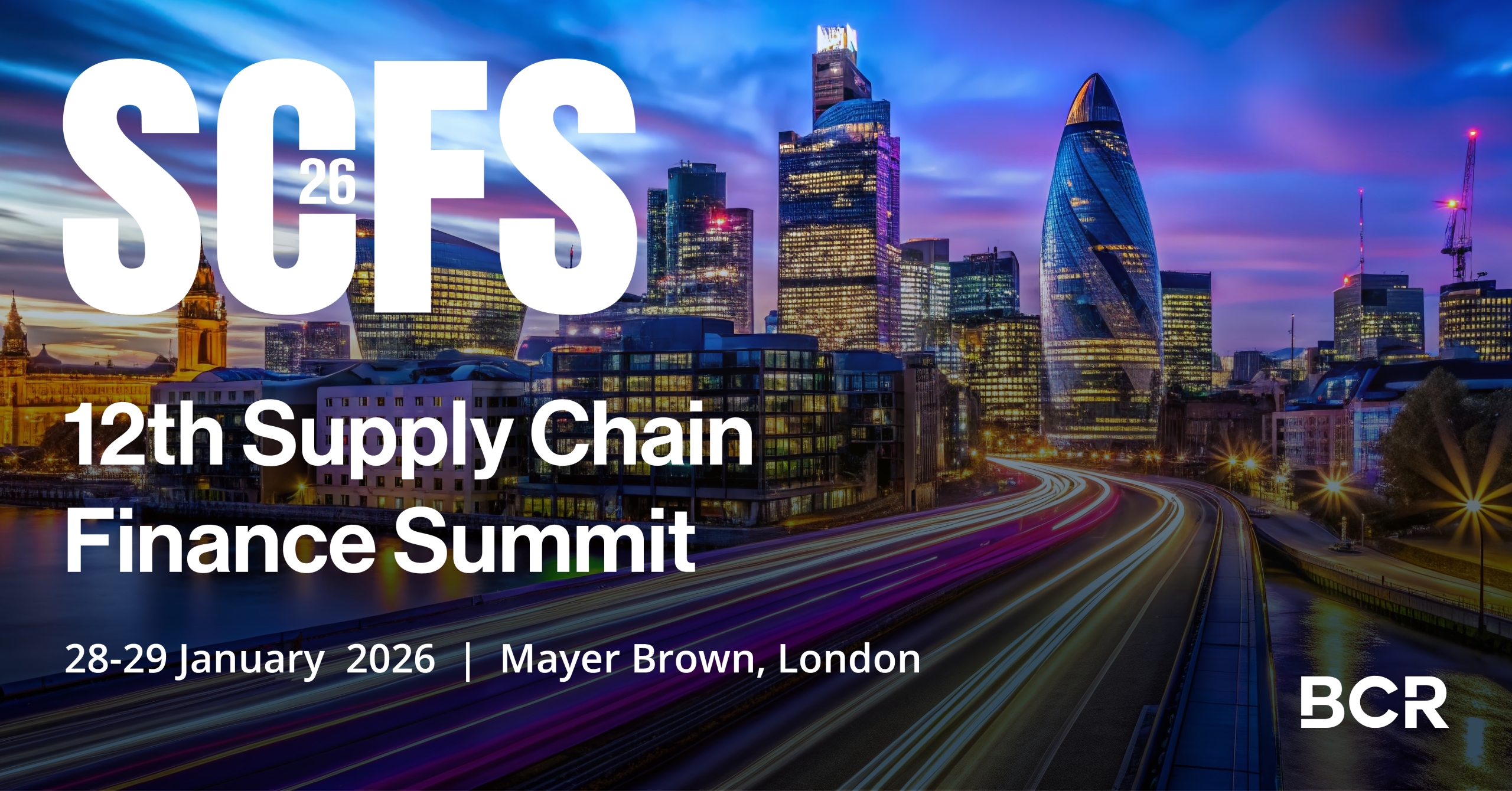
Free passes
For corporate treasurer roles/functions!
Microsoft Coco Framework: blockchain game changer?
|18-9-2017 | Carlo de Meijer | treasuryXL
We present a short summary of the article.
What’s the issue?
Corporate interest in blockchains is firmly growing. Embracing this innovative technology however remains a big hurdle for most enterprises, as there is no unified approach in this regard. As a result they have difficulties integrating in into their systems.
There are many different blockchains, but major blockchains are not designed to be interoperable with one another. As enterprises look to apply blockchain technology to meet their business needs, they’ve come to realize that many existing blockchain protocols fail to meet key business requirements. The problem is that most blockchain protocols today require complex development techniques to meet the operational and security needs of enterprises.
Issues like performance, confidentiality of data, governance and required processing power are still major stumbling blocks for using blockchains. One of the other key enterprise blockchain problems is that of access controls for transactions.
What is the Coco Framework?
The Coco Framework is an open-source Ethereum-based protocol, designed to provide high-scale and confidential blockchain networks for enterprise purposes. It should be seen as the foundation of blockchain for the enterprise.
It is designed to work with any ledger or operating system. It can connect existing blockchains with one another. The Framework is targeted especially for consortiums where nodes and actors can be controlled.
The Coco Framework is built to address some of the current limitations of enterprise blockchain. It is meant to reduce the complexity currently associated with blockchain protocol technology and make it easier for enterprises to adopt blockchain technology. This by increasing transaction speeds, offering confidentiality and simplify governance decisions. The ultimate goal is to boost widespread adoption, particularly among enterprises, of blockchain technology.
The CoCo Framework is not a decentralised solution in this regard as participants will still be able to exert a high degree of control over their blockchain. CoCo is more of a distributed ledger-oriented approach than a decentralised technology.
The design of the CoCo Framework
Microsoft is developing the CoCo Framework in cooperation with Intel, JP Morgan and Ethereum. The Coco platform is designed specifically for confidential consortiums, through the introduction of a trusted execution environment (TEE), advanced cryptography and innovative blockchain-focused consensus mechanisms “to open up new blockchain enabled scenarios across industries”.
The Coco Framework needs a trusted execution environment where nodes and actors are explicitly declared and controlled because it relies on shared trust between machines running modified blockchain software in order to avoid the need for transaction verification. With these TEEs a network of trusted enclaves can be build that all agree on the ledger and Coco code they are running. Because it’s an open framework, it can also support other compatible TEEs as they become available.
The idea is that enterprises may place their blockchain code in a trusted area, which is established through integrated tools such as Intel’s Software Guard Extensions (SGX) or Windows Virtual Secure Mode (VSM). These are hardware-based security technologies that the CoCo Framework uses to improve the throughput, efficiency and privacy of the blockchain.
Compatibility
The CoCo Framework is designed to integrate with a wide range of blockchains and distributed ledgers. It is meant to provide the infrastructural underpinnings for the growing number of such ledgers that are emerging from different vendors and groups. Although CoCo is not an actual ledger, it will help other companies with established blockchains to come together, link with each other and built large networks.
Problems to solve
Despite taking a more centralised approach there are many benefits to embracing the the CoCo Framework. When implemented into blockchain networks and processed in a trusted environment, allowing for a “simplified’ consensus mechanism” may solve the various privacy, speed and governance issues for commercial adoption by corporates. At the same time, ”they will not lack in security and immutability”, which are two of the driving factors behind blockchain technology as a whole.
According to the Coco Framework White Paper, these “enterprise-ready trusted blockchains networks” that all agree on the ledger and the CoCo code they are running, will deliver:
When to start?
According to Microsoft, the company has now started exploring the CoCo Framework’s potential across different industries, such as retail, supply chain and financial services.
Microsoft plans to make the Coco Framework available as an open source software project by 2018. It will be posted to and available on Github.
You can find more details about CoCo in Carlo de Meijer’s article on LinkedIn.
Carlo de Meijer
Economist and researcher
More articles about blockchain technology from Carlo de Meijer:
Kennismaking met de Discounted Cashflow methode
|14-9-2017 | Peter Schuitmaker |
De Discounted Cashflow (DCF) methode is een methode om de economische waarde van een object te bepalen. Toekomstige kasstromen worden op een of andere manier contant gemaakt naar het moment van waarderen. Dit is echter geen nieuwe wetenschap. Want de DCF benadering van waardering wordt in zijn basisvorm al vele eeuwen toegepast.
DCF methode
De DCF methode vindt toepassing voor het waarderen van projecten, beleggingsobjecten, ondernemingen, enzovoorts. Dat er een verschil bestaat tussen boekwaarde en economische waarde lijkt evident. Boekwaarde is het resultaat van een boekhoudkundig proces: investering minus afschrijvingen. Of voor de boekwaarde van aandelen: de kapitaalstorting plus winstinhoudingen minus de winstuitdelingen. Maar de economische waarde steunt op kasstromen en de tijdswaarde van geld.
Als voorbeeld de investering in een productieautomaat. De investering is 100. Gedurende 5 jaar wordt 25 bespaard. De productieautomaat wordt na 5 jaar afgestoten. Deze heeft dan een restwaarde van 20. Het geëist rendement door de vermogensverschaffers op de investering is 8%. De economische waarde laat zich dan eenvoudig berekenen: deze is dan 126. Dus 26% meer dan de boekwaarde.
Als dat object een beleggingsobject of een investeringsobject is, zijn de waarschijnlijkheid en omvang van toekomstige kasstromen relatief eenvoudig te bepalen. Zo’n investering en de daarmee samenhangende financiële gevolgen, zoals onderhoudskosten en besparingen, laten zich makkelijk begroten.
Maar wanneer dat object een bedrijf is wordt dat al snel beduidend lastiger. Dat komt vanwege de relatief grote onzekerheid over het ontstaan van vrije kasstromen. De onderneming is onderdeel van een waardeketen en opereert daarnaast in een dynamische marktomgeving. Ketenpartners, concurrenten en afnemers bewegen continu. Het waarderingsproces van MKB ondernemingen is daarom eerder een bedrijfskundige dan een rekentechnische uitdaging.
De DCF waardering van bedrijven is dus een lastige, soms vrijwel onmogelijke opgave. Dat is vervelend. Want bedrijfswaardering is een veel voorkomend onderwerp in de adviespraktijk van accountants, bedrijfsovername-specialisten en bedrijfsadviseurs. Bij bedrijfsoverdracht, uitkoop van een aandeelhouder, management buyout, bedrijfsopvolging binnen de familie of boedelscheiding doet zich het vraagstuk voor van een goed onderbouwde bedrijfswaardering. Want de financiële belangen zijn groot!
Kennis van de meest gebruikelijke DCF waarderingsmethoden helpt bij het oplossen van waarderingsvraagstukken. Het gaat hierbij om de basisprincipes en economische waarde. Maar ook begrippen als planperiode en restperiode, vermogenskostenvoeten, de WACC en Adjusted Present Value methode, goodwill, activa versus aandelentransactie en de waarde van de IB onderneming.
BBO&F en Bedrijfsopvolging.nl organiseren op dinsdag 26 september 2017 in Rotterdam een cursus ‘Kennismaking DCF voor bedrijfswaardering’. De cursus is bedoeld voor MKB accountants, administratiekantoren en overige financiële dienstverleners. Vooral praktijkgerichte concrete kennis van de achtergronden en uitgangspunten.
Meer informatie is te vinden via deze link
Peter Schuitmaker
Registered Advisor for Business Transfer and Succession
Peter Schuitmaker heeft ook gepubliceerd:
Werken aan Waardestuwers
Mijn bedrijf verkopen
De 100 meest veelbelovende FinTech bedrijven – wie wordt de winnaar?
12-9-2017 | FM.NL | treasuryXL |
Honderden Europese fintechbedrijven staan op het punt door te breken en uit te groeien tot scale-up. Miljarden liggen klaar om geïnvesteerd te worden in bedrijven die de markten gaan veroveren. Wie wordt de volgende?
De 100 meest veelbelovende FinTech bedrijven
Bron: FM.NL
Top 3 FinTechs per categorie
Bron: FM.NL
Veelbelovende FinTech-bedrijven & verrassende visies op de European FinTech Awards in Brussel:
Deel expertise en visies. Laat u verrassen tijdens de vele kennissessies, keynotes en pitches. Krijg de beste antwoorden op uw vragen: Hoe schaalt u efficiënt een FinTech-bedrijf op? Wat kunnen we leren van succesvolle FinTechs? Hoe reageren banken en wat denken investeerders?
Laat u inspireren door de meest veelbelovende FinTech-bedrijven ten overstaan van aanwezige investeerders, stakeholders en andere belangstellenden op 27 september 2017. Dit is de dag waarop u de beste FinTechs van Europa pas écht leert kennen.
Korting via treasuryXL
Bezoek de European FinTech Awards & Conference met korting
Ontmoet 27 september 2017 in ‘The Egg’ in Brussel 400 nationaal en internationaal befaamde FinTech-entrepreneurs, bankiers, investeerders en adviseurs. De European FinTech Awards & Conference 2017 biedt een unieke kans om uw netwerk te vergroten. Laat deze kans niet glippen om gearriveerde FinTech-sprekers op het podium te zien en 30 pitches te zien van Europa’s beste innovatieve ondernemingen van dit moment.
Speciaal als TreasuryXL community lid krijgt u 10% korting met de code: Friend2017, boek vandaag uw ticket(s)
De European FinTech Awards wordt georganiseerd door Alex van Groningen en B Hive.
[button url=”https://www.treasuryxl.com/about/” text=”Meer informatie over treasuryXL” size=”small” type=”primary” icon=”” external=”1″]
[separator type=”” size=”” icon=””]