

BCR Publishing
We are the leading provider of news, market intelligence, events and training for the global receivables finance industry.
Working with industry leading organisations, experts, governments and universities, BCR Publications delivers expertise in factoring, receivables and supply chain finance to a global audience.
BCR has long been a beacon of innovation and excellence in the realm of receivables finance, playing an instrumental role in shaping the industry’s international landscape. Through its comprehensive conferences, insightful publications, and thought leadership, BCR has facilitated crucial dialogues and connections among industry professionals, driving forward the development of receivables finance globally.
Follow BCR Publishing
Free passes
For corporate treasurer roles/functions!
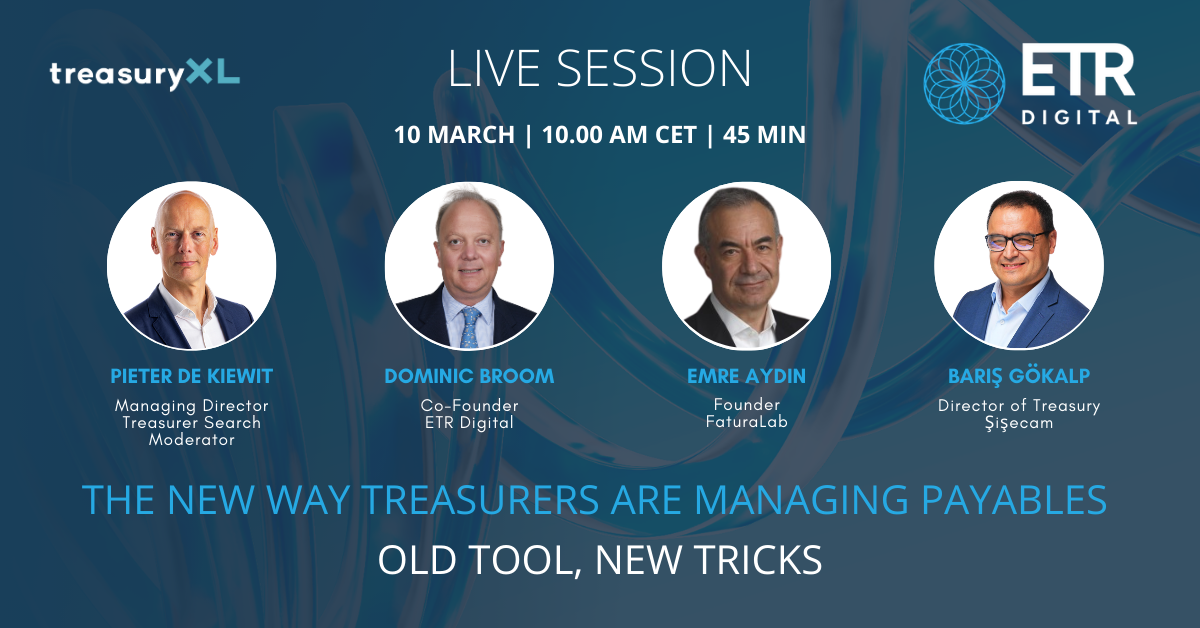
Managing working capital in challenging times | Attend on December 1st 2022
31-08-2022 | treasuryXL | The Working Capital Forum | LinkedIn |
Are you a Corporate Treasurer? Attend The Working Capital Forum Europe 2022 for free: use code TXL22CG
Mark your calendar for the 1st of December 2022! The Beurs van Berlage in Amsterdam will open the doors for The Working Capital Forum Europe. This event brings together leaders in treasury, procurement, and payments to share ideas and techniques for better working capital management across supply chains.
That’s never been so important as in these times of rising interest rates, inflation, and supply chain shocks, when managing working capital is everyone’s concern.
From supply chain finance to accurate cash forecasting, solutions for every component of working capital management will be discussed on stage, demonstrated in our information area, and examined in our workshops at the world’s largest specialist working capital and supply chain finance event.
We’re delighted to return to Amsterdam for this one-day live event, with main stage keynote sessions, panel debates, and breakout workshops and demos.
If you’re interested in optimising working capital in your organisation, you need to join us in Amsterdam for the most productive day you’ve had in years.
Among the topics we will be covering are:
TO REGISTER AND FIND OUT MORE VISIT: WORKING CAPITAL FORUM EUROPE
Visit the Working Capital Forum: https://www.workingcapitalforum.com/
Join our events here: https://www.workingcapitalforum.com/events
Enter the Working Capital and Supply Chain Finance 2022 Awards here: https://www.workingcapitalforum.com/awards.html
CFO Perspectives: How to set a currency hedging strategy
30-08-2022 | treasuryXL | Kantox | LinkedIn |
How should a CFO set their currency hedging strategy, to protect cash flows or to minimise P&L impact? In the fourth edition of CFO Perspectives, we’ll explore how senior finance professionals can choose the right path when it comes to hedging.
Credits: Kantox
Source
According to a recent HSBC report, the objectives of currency hedging are pretty extensive. While three-quarters of surveyed participants mention forecasted cash flows as an FX risk that their company hedges, 61% cite balance sheet items as the risk they hedge. Other participants say minimising the impact on consolidated earnings is one of their FX hedging objectives and KPIs.
The debate about whether to hedge cash flows or earnings —by removing the impact of accounting FX gains and losses— is as old as currency hedging itself. The two sides have powerful arguments in their favour.
Cash flow hedging vs balance sheet hedging
What’s the correct approach?
The debate will likely never be settled entirely. No single approach for currency risk management is definitively better than another. Different opinions may reflect the type of business activity, the preferences of investors and even managers’ own biases.
The key step for any CFO looking to establish or revamp their business’s currency hedging program is to clarify what the firm is trying to achieve. Only with enough clarity on this matter can the dangers of ad hoc or unsystematic hedging be avoided.
So, where does that leave us? This blog brings some welcome news to beleaguered CFOs as they take sides. While nothing replaces clarity regarding the key objectives of currency management, technology now makes it possible for risk managers to:
This is big news indeed!
Practical steps on the journey to the FX hedging decision
While a certain amount of debate and discussion is unavoidable when deciding the goals of a firm’s FX hedging program, a number of practical steps can be followed to determine what should be hedged.
These steps share a central concern about protecting and enhancing the firm’s operating profit margins by giving particular importance to the pricing characteristics of each business division.
These steps include:
In other words: to set a currency hedging strategy you need to do away with outdated constraints. Technology is putting to rest the traditional view of currency management as a resource-intensive activity. So the message is: give priority to your FX goals, not to the resources currently at hand.
Read the third edition of our CFO Perspectives series, 5 ways CFOs can increase the efficiency of treasury operations.
What is a yield curve or interest rate curve? (Dutch Item)
29-08-2022 | Erna Erkens | treasuryXL | LinkedIn |
Valutacoach en currency specialist Erna Erkens legt in dit artikel uit wat een ETF is, hoe je daar in kunt beleggen en waarom je daarin zou beleggen.
Oorspronkelijke bron
Inhoud
Ik was een tijdje geleden te gast bij een bank. Daar spraken we innovatie, risico en rendement. Dat is wat kort door de bocht, maar dan heb je een idee van het onderwerp. De ETF kwam in dit gesprek ook voorbij. Een van de topmensen van deze bank vroeg: “Wat is een ETF?” Dat was ook nog eens iemand die best vaak risico’s van deze bank moest beoordelen. Het goede nieuws was dat hij eerlijk was over het feit dat hij het niet wist. Het slechte nieuws was dat iemand op zijn positie niet wist wat een ETF was. Een goede reden voor dit artikel.
Na het lezen van dit artikel weet je beter het verschil tussen een ETF en een beleggingsfonds. Kan je met meer vertrouwen en succesvoller beleggen in een ETF. Ben je makkelijker in staat te beoordelen of een ETF als belegging bij jou past. En slaag je erin om duidelijker uit te leggen wat een ETF is als dit ter sprake komt.
Beleggen in ETF’s is de laatste tien jaar steeds populairder geworden. Maar wat is een ETF nu eigenlijk? En hoe werkt zo’n ETF nu eigenlijk?
Lees ook: Consumentenprijsindex vs. producentenprijsindex: dit is wat je moet weten
Wat is een ETF?
ETF staat voor Exchange Traded Fund. Een ETF is een beleggingsfonds dat bestaat uit verschillende onderliggende activa, zoals aandelen of obligaties. ETF’s worden verhandeld op de beurs, net als aandelen. Dit maakt ze toegankelijk voor iedere belegger. Ze werden in 1993 geïntroduceerd in de VS. Het is de eenvoudigste manier om een index te kopen. Je koopt een ETF met 1 transactie. Ze werden in het begin Indextrackers genoemd. Je kunt een ETF alle werkdagen verhandelen met dezelfde handelstijden als de AEX. Dus van 9.00 uur tot 17.30 uur.
Als je bijvoorbeeld een ETF van de AEX koopt, wordt je geld belegd in alle aandelen die in de AEX zitten.
Er zijn ook ETF’s in een combinatie van producten zoals aandelen, obligaties en vastgoed. Of in aandelen uit verschillende sectoren. De keuze is reuze.
Wat is een ETF? Waarom zou je daarin beleggen?
Kort gezegd zijn ETF’s een goede keuze voor beleggers die diversificatie willen en risico willen verlagen. Ze worden soms ook gebruikt door beleggers die snel geld willen verdienen – al is dat wel afhankelijk van je beleggingsstrategie en de ETF waarvoor je kiest. En garanties zijn er natuurlijk nooit.
Als je overweegt om in een ETF te beleggen, is het belangrijk dat je goed informeert en weet waar je aan begint. Zoals met elke vorm van beleggen, is er altijd het risico dat je geld verliest.
ETF’s zijn niet geschikt voor iedere belegger, dus denk goed na voordat je erin stapt!
Voordelen van ETF’s
Nadelen van ETF’s
Nog een nadeel van een ETF
Wat is het risico van een ETF?
Het risico van een ETF is afhankelijk van de onderliggende activa waarin het belegd is en wat de ontwikkelingen in die onderlinge active. Als je bijvoorbeeld in een ETF belegd die bestaat uit aandelen van bedrijven uit de technologische sector, dan is het risico hoger dan wanneer je in een ETF zou beleggen in obligaties.
Dit komt omdat de technologische sector beweeglijker is dan de obligatiemarkt.
In het algemeen is het risico van een ETF hoger dan het risico van een obligatie, maar lager dan het risico van een aandeel.
Dit betekent dat ETF’s geschikter zijn voor beleggers die bereid zijn om iets meer risico te nemen, in ruil voor de kans op een hoger rendement.
Welke soorten ETF’s zijn er?
Er zijn verschillende soorten ETF’s, afhankelijk van de onderliggende activa waarin ze belegd zijn.
Sommige ETF’s bestaan uit aandelen, andere uit obligaties of grondstoffen. Er zijn ook ETF’s die een mix van verschillende onderliggende activa hebben.
Wat is het verschil tussen een ETF en een aandeel/obligatie?
1. ETF = meerdere onderliggende activa
Het belangrijkste verschil tussen een ETF en een aandeel/obligatie is dat je met een ETF in meerdere onderliggende activa kunt beleggen.
Als je in een ETF belegt die bestaat uit aandelen van bedrijven uit de technologische sector, dan beleg je indirect in alle bedrijven die in deze ETF zitten. Dit is niet mogelijk met aandelen of obligaties. Dan moet je alle aandelen of obligaties individueel aanschaffen.
Je kunt wel een aandeel kopen van een bedrijf uit de technologische sector, maar je hebt geen invloed op de rest.
2. ETF = vaak goedkoper dan aandeel/obligatie
Een ander verschil is dat ETF’s meestal goedkoper zijn dan aandelen en obligaties. Dit komt omdat er minder kosten aan verbonden zijn, zoals o.a. managementkosten. Ook hebben ETF’s een hogere liquiditeit, wat betekent dat ze makkelijker te verhandelen zijn.
ETF’s vs. beleggingsfondsen
Een veel voorkomende vraag is hoe ETF’s verschillen van beleggingsfondsen, aangezien het basisprincipe hetzelfde is.
Hoeveel geld heb je nodig om in ETF’s te kunnen beleggen?
ETF’s hebben geen minimuminvestering nodig – tenminste niet in dezelfde zin als beleggingsfondsen.
Ook worden ze per aandeel verhandeld, dus tenzij je broker de mogelijkheid biedt om fractionele aandelen te kopen, zul je tenminste de huidige prijs van één aandeel nodig hebben om te beginnen.
Een bekende en populaire ETF is bijvoorbeeld die van Vanguard FTSE All-World. Op het moment van schrijven staat die rond de 95 euro. Eerder dit jaar (2022) stond hij hoger (rond de 105 euro), maar zoals normaal is op de aandelenmarkt fluctueert dat.
Lees ook: Wat is valutarisico?
Doe nu de valutatest!
Als valutacoach help ik beleggers met het vergroten van hun winst door aandacht te besteden aan valutarisico.
Neem 5 minuutjes de tijd om tien vragen te beantwoorden en ontdek hoe ook jij beter kunt scoren op valutagebied.
Doe nu de test!
Wil je beginnen met beleggen? Dan raad ik je aan om je eerst goed te verdiepen. Dat begint met het lezen van boeken over beleggen, het volgen van trainingen en bekend worden met het vakjargon.
Heb je vragen of wil je meer informatie over aanstaande trainingen? Neem dan contact met mij op.