

BCR Publishing
We are the leading provider of news, market intelligence, events and training for the global receivables finance industry.
Working with industry leading organisations, experts, governments and universities, BCR Publications delivers expertise in factoring, receivables and supply chain finance to a global audience.
BCR has long been a beacon of innovation and excellence in the realm of receivables finance, playing an instrumental role in shaping the industry’s international landscape. Through its comprehensive conferences, insightful publications, and thought leadership, BCR has facilitated crucial dialogues and connections among industry professionals, driving forward the development of receivables finance globally.
Follow BCR Publishing

Free passes
For corporate treasurer roles/functions!
How are fintechs combating anti-money laundering challenges?
30-01-2023 | treasuryXL | Refinitiv | LinkedIn |
A recent white paper from Refinitiv – produced in collaboration with global consultancy, FINTRAIL – discusses the key elements currently shaping the evolving fintech space and the key trends that will be shaping the fintech landscape in 2023.
For more data-driven insights in your Inbox, subscribe to the Refinitiv Perspectives weekly newsletter.
Constant evolution
The fintech industry is one of dynamism and innovation; a space where agile players harness new technology and challenge the status quo of the traditional financial services industry every day.
Undoubtedly, this delivers substantial opportunity for those involved in the sector, but at the same time, financial criminals are similarly leveraging technology and using advancements to devise new ways to further their illicit activities.
In this fast-paced space, characterised by evolution and a growing financial crime threat, what key elements are at play and what factors have shaped and defined the industry in 2022, and will continue to do so in 2023?
Findings from Refinitiv and FINTRAIL, based on interviews with experts from different fintechs across a range of geographies, have identified five key factors that are shaping fintechs today.
Five factors shaping fintechs today
Technology
The fintechs we spoke to stress that the right technology can make all the difference when it comes to managing financial crime, with some describing machine learning and artificial intelligence (AI) as “indispensable tools”.
This view is in line with the recommendations of the Financial Action Task Force (FATF).
Interviewees also stress the importance of “explainability” – in other words being able to explain what data is used to reach different conclusions and why the results can be trusted – when introducing technology.
Data
Leading technology needs trusted, comprehensive data, but fintechs highlight that striking a balance is key. Requiring too much information can damage the customer experience, while not enough leaves fintechs vulnerable to financial crime.
Collecting the right data – and the right amount of data – and then building a complete picture of risk is key to the combined fintech goals of maximising efficiency, keeping customers happy and protecting against financial crime.
Talent
Technology and data are critical in managing financial crime threats, but a third and equally critical element is invaluable human expertise. The right people across difference disciplines can make all the difference.
Those we interviewed said that engineers and data scientists are key, and further that the compliance profession is considered “recession-proof” – upskilling compliance team members should be a key priority for those in the sector.
Interviewees also highlighted that fintechs should concentrate on attracting and retaining key staff, but should also consider outsourced solutions for additional support and expertise.
Governance
Effective governance is a key consideration for fintechs as they grow and evolve. The nature of the industry and the rapid growth trajectories often followed by sector participants mean that effective AML controls and good governance need due attention.
Plus, fintechs agree that governance models should not be static – they need to adapt over time.
Efficiency
Efficiencies are increasing in the industry, with new technology now enabling fintechs to integrate specific data points alongside behavioural biometrics to help them spot suspicious activity.
For example, device identification data can identify if an account is accessed from a new device and this can be compared to a client’s history.
To further boost efficiencies, fintechs say that adopting a dynamic approach to risk is key and avoids wasting often scarce resources.
Discover more about our KYC and anti-money laundering solutions for the fintech industry
Keeping pace with changes in fintech
Fintechs can expect these top trends to continue in the year ahead and should especially take note of the powerful combination of tech, data and human expertise that are not only shaping the sector, but can enable better compliance and good governance, while boosting efficiencies.
As the industry continues to grow and develop at pace, many players are rightly concerned with ensuring an engaging and positive customer experience that offers connectivity and seamless interaction. They must, however, also keep tight control of the AML processes they will need to protect against widespread illicit activity and ensure regulatory compliance.
Read the full white paper. AML challenges for fintechs: Insights for the future
5 Treasury Trends for 2023: Managing Currencies in an Age of Uncertainty
26-01-2023 | treasuryXL | Kantox | LinkedIn |
Scared about 2023 looking even worse than the crazy last three years? Keep calm and take a holistic approach to currency management.
Source: Kantox
If we look back at the economic landscape of last year, treasurers and CFOs have been dealing with risky scenarios for a while. But is the future as dark as some say? Our latest episode of CurrencyCast featured the treasury trends for 2023. In this article, we will take a deep dive into those trends and give you some tips on how to tackle the challenges in this volatile landscape.
Treasury trends for 2023
Consultants and pundits are busy laying out scary scenarios for 2023. However, the future is uncertain so let’s not waste time in futurology trying to predict what’s coming.
Instead, we can focus on understanding the treasury trends of 2023. In this article, we’ll analyse those trends with a focus on currency management and give you actionable tips on how to handle any hurdles ahead.
CFOs and corporate treasurers need to be well prepared for the upcoming challenges and opportunities as they manage currencies. The top five priorities in the corporate treasury space for 2023 are:
FX volatility
In the past year, the financial markets have seen high levels of FX volatility and an unstable economy that seems to point towards a recession. Trends of high inflation, banks’ rising interest rates, political instability, and more will remain in the new year.
Hence why, it is fair to say that currency managers need to be well-prepared to face interrelated risks affecting FX rates. Companies dealing with foreign currencies will have difficulties accurately forecasting cash flows.
However, there is no reason to panic yet. There are a few strategies that corporate finance professionals can implement to tackle FX volatility; we will explain them later.
Shifting interest rate differentials
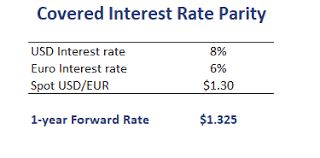
Shifting interest rate differentials are a likely scenario in 2023 as central banks act to tame inflation, each at its own pace. The good news is that companies can optimise such interest rate differentials across the entire FX workflow. Here are a couple of examples:
– With favourable forward points, pricing with the forward rate improves the firm’s competitive position without hurting budgeted profit margins.
– With unfavourable forward points, pricing with the forward rate helps managers avoid losses on carry and the temptation of excessive pricing markups.
– Finally, the cost of hedging can be lowered by delaying hedging execution with the help of automated conditional FX orders.
.
Liquidity management
In addition, the current emphasis on strong liquidity management will persist well into 2023. Liquidity management allows the treasury team to have a wider view of the company’s resources and be financially agile.
This will give any treasury professional the required accurate insights on the cash projections. And ultimately, help the business be prepared for potential liquidity risks that may arise.
Cash flow visibility
Avoiding less-than-stellar cash flow visibility will be top of mind for treasurers in 2023. As economic cycles could be disrupted again, companies need to be able to get ahead of the curve and reduce deviations in their cash flow projections.
However, we believe that the importance of having accurate cash flow forecasts is somewhat overstated, at least when it comes to currency risk management.
To understand why this is so, the treasury team should consider how the different cash flow hedging programs deal with this concern:
– In firms with dynamic prices, forecasting accuracy is not much of a concern because firm sales/purchase orders have a very high occurrence probability.
– In firms with steady prices across several campaign/budget periods, layered hedging programs build the hedge rate in advance instead of protecting an FX rate.
– In firms with steady prices for a single campaign/budget period, conditional orders to protect the budget rate provide managers with time to update their forecasts.
For better cash flow visibility in the new year, companies will need to consider their ability to implement hedging programs that best suit their needs.
Automation
In 2023, the role of the corporate treasurer will require professionals to improve their technological skills. The traditional treasury function is shifting towards an automated digital infrastructure that enables increased efficiency and faster processes.
To manage currency risk in the new year, treasurers will need to move away from siloed systems and wasting time on manual tasks. Instead, they need to look for a solution that is able to automate the entire FX workflow.
Tools that are able to connect, via APIs, to their treasury management system and other data sources, for updated reports that give accurate insights into their FX exposure.
Facing the challenges
Now you know the treasury trends that will be dominating 2023 for corporate treasurers. But we also want to give you some tips on how currency managers should act in the face of such challenges.
As we like to emphasise at Kantox, currency management is much more than currency risk management. And currency risk management, in turn, is more than just the act of executing a hedge. Let us see this in more detail.
Consider the case of automated conditional orders to protect a budget rate. To the extent that the underlying levels are not hit, no trades are executed. Yet, you are still actively managing your firm’s exposure to currency risk.
Delaying hedges may lead to netting opportunities that ultimately result in less, not more, hedging transactions. The results are:
The right approach for 2023
Pundits predicting a catastrophic 2023 may turn out to be right. Then again, they might not. In any case, the priority for currency managers is to take a holistic view of currency management that allows them to:
As you have seen, corporate treasurers will need to be well-prepared for all the interrelated risks of the turbulent economic landscape. With the help of the right automation tools, the treasury function can have a strong currency management strategy that helps them storm the weather outside.
Kantox is the currency management automation solution that covers the entire FX workflow so you can improve your profit margins and leverage foreign currencies.
Book a free strategy session with our currency management specialists to learn more.
Programme: International Treasury Management and Corporate Finance – Advanced
26-01-2023 | François de Witte | treasuryXL | LinkedIn |
treasuryXL expert François de Witte will conduct advanced training on International Treasury Management and Corporate Finance at the House of Training in Luxembourg on March 2nd. Read below more
Description
The treasurer is the custodian of the company’s daily liquidity and financial risks. He manages, anticipates, secures and help optimize cash flows by ensuring that financial needs are covered and appropriate instruments are used, as well as take necessary measures to mitigate financial risks.
Objectives
At the end of this programme, the participant will able to:
The various modules will allow to acquire an in-depth knowledge of the different areas of the “Corporate Treasurer” profession.
Programme
Module 1 : Financial Maths in Excel (Focus on treasury & corporate finance)
Speaker: Hugues Pirotte / Professor of Finance at Solvay Brussels School
Module 2 : Payments, Cash Management and Banking Relations – Advanced
Speaker François De Witte / Treasury Consultant
Liquidity management – Basic concepts.
Module 3 : Trade Finance – Advanced
Speaker: Benjamin Defays / Senior Associate Vice President
Module 4 : Practical Aspects of International Finance Regulation
Speaker: Lievin Tshikali
With the successive financial crises, serious concerns have naturally been raised in the population, forcing G24 governments and international organisations to build an incredible set of laws to “better” regulate/monitor the activities of banks and other financial institutions. This module provides an overview of international finance regulation. It considers some regulatory and practical issues affecting transnational financial transactions undertaken by global investment and corporate banks.
Module 5 : Risk Management Applied to Treasury – Advanced
Speaker: François Masquelier / CEO
Module 6 : Technologies Applied to Treasury
Speaker: François Masquelier / CEO
Target Audience
Financial professionals (finance, banking, accounting, tax, treasury…) willing to acquire an in-depth knowledge in corporate treasury and wishing to exercise this knowledge in practice.
Prerequisites
François de Witte