XLcompass: FX risk, hiring and automation: how treasury teams are handling it
23-09-2026 | How treasury teams handle FX pressure, build stronger teams and automate without losing control.

23-09-2026 | How treasury teams handle FX pressure, build stronger teams and automate without losing control.
07-09-2026 | Treasury automation is moving beyond simple rules and static workflows.
17-08-2026 | A successful treasury team needs more than technical knowledge
14-07-2026 | The session brought together treasury professionals and technology providers to discuss how treasury teams can respond to growing pressure from volatile markets, geopolitical events, AI, and changing board expectations.
11-03-2026 | In our live session with ETR Digital we explored how working capital notes and a digital marketplace can transform payables and supplier financing.
30-03-2023 | Have you ever sat staring at a huge data set, perhaps spread across many files or sources, wondering how to collect and extract the valuable insights hidden within it?
06-02-2023 | Anastasia Kuznetsova | treasuryXL | LinkedIn |
The recent increase in ESG awareness among consumers and investors, along with regulatory pressure, has prompted companies around the world to incorporate ESG aspects into their business models in order to become sustainable.
However, a transition to more sustainable operations is not possible without new financing. Thus, Corporate Treasurers can significantly help companies to achieve their ESG goals by raising funds for the company’s sustainable initiatives. This can be done through the creation of a sustainable finance framework, which has gained popularity among companies in recent years.
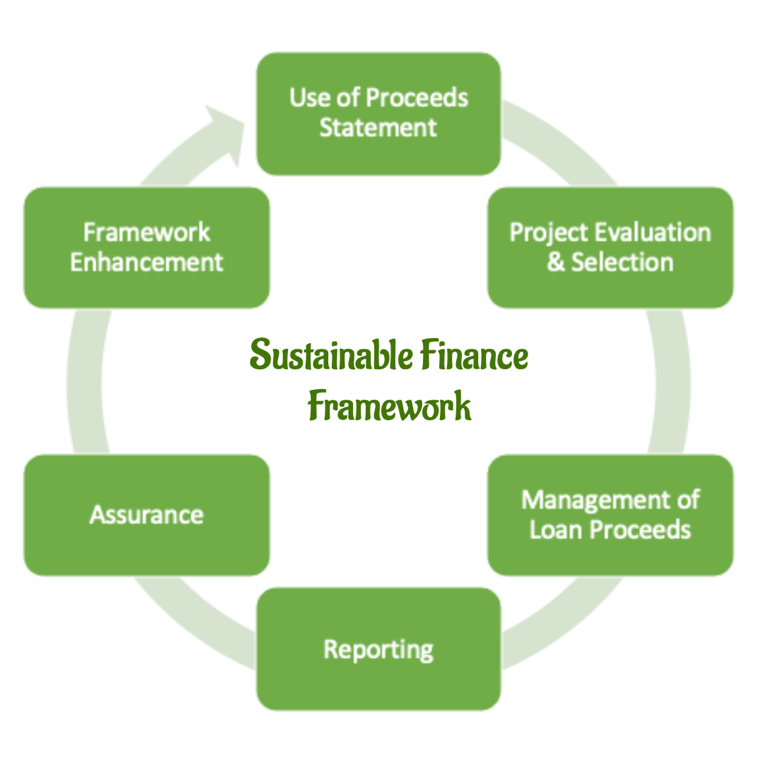
A sustainable finance framework aims to align financial decision-making with the principles of sustainable development. The framework outlines how a company uses environmental, social, and governance (ESG) factors in its financing, refinancing, and investment processes. As a starting point, corporations typically establish a sustainable finance framework to arrange debt financing for a certain group of projects with positive environmental or social benefits. Many organizations set up their sustainable finance framework in accordance with international guidelines such as the Green Bond Principles (GBP) or Social Bond Principles (SBP), which support the issuance of ESG-related debt.
The use of Proceeds clause defines categories of projects for which a company can use debt proceeds that were raised under its sustainable finance framework. For instance, the Framework of a property developer may cover the issuance of green and social bonds for three project categories:
Each project category will also have specific ESG criteria that will help to identify truly sustainable investment opportunities eligible for sustainable financing. For example, a project category “acquisition/development of low carbon buildings” may only allow spending debt proceeds on the acquisition of buildings with an energy efficiency rating of A. Projects that do not fall under eligible project categories, or projects that do not satisfy the established ESG criteria within each project category, will not receive sustainable financing and, thus, will not be undertaken by the company.
Another crucial component of a sustainable finance framework is project evaluation and selection. Corporate Treasurers should establish a method for determining whether new projects available for the company fit eligible project categories and, therefore, can be adopted. All selected projects included in a sustainable finance framework should be reviewed on a periodic basis and before new financing is raised. As a rule, a full list of eligible projects is examined and approved by the CFO to confirm that they meet the ESG criteria of the Framework and, thus, can receive financing.
After the sustainable financing is raised, Treasurers should ensure that funds are properly allocated and used in accordance with the “use of proceeds” clause. Thus, the sustainable finance framework should specify how a company will track the disbursements and allocation of debt proceeds among eligible projects.
The fourth component of the sustainable finance framework is the periodic disclosure of debt-related and project-related information. As long as a company has some outstanding debt raised within its sustainable finance framework, it should disclose, at least annually, the total amount of ESG debt raised, the remaining outstanding proceeds and the allocation of the proceeds across eligible projects. Such disclosures will help the company’s debtholders to understand how and to what extent their capital has been deployed by the organization.
Companies should also evaluate the environmental/social impact of funded projects via verifiable Key Performance Indicators (KPIs). For instance, a property developer can measure the environmental impact of projects under the “acquisition/development of low carbon buildings” category by energy consumption (kWh) and/or energy intensity (kWh/m2) KPIs. Impact reporting is crucial to assess whether the projects that received sustainable financing have achieved the expected positive environmental/social benefits.
The last attribute of the sustainable finance framework is independent external assurance. This step is needed to confirm the credibility of the established Framework as well as attest the compliance of the debt issuance process with the principles of international guidelines adopted by the company as a foundation for its sustainable finance framework.
The ultimate objective of a sustainable finance framework is to drive the financing of all corporate activities that align with the company’s sustainability goals. As such, Treasurers should gradually broaden the Framework by incorporating other sustainable finance instruments, such as convertible green bonds or sustainability-linked revolving credit facilities, to finance a diverse range of sustainable initiatives that support a company’s transition towards more sustainable operations. Over time, the Framework should be continuously expanded to include the development of new products/services and other sustainable business activities, instead of being limited to the financing of specific project categories that were initially defined in the use of proceeds clause.
The implementation of the sustainable finance framework can potentially result in the following benefits for the company.
By inclusion of ESG factors in the financial decision-making process, the Framework ultimately forces companies to consider environmental and social risks as well as their interdependences when evaluating investment opportunities. This enables businesses to receive a more complete picture of their risk exposures and, therefore, timely put in place adequate risk management tools that are required to keep company’s exposure to risks at an acceptable level.
The improved risk management that accounts for ESG-related risks is also likely to increase the confidence of capital providers in the company’s ability to survive in the long-term and remain profitable during challenging times. This, in turn, might improve a company’s credit rating, decrease the cost of capital, and enable businesses to obtain new financing on more favourable terms.
Sustainable finance has gained significant momentum in recent years. Therefore, companies that are perceived as environmentally and socially responsible are more likely to receive investment from impact-oriented investors and financial institutions. Thus, the implementation of the sustainable finance framework can increase a company’s access to capital and provide new source of financing in the face of ESG-oriented investors.
The implementation of a sustainable finance framework also demonstrates a company’s commitment to sustainability, which can lead to a better reputation among stakeholders, and enhance the company’s credibility and trust. This may translate into a wider pool of investment options and stronger relationships with suppliers, customers, and other stakeholders.
Thank you for reading!

01-12-2022 | Anastasia Kuznetsova | treasuryXL | LinkedIn |
The expression “Money makes the world go round” probably underscores the importance of the finance community for the transition to a greener economy. Financial market participants can significantly accelerate the transition to a more sustainable world by directing capital flows to the most sustainable projects, assets and companies.
Corporate Treasurers can have a substantial impact on business sustainability by allocating capital to green projects as well as incorporating ESG factors in their risk management processes. Below I will summarize some of the instruments Corporate Treasurers could use to support companies on their way to sustainability.
ESG debt is perhaps one of the most common instruments that may help companies to meet their ESG goals. For instance, to achieve environmental objectives, some companies issue green bonds. The proceeds from green bonds can only be spent on funding climate-related projects, including renewable energy, construction of green buildings, installation of air pollution control systems and etc. Most green bonds issued are “use of proceeds” bonds, which determine a range of eligible green project categories for which capital raised can be used. These bonds are also backed by the entire balance sheet of the issuer. Project bonds are another popular type of green bonds for which the proceeds are earmarked for specifically identified projects and are exclusively backed by the project’s assets. While green bonds might be more relevant for large public companies, private companies may still add ESG debt in their capital structures by arranging green loans which serve the same purpose as their public market bond equivalents.
Another type of ESG debt is sustainability-linked loans (SLLs), which are even more popular than green bonds and loans. The rise in popularity of SLLs may probably be explained by higher flexibility when it comes to the use of debt proceeds. Hence, the proceeds from SLLs can be spent on general corporate purposes but not exclusively earmarked for environmental projects. Moreover, SLLs are normally structured in the form of revolving credit facilities, which enables companies to fund their daily liquidity needs if they encounter a working capital deficiency. The purpose of SLLs from an ESG perspective is to encourage companies to achieve sustainability as quickly as possible. This is done by linking loan margin to a borrower’s sustainability performance. At first, sustainability performance targets (SPTs) for the borrower are established. After that, the borrower’s progress toward SPTs is monitored on annual basis via Key Performance Indicators (KPIs). If the targets are achieved, the loan’s margin will be reduced, enabling the borrower to benefit from lower interest payments. If the targets are missed, a step-up provision applies, increasing the loan’s margin and, thus, interest payments. Such an ESG Margin Ratchet provision incentivizes the borrower of SLLs to not only achieve but also maintain a certain level of ESG performance. The public markets equivalent of sustainability-linked loans is sustainability-linked bonds (SLBs) whose coupon payments are reduced (increased) if SPTs are met (missed).
On top of ESG-related loans and bonds, hybrid instruments such as green convertible bonds are becoming more and more popular. Thus, in 2020, Neoen, a French producer of renewable energy, issued €170M of the first ever green convertible bonds in Europe. This year, the company launched another €300M offering of green bonds convertible into new shares and/or exchangeable for existing shares.
Finalizing the topic of ESG debt, it is worth mentioning that when it comes to the EU’s finance providers, and particularly credit institutions who will soon have to disclose the percentage of green assets on their balance sheet under the EU Taxonomy, it is reasonable to expect that sustainability-linked debt will be favored by creditors. Specifically, being an underwriter of ESG debt could add prestige, and improve reputation and market positioning. In contrast, non-ESG debt may experience a pricing premium since such loans are likely to worsen the “greenness” of capital providers’ balance sheets.
Although currently ESG is not widely incorporated in foreign currency trades, some banks have already started to develop FX products that have a similar structure to SLLs. Such FX products will be linked to sustainability KPIs that will measure a company’s sustainability performance against pre-defined SPTs. If SPTs are successfully achieved, then a company may receive a rebate on its FX trades or a reduction in the required FX margin.
Sustainability-linked derivatives (SLDs) are another instrument that can be adopted by Treasurers to facilitate a transition of businesses to greener operations. SLDs are particularly relevant for companies, operating in “high-impact climate sectors” such as energy and agriculture. Cash flows of SLDs are connected to the sustainability performance of counterparties that is monitored via KPIs. Having met KPIs, a counterparty in a derivative transaction may receive a higher incoming payment, or be able to make a lower payment if the transaction results in a cash outflow. SLDs are OTC derivatives, meaning that counterparties can customise the derivatives’ terms and, thus, embed other ESG incentives, i.e. reduction in margin/spread, or payment of rebate upon achievement of pre-agreed sustainability targets.
Sustainable supply chain is one of the current ESG trends, particularly among retailers whose total carbon footprint mainly consists of Scope 3 emissions, which are essentially emissions of suppliers. That is why, more and more companies are trying to encourage procurers to reduce their emissions and, hence, decarbonize the supply chain. Corporate Treasurers can make a substantial contribution to this objective by arranging sustainable supply chain finance programmes. Programmes are based on early-payment principles. As a first step, a company sets up sustainability KPIs to monitor the ESG performance of its suppliers. The performance of suppliers may be measured once or twice per year. After meeting at least one of the established KPIs, a supplier is paid earlier than originally agreed. Hence, highly sustainable procurers will effectively receive better payment terms, which should encourage more suppliers to improve their sustainability performance.
Almost all the above-mentioned ESG products require the establishment of sustainability targets and KPIs. This unfortunately cannot be done by Treasurers on their own but instead should be done at the strategic level by company management. Sustainability targets must be ambitious, meaning that their achievement would require a substantial transformation of business models, e.g. switching to more sustainable suppliers; divestment or restructuring of high-carbon footprint units. Practice shows that not all management teams are capable of setting ambitious targets relevant to the business. Thus, the least Treasurers could do, besides the arrangement of ESG debt or other sustainability-linked products, is to question the adequacy of the chosen sustainability objectives within their organisations. In other words, Treasurers could make sure that the answer to the question “Why did your company set up its net-zero objective?” is not “Because everyone does it” but “Because it is relevant for our core business operations”.
Thank you for reading!
19-10-2022 | Philip Costa Hibberd | treasuryXL | LinkedIn |
We sent our expert Philip Costa Hibberd to the SIBOS conference to discover and explore the World’s Premier Financial Services event.
Last week, the SIBOS conference took place in Amsterdam. Sibos 2022 brought together more than 10,000 participants in Amsterdam and online, as this event returned in-person for the first time in three years.
Philip is delighted to share his experience with you. Happy reading!

The Sibos conference is an annual event organized by Swift that brings together leaders in the payments, banking, and financial technology industries. The conference provides a forum for attendees to discuss the latest trends and developments in the industry, but – as it turns out – it is mostly used as a venue where bankers meet other bankers with the occasional FinTech thrown in the mix.
During the 4 days of the 2022 edition, I learnt that little focus is given to the needs of the corporate treasurer. Throughout the conference, a few interesting recurring themes emerged nonetheless, which I’ll describe in the paragraphs that follow.
Queen Maxima – acting as the “United Nations Secretary-General’s Special Advocate for Inclusive Finance for Development” – kicked off the opening plenary by speaking about the importance of financial inclusion and access to banking services for all.
The first priority is to make sure we do no harm […] but we have a chance today of moving beyond doing no harm to actually doing good. So, beyond transaction volume and customer acquisition can we create the rails for transformative change to help users become more financially healthy?
Sadly the answer I heard from the bankers speaking on stage during the sessions that followed was not promising. “Maximising shareholder value” was still the dominating mantra… which – as experience teaches us – has seldom led the banking industry to “doing no harm”, let alone “doing good” in the past.

A bit more hope for the industry “doing good” came from the voice of FinTechs on stage. As it turns out, a mantra based on “innovation and disruption” makes it easier to attract scarce resources (such as talent) and ironically deliver shareholder value as a consequence.
It was interesting to observe the evolution of the Bank-FinTech relationship. The change in how banks perceive FinTechs today compared to a few years ago was remarkable. Once seen as a threat, FinTechs are today considered an ally by banks.
When asked “Are FinTechs Friend or Foe?”, bankers gave answers as:
“Partnership with FinTechs is our main strategy”.
“Partnership with FinTechs is crucial. They bring agility and they are a matter of survival for us”.
It was hardly a surprise then to learn on day 2 of the conference about BNP Paribas’ acquisition of Kantox, a leading fintech for automation of currency risk management. The relationship between banks and FinTechs will probably only get warmer and tighter from here… but only time will tell if that is good news for us.

Besides FinTechs, another often cited source of innovation for banks was “the regulator”.
Singapore was the most cited example of successful regulator-driven innovation. Its central bank has been encouraging innovation in the financial sector with generous grants to adopt and develop digital solutions, AI technology, cybersecurity capabilities, etc. On top of that, it has developed an exceptionally accommodating regulatory framework. It has for example introduced a “regulatory sandbox” for FinTechs and banks to test their products and services in a live environment without them having to be concerned with compliance hurdles (at least for the delicate initial phases of innovation).
There are hopes that Singapore’s success will be taken as an example by other regulators across the globe, but the most basic expectation from the industry is for regulators to at least set guidelines to improve standardization across the market. As nicely put by Victor Penna, there is still a lot of work to be done:
“Can you imagine if I sent an email from Singapore to Belgium and they couldn’t process it? That is exactly what is happening today with payments. This has to change.”
One last often cited trend where regulators are expected to play a dominant role in innovations, are Central bank digital currencies – CBDC in short.
CBDCs are digital currencies issued by central banks. Typically central banks have two kinds of liabilities:
CBDCs are a third form of liability that complements cash and central bank deposits: they take a digital form and are directly available to the general public.
More than 100 central banks are estimated to be working on their own projects. They are important in the context of innovating the financial sector because they have the potential to provide greater efficiency and transparency in financial transactions. Additionally, CBDCs could help to reduce the cost of financial services and increase access to financial services for underserved populations.
There is still little consensus today on what exactly the impact will be, not least because of the fragmentation of all the initiatives. For example, when it comes to the digital Euro project, the impact on corporate treasury payments is expected to be limited. The project is still in the validation phase, but the assumption is that even if/when the project were to move into the realization phase (decision expected in September 2023) usage will be limited by design with the introduction of low limits to the maximum balances which could be held (exact limits need to be defined, but think of a few thousand euros max).

Banks have invested a lot in the technological backbone needed to support open banking and instant payment requirements across the world and seem to be puzzled by the modest adoption. The ambition is to move away from batches, cut-off times, and end-of-day statements in favour of instant payments 24/7 and provide information-on-demand via APIs.
From a treasury perspective, this brings some challenges. Moving to APIs can be hard, especially if you have a fragmented ERP/TMS/Banking landscape. But the biggest challenge is probably the way that we organize our work and our processes. As jokingly put by Eddy Jacqmotte group treasurer at Borealis:
“Instant Treasury is nice: but I don’t like the idea of instant treasury on Saturday and Sunday”.
The ever-decreasing cost of storage and processing information, combined with the ever-increasing flow and value of user data has transformed the “AI” and “(big) data” brothers from geeky kids in the corner to rockstars in the centre stage.
Besides the obvious use cases such as fraud detection, sanction screening, reconciliation, payment repair, etc. the new trend is to use AI to generate new tailored content and to feed it to users to measure their interest in a specific topic and nudge their behaviour. Instead of asking you directly if you are interested in a mortgage, the algorithm might casually inform you about the price per square meter of properties in the neighbourhood where you go for coffee every weekend. If you interact with the prompt, the algorithm will take notice and will keep on feeding you with “property-related” information, until you find yourself asking for a mortgage…or showing interest in something else that the bank can do for you.
Sounds sketchy? It might be, that’s why another trend in this area has been making its way to the foreground: Explainable AI.
Explainable AI is a form of AI that can provide understandable explanations for its predictions and decisions. This is important especially in the financial industry because it can help to build trust with customers and regulators and avoid (or at least make explicit and controllable) unwelcome biases.
For example, the Apple Card / Goldman Sachs scandal in 2019 could have been prevented if the algorithm used by Apple had been more transparent and accountable. According to researchers, the algorithm used by Apple was biased against women, resulting in lower credit limits for women than men. If the algorithm had been more explainable, the bias could have been discovered and corrected before the card was launched.
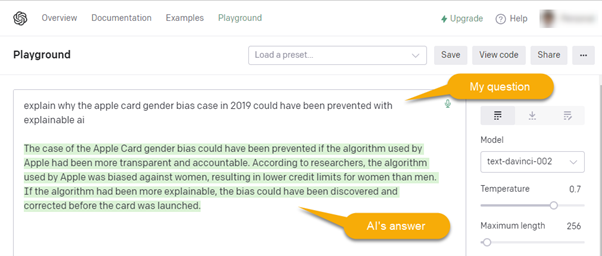
In essence: AI is powerful, but transparency is key. On that note, I have a confession to make: the previous paragraph was written by an AI and not by me…
Thanks for reading!