

BCR Publishing
We are the leading provider of news, market intelligence, events and training for the global receivables finance industry.
Working with industry leading organisations, experts, governments and universities, BCR Publications delivers expertise in factoring, receivables and supply chain finance to a global audience.
BCR has long been a beacon of innovation and excellence in the realm of receivables finance, playing an instrumental role in shaping the industry’s international landscape. Through its comprehensive conferences, insightful publications, and thought leadership, BCR has facilitated crucial dialogues and connections among industry professionals, driving forward the development of receivables finance globally.
Follow BCR Publishing
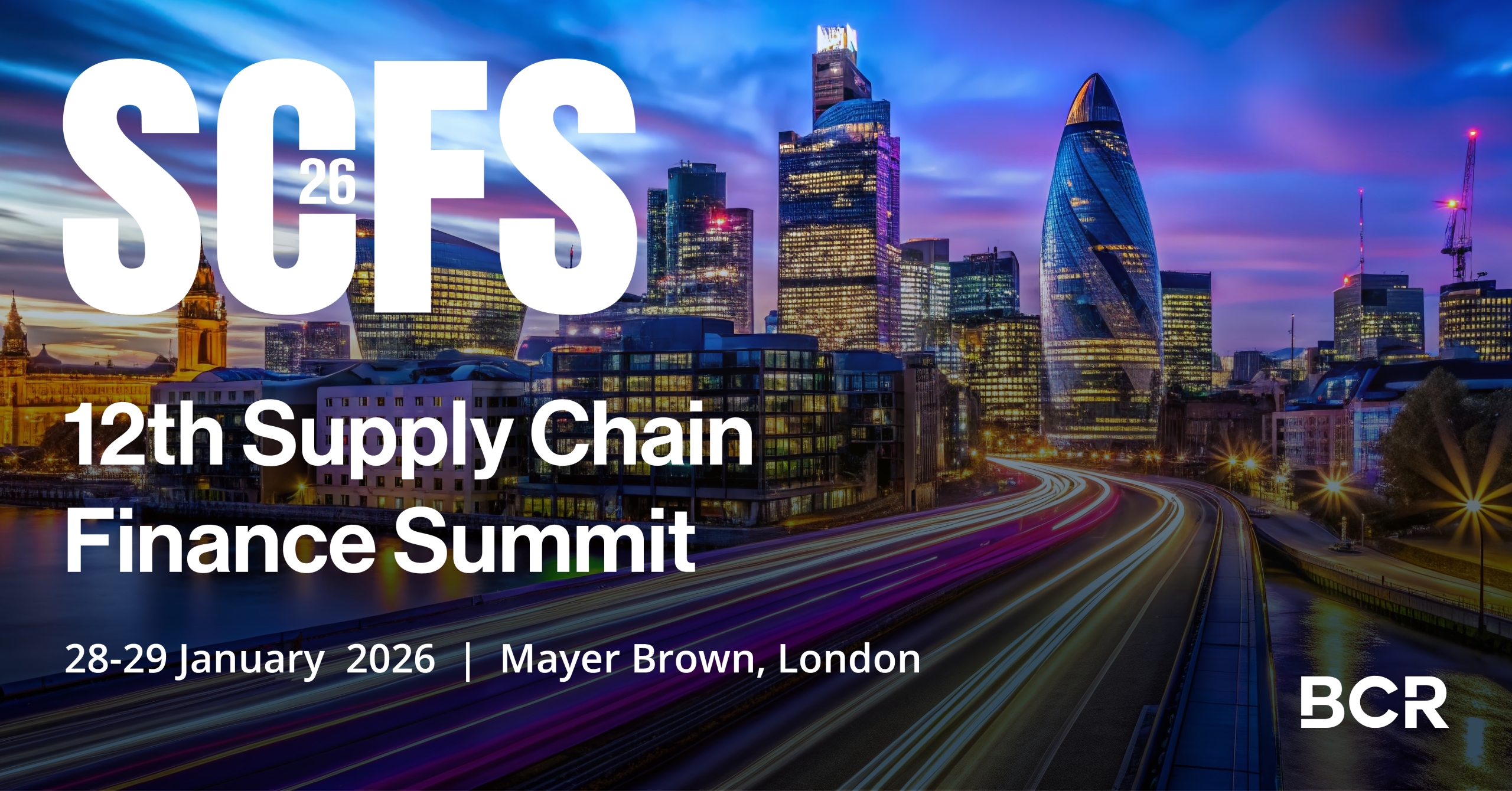
Free passes
For corporate treasurer roles/functions!
The Five Cash Management Initiatives Treasurers Should Consider
|8-2-2017 | Jan Meulendijks | iTreasurer |
In October 2014 iTreasurer published an article ‘The Five Cash Management Initiatives Treasurers Should Consider‘ about how treasurers keep focus on ways to keep cash management in their organisation efficient and cost effective. As this is always an important issue and also relevant in 2017, we asked our expert Jan Meulendijks to comment on the article.
Five initiatives
iTreasurer stated in their article that treasurers should spend their time on five initiatives and that they should be part of a treasurers’ overall budget and resource planning process.
Going beyond SEPA
iTreasurer stated: ‘Initially rolled out as an approach for risk mitigation for commercial payment transactions in Euro, SEPA adopters have found that SEPA, or the Single Euro Payments Area, provides a more efficient way to transfer and collect funds across borders without managing all the different legal payment frameworks of each country. But despite the many bright spots of SEPA, “reconciliation in 2014/2015 was still a challenge,”
According to Jan Meulendijks the development of reconciliation tools has now become an issue for ERP/General ledger software developers and that the banks do not need to focus on it any more. Processing digital account information/account statements are a well established feature of financial software programs and also include the processing of open accounts receivables.
Global Account Rationalization
‘The SEPA initiative has acted as the catalyst for other global projects, with high priority placed on account rationalization. By reducing accounts across Europe, many large US multinational corporations are realizing significant savings in both hard- and soft-dollar costs. “In the SEPA environment, all corporates needed was one account for payments and one account for receivables across the SEPA landscape,’ said Mr. Brieske, Regional Head of Trade Finance and Cash Management Corporates Global Solutions Americas, Global Transaction Banking, Deutsche Bank in the article. At that time keeping every bank happy was a tough job, if not impossible. Being able to spread the wallet across fewer banks was one of the positive by-products of a bank consolidation.
In-House Bank Structures
Treasurers had continued to find ways to alleviate the growing cash balances that had become strategically more important to their organizations. Structures like in-house banks (IHBs) were becoming more commonplace as organizations took the next step to further enhance their global liquidity models. The practical considerations for the evolution of the IHB could be directly attributed to global expansion and increased revenue mix overseas in addition to complexities related to time zones, language, growth of regional shared services and decision execution.
RMB Internationalization
As a result of the ongoing RMB regulatory changes, there had been a significant improvement in the ease of making cross-border RMB payments via China. The RMB was a fairly new currency on the international scene then. The RMB internationalization project had begun to pick up steam over the second half of 2014, with many global MNCs looking to launch new cash management strategies in Asia. New structures were thought to be able to unlock China’s previously “trapped cash” challenge, and optimize their cash held in this part of the world where many opportunities lie for them.
Jan sees a tendency today that the more the deregulation of the RMB progresses the more one can treat it as any other currency. However, this is not achieved yet and Asia will continue to be an region where ‘trapped cash’ occurs on a regular basis.
Maximizing Excess Cash
Managing Treasury Risk – Foreign Exchange Risk (Part III)
| 7-2-2017 | Lionel Pavey |
There are lots of discussions concerning risk, but let us start by trying to define what we mean by risk. In my third article I will focus on foreign exchange risk. This risk has to be taken into consideration when a financial commitment is denominated in a currency other than the base currency of a company.
There are 4 types of foreign exchange risk.
Transaction Risk
Transaction risk occurs when future cash flows are denominated in other currencies. This refers to both payables and receivables. Adverse changes in foreign exchange prices can lead to a fall in profit, or even a loss.
Translation Risk
Translation risk occurs when accounting translation for asset and liabilities in financial statements are reported. When consolidating from an operating currency into a reporting currency (overseas offices etc.) the value of assets, liabilities and profits are translated back to the reporting currency. Translation risk does not affect a company’s cash flows, but adverse changes can affect a company’s earnings and value.
Economic Risk
Economic risk occurs when changes in foreign exchange rates can leave a company at a disadvantage in comparison to competitors. This can affect competitive advantage and market share. Future cash flows from investments are also exposed to economic risk.
Contingent Risk
Contingent risk occurs when potential future work is expressed in a foreign currency. An example would be taking part in a tender for work in another country where the pricing is also in a foreign currency. If a company won a large foreign tender, which results in an immediate down payment being received, the value of that money would be subject to transaction risk. There is a timeframe between submitting a tender and knowing if the tender has been won, where a company has contingent exposure.
Identifying Foreign Exchange Risk
Initially we need to ascertain what we think future FX rates will be. Methods that can be used include the Forward Rate Parity, the International Fisher Effect which also includes expected inflation, forecasts provider by banks and international forums, along with VaR. Model analysis can be provided, among others, via fundamental factors, technical analysis, and political analysis.
Different FX rates can then be used to simulate the effects on cash transactions when converted back into the base currency. This will provide different results that will allow a company to determine what level of risk it is prepared to accept. Finally a decision must be taken as to whether the company wishes to hedge its exposure or not. Before the advent of the Euro, both the Netherlands and Germany were members of the Exchange Rate Mechanism (ERM). This meant there was agreed band within which the spot rate could move around an agreed central point – this was NLG 112.673 equal to DEM 100.00 with a bandwidth of +- 2.25%. For some companies, this tight band meant that they took the decision not to hedge any exposure between DEM and NLG.
Financial products that are commonly used to manage foreign exchange risk include Forward Exchange contracts, Futures, Caps, Floors, Collars, Options, Currency Swaps and Money Market hedging.
Lionel Pavey
Cash Management and Treasury Specialist
More articles of this series:
Managing treasury risk: Risk management
Managing treasury risk: Interest rate risk
Flex Treasurer op treasuryXL: nog meer nieuwe diensten
| 6-2-2017 | treasuryXL |
treasuryXL en Treasurer Search hebben de handen ineengeslagen om laagdrempelige en hoogwaardige expertise van ZZP’ers uit de treasury wereld te koppelen aan middelgrote en kleine ondernemingen die geen treasurer of cash manager in dienst hebben. Intussen kunnen wij jullie laten weten dat zich al een aantal experts hebben aangesloten bij dit nieuwe concept en er zijn een aantal nieuwe diensten bij gekomen. Graag presenteren wij de nieuwe diensten.
CASH & LIQUIDITY MANAGEMENT ONDERSTEUNING
Heb je een goed overzicht van je liquiditeitspositie? Is er geen versnipperde cash- en kredietbenutting? Ben je onlangs geconfronteerd met liquiditeitsproblemen t.g.v. onverwachte uitgaven? Word je regelmatig geconfronteerd met manuele verwerking van betalingen? Ben je recent geconfronteerd met fraudegevallen? Is het aantrekken van de financiering een issue?
Een treasury expert kan je helpen in het vinden van de juiste antwoorden op deze vragen. Een Flex Treasurer kan ondersteuning bieden op tijdelijke basis, onder meer voor de volgende aspecten:
FX EN IR RISICO ANALYSE
Heb je een goed zicht op de risico’s die je bedrijf oploopt (o.m. valuta en renterisico) en op de impact hiervan op jouw bedrijf? Heb je een politiek in verband met de risicoafdekking? Heb je een zicht op de mogelijkheden om ze in te dekken? Koerswijzigingen in valuta en rente kunnen zeer vluchtig zijn en leiden tot onnodige extra kosten. Als je je wilt concentreren op je ‘core business’, zonder je zorgen te hoeven maken over bv. de EUR/USD wisselkoers of de Europese rente dan is het inhuren van een Flex Treasurer de ideale uitkomst. Hij kan de organisatie helpen eenvoudig en effectief de risico’s af te dekken, alsmede te onderhandelen over betere spreidingen en lagere kosten bij uw bank.
OPTIMALISATIE WERKKAPITAALBEHEER
Kamp je met een DSO (gemiddelde betalingstermijn klanten) die veel hoger is dan het sectorgemiddelde? Heb je een duidelijk afgelijnd acceptatieproces en een politiek voor de betaaltermijnen? Is je facturatieproces optimaal? Heb je een afgelijnde politiek voor de selectie en de betalingstermijnen aan je leveranciers? Heb je regelmatig incassoproblemen? Kamp je met wanbetalingen en afschrijvingen op je klantenportefeuille? Ondervind je regelmatig reconciliatieproblemen bij binnenkomende en uitgaande betalingen?
Een treasury & working capital management expert kan je helpen in het vinden van de juiste antwoorden op deze vragen en het optimaliseren van je werkkapitaalbeheer. Een Flex Treasurer kan ondersteuning bieden, onder meer voor de volgende aspecten:
In ons actieve netwerk zijn meerdere senior professionals te vinden die ondersteuning kunnen bieden bij deze drie nieuwe diensten en hier meer dan voldoende ervaring in hebben. Daarnaast kunnen zij ook ingezet worden als treasury coach, voor een treasury quickscan, of als iemand ondersteuning nodig heeft bij financiële instrumenten en derivaten. Overigens komen onze Flex Treasurers ook gedeeltelijk uit België, waardoor zij ook daar beschikbaar zijn.
Voor meer details over onze Flex Treasurers verwijzen wij jullie ook naar onze pagina ‘Flex Treasurer‘
[button url=”https://www.treasuryxl.com/community/flex-treasurer/” text=”Ga naar de Flex Treasurer” size=”small” type=”primary” icon=”” external=”1″]
[separator type=”” size=”” icon=””]
Alle Flex Treasurer zijn op korte termijn beschikbaar en kunnen ingehuurd worden voor specifieke projecten of op regelmatige basis. Neem voor meer informatie en mogelijkheden contact op met
[separator type=”” size=”” icon=””]